Rahul Dogra - Uniquescadd - Page 3

How Clash Detection Improves Collaboration Among AEC Professionals

Building information modeling services has emerged as a revolutionary technology in the AEC landscape. A marvelous technology has reshaped the working approach for architects, engineers, and contractors. However efficiency and accuracy have always been pillars of a project’s success. A small error in the project at any stage can lead to significant loss and delay in the project. Every infrastructure project entails critical components that make the building functional and comfortable. From appropriate lighting to air ventilation, all the elements in the building work efficiently when seamlessly fit together in the intended design. Furthermore, the architecture and construction industry is dynamic, constantly updating with innovation and technologies that help to enhance the current work process.

Many AEC professionals work on the same model, according to their respective fields and expertise. Every stage of the construction project encompasses critical processes and methodologies that demand the utmost accuracy and precision. It includes designers, architects, civil engineers, contractors, and more. Thanks to 3D BIM services, AEC experts can collaboratively work on the same model and stay updated with any modifications. This bridges the gap of communication and ensures a smooth workflow for project completion.

However, traditional practices and the involvement of different professionals can make the process more complex as each expert delivers their opinions to bring comprehensive solutions, which is why BIM is one of the revolutionary approaches that allows different AEC professionals to communicate effectively. During the various stages in the BIM model, harnessing clash detection in construction can be valuable. It will enable architects, engineers, and contractors to collaborate and quickly identify potential errors and clashes before the groundwork begins.

During various stages of architecture, the most critical aspect is the MEP component, where the chances of errors and clashes are high. Professionals leverage MEP clash detection in the BIM model to identify potential errors, location, and quick resolution. This ensures that the project is efficient, cost-effective, and accurate. Let’s understand BIM clash detection and how it allows architects, engineers, and contractors to improve collaboration from the start to the end of the project.

Hire Experts for Clash Detection to Resolve Conflicts Efficiently

bim services

Understanding Clash Detection in Detail

In the construction industry, there are multiple unforeseen conflicts, errors, and clashes during the different stages of construction. These errors or clashes may look small but result in significant costly rework, potential delay in the project, resource and material misuse, and much more. During the traditional era, architects, engineers, and other professionals faced challenges coordinating and communicating. This gap always leads to crucial and costly errors in the project. As BIM has redefined how projects are planned and executed, the AEC sector continues embracing other BIM tools that assure professionals can improve outcomes and overcome certain obstacles. Clash detection in BIM stands out in the building information modeling framework.

This is one of the indispensable features that provides quick identification and resolutions for potential clashes and conflicts in the different stages of projects. This proactive approach quickly identifies, analyzes, and resolves the clash within the BIM model, resulting in cost and time savings. As MEP is a significant and complex stage, MEP clash detection plays a crucial role in overseeing the seamless coordination among three disciplines. As a matter of fact, clash detection is a vital approach for the seamless integration of different construction components and elements within the 3D BIM model.

Quick identification and resolution of conflicts make it the most prominent process for architects, engineers, and contractors. This also results in improved communication and collaboration among various AEC professionals, allowing each expert to stay updated with current changes and achieve the best outcomes. Architects, MEP engineers, and other contractors seamlessly work on a BIM model that encompasses the details of geometry, spatial relationships, and other data that help professionals manage accurately.

Integrated with MEP components, clash detection plays a crucial role in identifying potential conflicts that can occur in the design. These conflicts may be expensive and require major rework in design that could consume crucial time. Additionally, it is also significant in BIM coordination services, ensuring each stage is error-free, well-coordinated, and seamlessly fits together to enhance the overall performance of the infrastructure.

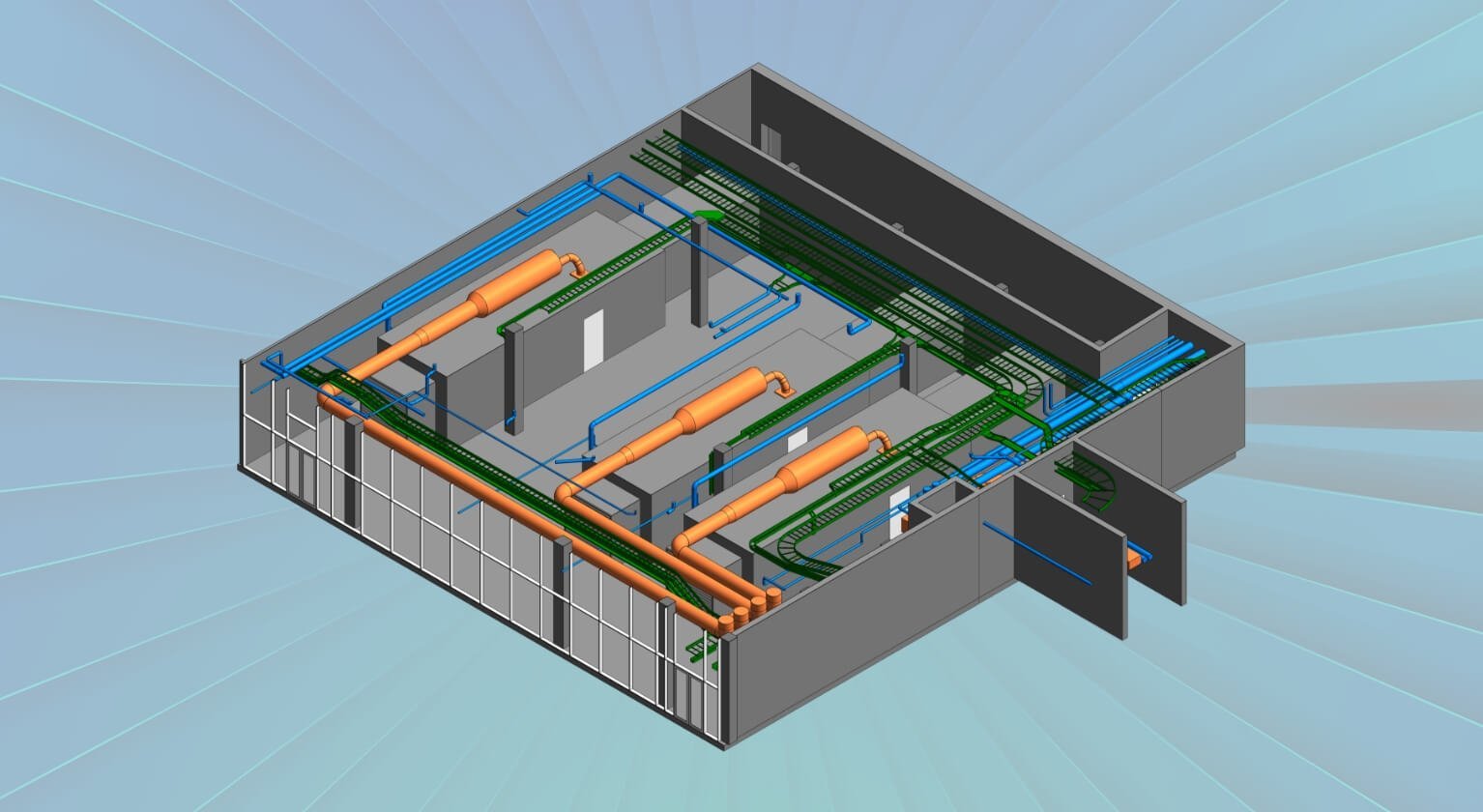
Clash detection is an approach that significantly relies on software that analyzes the 3D BIM model. Overlaying different components and elements, such as mechanical, plumbing, electrical, architectural, and structural, is identified in the designing and planning stage, preventing costly rework and delays in the actual construction project. Above all, the following are the primary benefits of multidisciplinary BIM collaboration.

Benefits of Multidisciplinary BIM Collaboration

Improved accuracy and reduced rework
Enhanced communication and collaboration
Minimize on-site conflicts
Higher accuracy in construction drawings
Cost and time-saving
Facility management
Enhanced safety
Project optimization

These are some of the major benefits of clash detection in construction. As a matter of fact, the crucial process requires advanced technology use and expertise skills for accurate outcomes. In-house teams of resources are usually occupied in other core activities and lack the knowledge to understand the complex process. Therefore, partnering with a BIM services provider who specializes in BIM clash detection approach.

A team of experts ensures the accuracy and efficiency of the project while resolving conflicts with comprehensive solutions. Furthermore, BIM experts understand the complexity of MEP clash detection due to the involvement of different components to seamlessly fit together. With a significant and accurate process of detecting errors and conflicts, architects, engineers, and contractors enhance coordination that eventually results in the success of construction projects. In addition to this, let’s explore how BIM clash detection collaboration works.

UniquesCADD successfully developed clash detection and quantity takeoff for large-scale buildings, providing an in-depth understanding of how clash detection is implemented in the process.

How BIM Clash Detection Works?

As discussed, clash detection and its vital role in the industry has also become mandatory in any construction project, regardless of nature, type, or size. As the process in the 3D BIM model operates through an organized and automated approach to detect any conflicts, it encompasses a significant work procedure that entails a few steps. For a complex process to work accurately, it is evident that the process must be followed to gain accurate outcomes. As precision in the clash detection process will also be helpful in precise construction documentation, BIM coordination, including MEP BIM coordination, results in enhanced collaboration. Here are a few crucial steps for understanding how BIM clash detection works.

  • Step 1 Creation of BIM models: The foremost step is to create accurate 3D BIM models of different components, such as architectural, structural, and MEP, as they entail rich data of the project’s geometry, dimensions, spatial relationship, location, and other significant data. BIM modeling here is evident as each component’s model will be further utilized.
  • Step 2 Integration of models: Once each expert creates a model, it is integrated into a centralized BIM platform for digital representation of the entire project. This BIM model includes all the multidisciplinary components of construction.
  • Step 3 automated clash detection: After curating a single BIM platform, software for BIM clash detection is used to analyze the entire BIM model. The software for clash detection significantly identifies errors or conflicts in areas where the components overlap or clash with each other. The disputes may involve overlapping of two or more components, conflicting specifications, physical collisions, and more. Conflicts in the systems reduce building performance and increase risk factors in the long run.
  • Step 4 clash resolution: Specialized software for clash detection detects potential conflicts in the BIM model and offers comprehensive resolutions through a collaborative approach for AEC professionals. Holistic solutions for errors may involve reworking element positioning, modifying designs, and more to rectify the errors.

These are the four crucial steps for clash detection in BIM that operates on advanced software to automatically identify errors throughout the BIM model. Once rectified and modified, the BIM model further helps to streamline the workflow and enables AEC professionals to improve communication and collaboration.

Only building information modeling cannot enhance the collaboration. Architects, engineers, and other experts curated 3D models of the respective components. After the integration of each model into centralized platforms, possible changes are foreseen in the designing stage for all the professionals involved. This is one of the most crucial advantages as it offers a collaborative approach for every expert to stay updated with the ongoing process and bring accurate solutions. Identifying and resolving clashes in digital 3D models helps eliminate the possible risks associated with construction projects. While mitigating possible risks, clash detection in BIM also helps ensure safety precautions, compliance with standard codes and regulations, and high-quality building design.

Impact of Clash Detection on Project Success

With the significant process of BIM, clash detection offers a variety of benefits and enables AEC professionals to collaborate efficiently and streamline construction work. Identifying the clashes at an early design stage, AEC professionals ensure resolution within the model and bring effective solutions without compromising the quality. This intricate process results in cost savings and eliminates material wastage. As a matter of fact, clash detection in construction in modern times has become a significant role player, enabling architects, engineers, and contractors to seamlessly collaborate on the project, reduce material wastage, accelerate the process, and keep a progress track. This brings efficient results on the groundwork, ensuring an accurate and precise construction process.

With continuous advancement in the architecture and construction industry, clash detection in BIM will improve with the amalgamation of advanced software that helps optimize the overall construction process, improves communication, and more. For AEC professionals today, ensuring seamless harmony between various components and enhancing collaboration among architects, engineers, and contractors has become essential. However, to ensure the BIM clash detection results, it is essential to understand BIM coordination services. Coordination in BIM is a comprehensive approach to aligning the different components of projects.

This involves coordination of architectural, structural, fire safety, mechanical, and other components. Moreover, AEC experts focus on MEP BIM coordination as three disciplines require acute synchronization in the project for infrastructure to become functional. For accurate clash detection, BIM coordination is a crucial aspect to focus on that contributes to optimizing the project and enabling professionals and stakeholders to coordinate accurately. The following are key advantages of BIM coordination for clash detection.

Key Advantages of BIM Coordination for Clash Detection

Improved decision making
Safety and regulatory compliance
Eliminates rework
Enhanced productivity and pace
Better visualization
Minimize miscommunication

In modern times, BIM coordination for AEC teams and clash detection in the project have become significant and transformative approaches to achieving the most accurate and efficient results. As significant and crucial as these services are, outsourcing them is evident for precise results. Let’s understand how outsourcing to a reliable BIM service provider can be beneficial.

Outlook on Outsourcing BIM Clash Detection

The construction and architecture sector is growing rapidly with advanced technology and new innovations. Since its inception, BIM has reshaped the working environment for AEC professionals and resulted in the most accurate and efficient outcomes. As a vast concept in the architecture landscape, BIM and its related services are typically outsourced to a reliable partner.

In the advancing age, AEC firms partner with BIM consulting company to understand each aspect, importance, and precision in the construction project. In addition, AEC firms are preoccupied with various responsibilities, which enhances the possibility of outsourcing BIM services. Construction and architecture projects are critical due to the involvement of multiple stages, outsource BIM experts offers various advantages, including;

  • Accurate and efficient outcomes
  • Expertise knowledge
  • Strictly adheres to regulatory requirements
  • Timely delivery
  • Enhanced project outcomes
  • Increases ROI
  • Latest technology and software use

These are some of the benefits of outsourcing BIM services. UniquesCADD is a renowned and trusted outsourcing BIM company. With extensive experience and a strong clientele, the UniquesCADD team offers various BIM services. The team of experts ensures accuracy and reduces the risk of errors.

Ending Thoughts

Clash detection in construction is now a crucial aspect of any architectural project, regardless of its nature or size. It helps to ensure seamless harmony between various components and improve collaboration among architects, engineers, contractors, and various stakeholders.

Understanding the Pivotal Difference Between BIM vs. CAD

Building information modeling is a valuable and go-to approach in today’s architecture and construction industry. Understanding and catering to modern architecture projects, AEC professionals have achieved a new level of excellence in the sector with BIM technology. In today’s digital era, BIM has become a significant tool for architects, designers, engineers, and other professionals. Before BIM transformed the industry with multiple perks and capabilities, CAD was a popular tool that enabled architects and designers to shift from drafting tables to computer screens. This eliminated the traditional practices of hand-drawn sketches, long working hours, and possible errors and rework.

With computer-aided design technology, AEC experts could enhance the complex process and ensure accuracy without errors. This technology in the architecture and construction industry transformed with a working approach, bringing a new face to the sector. Before BIM, CAD drafting services were quickly adopted due to beneficial reasons and accurate process outcomes. Not only this, but the implementation of CAD was a complete game changer for professionals to design with precision, enhance quality, improve communication, and much more.

As the economy’s technology showed no signs of stopping, it reshaped the reality of the construction sector by introducing building information modeling services. Since CAD drafting had given its primary contribution, it had few limitations in the modern architecture era. During the early 80s, CAD gave a new path in the AEC while advancing technology transformed the approach with BIM architectural services. Precision, efficiency, and reliability have always been paramount for any project’s success. For professionals to ensure the project’s success, CAD implementation was evident in transforming the traditional working methodologies. In the current scenario of AEC today, CAD and 3D BIM services have emerged as important technologies for quality, precision, and efficiency.

Each technology plays a different role, which is why it is crucial to understand when to use CAD and BIM services in AEC projects. Since CAD has significantly changed from drafting tables to computer screens, BIM offers a holistic approach to project construction, design, execution, and management. Due to the different capabilities of each technology, BIM and CAD comparison has always been a topic of debate for renowned AEC professionals. Let’s discuss each revolutionary technology in detail and its differences for a better understanding and appropriate use in the projects.

Upscale Project Quality with BIM and CAD Expertise by UniquesCADD

bim services

Brief Insights on Computer-Aided Design Technology

As discussed, professionals manually completed all the necessary tasks of the project, from drawing to curating blueprints. With CAD’s introduction in the industry, AEC professionals quickly adopted the power of the automated approach. This technology has replaced the manual or traditional hand-drafting working process with computer-based solutions. Implementation of this technology has resulted in the utmost precision, efficiency, and detailed representation of the infrastructure in 2D and 3D views. At its best, CAD drafters and professionals can create accurate and detailed 2D or 3D representations of the objects as well as the building. AEC firms in today’s modern era partner with CAD service provider for accurate and efficient results.
Apart from offering detailed representations of the infrastructure, CAD is also useful in drafting different project disciplines, such as mechanical CAD drafting services, electrical CAD drafting, and more. These detailed drawings allow MEP experts to maintain accuracy and understand the design intent and 2D and 3D capabilities. As a matter of fact, for years, CAD services have been a backbone of the architecture industry, drafting complex floor elevations with accuracy and efficiency. Following are some of the key benefits of CAD in AEC projects;

Key Benefits of CAD in AEC Projects

Cost reduction
Collaboration and communication
Faster design iterations
Enhanced visualization
Increased efficiency and productivity
Reduced rework

These are the generic benefits of computer-aided design technology; however, its key features make it the most adopted technology in the AEC realm. As these benefits enhance the construction projects, key features of CAD technology enable professionals to improve the overall design process. The following are the key features of CAD;

  • Geometry-centric precision: CAD software offers comprehensive tools for curating accurate lines, shapes, and curves. This allows designers and architects to have hands-on detailed drawings for construction projects.
  • 2D and 3D design capabilities: One of the significant features of CAD drafting is the creation of 2D and 3D designs, which empowers AEC professionals to improve communication, visualization, and collaboration, resulting in overall design precision.
  • Isolated object focus: CAD software and files often represent isolated objects, components, parts, and more. Specific layouts or other technical drawings are also represented to enhance focus and minimize errors.

CAD’s efficiency and accuracy enable professionals to work closely on the intended design and bring efficient results in the overall process. As technology has advanced over time, it is evident that designers, architects, engineers, and other professionals can adopt new technologies and stay ahead of the market. Additionally, CAD drafting services have transformed the face of the architecture sector, although the inception of BIM architectural services has hit the sector with revolutionary waves. Let’s understand BIM in detail.

3D BIM Services in AEC Projects

BIM in the architecture and construction sector isn’t an unfamiliar concept. In modern architecture, staying ahead of the market curve, adapting innovation, and implementing the latest construction practices enhance project results. As discussed, CAD has pushed architects and designers to use computer screens, and 3D BIM services play a significant role in the industry now. Typically, it refers to the representation of different functional and physical characteristics. BIM offers a data-rich intelligent 3D model that entails data of every component, leading to enhanced communication, collaboration, improved design, and more. In the modern architecture landscape, BIM isn’t just a tool or a mere technology but has emerged as a revolutionary approach that supports collaboration and communication among various professionals involved in the projects.

Tools like Revit and Archicad have become popular BIM software that transform the design, planning, and execution process. The data-rich 3D model encompasses geometry, spatial interrelationships, geographic information systems, and material quantities. With the help of accurate BIM services, AEC experts can track progress, manage project costs, ensure accuracy in the design, minimize the scope of errors on the ground, and more. Above all, BIM modeling services bring a plethora of benefits, such as;

Benefits BIM Modeling Services

Data-driven model
Improved visualization
Reduced errors
Informed decision making
Enhanced communication and collaboration
Centralized platform

With a plethora of advantages, building information modeling has become a go-to tool for architects, engineers, and other professionals. The collaborative power of BIM allows experts to streamline the design and planning process while ensuring accurate on-site construction management. With a data-rich model, BIM enhances the visualizations of the project before even it’s built, resulting in fewer errors, reworks, and cost savings. However, in the modern architecture horizon, it is crucial to understand when to use BIM and CAD services in the project.

Besides BIM being a key role player in the sector, CAD technology has wholly vanished. Many AEC firms and individual experts use CAD files and transform them into BIM models for effective and accurate results. This process typically involves AutoCAD to BIM services, which have become quite common in the market. CAD technical drawings are precisely converted into 3D BIM models, enabling professionals to have hands-on data rich building models. As a matter of fact, BIM is increasingly becoming valuable as technology improves.

Difference Between BIM and CAD

In the landscape of architecture and construction, adopting the latest technology brings enhanced results and streamlines the complex process. As discussed, CAD was a significant part of the construction process that reshaped the entire industry. With building information modeling, AEC professionals enhanced and seamlessly worked on complex projects with precision and efficiency. However, this doesn’t mean CAD technology isn’t in use. With BIM, CAD plays a crucial role as mechanical CAD drafting services, electrical, and plumbing. There is often an overlap between BIM and CAD in the aspects of functionality.

Even today, AEC firms sometimes have CAD files that are transformed into data-rich 3D models for accurate visualization and reducing errors. With the accurate implementation of AutoCAD to BIM services, technical drawings files in CAD software are converted to BIM model. As each of the technologies varies from each other and plays a crucial role in the architecture and construction realm, it is evident to understand the fine line between BIM vs. CAD. The following is the difference between CAD technology and BIM technology in various aspects.

Dimensionally

  • BIM: It offers a holistic and comprehensive 3D view of buildings with functional characteristics and other sets of data.
  • CAD: CAD offers a 2D view of the project, technical drawings, and a 3D view of essential elements that enhance visualization.

Data Insights

  • BIM: 3D BIM modeling services offer rich data of every building component and element while also integrating seamless data storage for construction documentation and facility management.
  • CAD: It entails limited data, which becomes one of the limitations for complex and large-scale projects.

Collaboration

  • BIM: allows multiple AEC professionals and stakeholders to work on the same model with real-time updates due to centralized environment capability.
  • CAD: For technical drawings in CAD, generally, individual experts can create and edit without any involvement of a third party. This leads to inconsistencies and rework, specifically in large-scale commercial projects.

Workflow

  • BIM: Building information modeling services maintain the entire project lifecycle, from conceptual design to facility maintenance.
  • CAD: Typically, it is used to create construction documents, blueprints, technical information, and more.

Project updates

  • BIM: This data-rich intelligent model automatically updates changes across the entire model. For example, a change in window size in the hall will be altered throughout the model, saving time and effort.
  • CAD: Changes in the CAD model require a manual process throughout the CAD file.

Analysis and simulation

  • BIM: 3D modeling services include simulations for early clash detection, sustainable design, energy analysis, and more. They allow experts to make informed decisions.
  • CAD: The CAD technical file limits analysis and simulation tools, which can be challenging for larger construction projects.

Project budget

  • BIM: The data-rich intelligent model offers insights into cost estimation and comprehensive project tracking progress in 4D and 5D BIM levels.
  • CAD: Due to limited data, CAD offers limited cost related information.

Facility Management

  • BIM: The BIM model provides accurate facility management and maintenance activities with a data-rich model, dimensions, and detailed insights into components and elements.
  • CAD: This is one of the limitations of CAD as it does not provide any facility maintenance insights.

This is the core BIM and CAD comparison, making 3D BIM modeling technology powerful. As a matter of fact, the use of CAD continues for detailed, technical, and mechanical drawings as blueprints. This shift from AutoCAD to BIM services has quickly gained attention due to the plethora of perks and exponential capabilities of building information modeling. As significant as the technologies are, it is advised to outsource BIM services to renowned BIM experts. UniquesCADD is an award-winning outsourcing BIM company with extensive years of experience and a talented team.

Ending Notes

The distinct roles of BIM and CAD are vital in the construction landscape and for the successful execution of projects. However, understanding the difference between BIM and CAD differs on a variety of bases, so it is essential to implement each technology per the project’s requirements.

How Custom Revit Families Improve Coordination in Large-Scale BIM Projects

The architecture and construction industry is continuously evolving and advancing with technology and innovation. Today, the AEC sector has a new face of reality, working approach, and operation workflow, allowing professionals to enhance results. Advancing technology has given a new curve to the architecture industry, enabling streamlined processes with accuracy and efficiency. From traditional practices to modern working culture, technology has given a new shape to the sector. Thanks to the introduction of BIM services, AEC professionals can maintain accuracy and efficiency, reduce the scope of errors, and achieve the desired project goals. Building information modeling has revolutionized how architects, engineers, and other professionals execute construction.

Moreover, it has transformed the working approach and enhanced the efficiency of architecture project outcomes. With the integration of BIM modeling services, complex infrastructure projects are simplified and catered to achieve the project goals efficiently. As BIM represents the functional and physical characteristics of the project in 3D view with detailed insights, it helps AEC professionals minimize errors. With a plethora of capabilities and benefits, at the heart of BIM modelling services lies the concept of custom families in the architecture concept. The idea of custom families in the Revit software brings multiple scopes of benefits, allowing AEC professionals to create, modify, and manage the building components as per the project requirements.

As a matter of fact, the integration of custom Revit families enhances the design process and overall project management. From small-scale to large-scale projects, BIM has become a valuable tool for architects and engineers, while Revit family creation adds excellence to the project and offers a curve of modernization throughout the entire process. For large-scale BIM projects, countless disciplines, components, and seamless coordination are paramount to project success. BIM integrated with Revit family creation services is a strategic implementation that proves to be a powerful approach for the success of large-scale BIM projects. Let’s understand the custom Revit family creation service and how it catalyzes project success.

Elevate BIM Projects with Custom Revit Family Creation by Our Experts

bim services

Understanding Custom Revit Families in BIM Architecture

As discussed how building information modeling has altered the working approach of architects, engineers, and designers. From the enhanced design process to having data-rich insights into the infrastructure, BIM’s potential brings a plethora of accurate results. BIM modeling services in the AEC realm act as an indispensable technology; however, it comes with the associated concept of Revit creation that contributes to the construction projects’ overall performance, efficiency, and accuracy. Typically, it involves designing and creating parametric components of the building that can be used in the project.

These components, also known as families, include doors, windows, MEP systems, and other furniture for the project. These families contain parameters, data, and geometric measurements that define the behavior while adapting to various design requirements. As a crucial approach in today’s modern architecture and construction realm, Revit families can also be customized as per the project requirements.

Custom families in BIM architecture are defined as tailored families or components to meet the specific requirements of the projects. These components are not standard, pre-defined, or available in the software. Custom Revit families are designed to meet the requirements of the project while ensuring every component in the model serves its purpose accurately. Moreover, in the Revit BIM architecture, custom families for the project bring enhanced accuracy while meeting the tailored demands of the client.

Other than that, the sheer significance of the parametric revit families in large-scale BIM projects cannot be overstated, as they offer precision and efficiency compared to standard families. Customizing families, architects, and engineers can bring accuracy and efficient design solutions. Additionally, communication and collaboration among the project team members are crucial for success, which is why Revit custom families concepts are significant here.

  • Enhanced accuracy and details
  • Standardized parameters
  • Shared parameter integration
  • Classification and categorization
  • Reduced chances of errors
  • Streamlined collaboration and communication
  • Clear visual communication
  • Enhanced clash detection
  • Optimized project workflows and efficiency
  • Prefabrication and offsite manufacturing
  • Lifecycle project management

These are the advantages of customer Revit for architecture projects. By creating custom components for the project, architects and engineers ensure the element in the model is tailored as per the project’s requirements and enhances the design’s accuracy. This leads to a seamless and streamlined project workflow, bringing desired solutions. However, the significant process requires careful planning and execution to achieve the desired results. Let’s explore some of the best practices that can help create customized solutions for Revit family creation services.

Best Practices for Custom Revit Families in Large-Scale Projects

Large-scale BIM projects require significant detail, attention, accuracy, and efficiency in the process. A minor clash or error can lead to a substantial loss of time, budget, and effort. As a matter of fact, large-scale projects require careful planning and designing for precision. Here, the role of Revit families creation comes into focus as it allows the BIM model to be integrated with customized components and elements that enhance the project quality while ensuring to meet the project requirements. BIM coordination, careful planning, and executing the design are vital for large-scale project precision. Here are some of the best practices for family creation in Revit.

Best Practices for Family Creation in Revit

Establishment of clear standards
A skilled team of professionals
Robust quality processes
Collaboration and communication
Develop a comprehensive family library
Optimum utilization of family templates
Test and Trial
Leverage BIM management tools
  • Establishment of clear standards: Determining a BIM standard according to the project integrated with Revit family guidelines, parameters, and naming conventions can help map out the process for defined execution. Hence, having clear standards for the project is vital before implementing a custom Revit family.
  • Develop a comprehensive family library: Before proceeding, it is essential to identify specific components that require customization based on the complexity of the project, coordination, and details.
  • A skilled team of professionals: Another significant aspect of the BIM Revit family process is having trained professionals who are well-versed in technology, updated with trends, understand the project’s complexity, and create accurate custom Revit families per the requirements.
  • Optimum utilization of family templates: While ensuring the use of custom Revit components, it is essential to develop and utilize standard family templates that bring consistency, efficiency, and accuracy to the family creation process.
  • Robust quality processes: Customizing the Revit family isn’t the end goal. Before optimum use of the BIM model, developing an intense quality check process is vital to ensure the family’s standard is error-free for accurate large-scale projects.
  • Test and Trial: As crucial as the quality check processes, test and trial allow professionals to ensure the component behaves according to the parameters and disciplines. Before using the custom family element in the project, it is crucial to thoroughly test and validate it to ensure function, check for errors to avoid problems and ensure smoother project execution.
  • Collaboration and communication: Open communication among different AEC professionals during the family creation processes leads to efficient and precise results, as every AEC expert is informed about the project requirements.
  • Leverage BIM management tools: Another significant aspect to remember while creating custom family elements is utilizing BIM management platforms for precise organization and management and effectively sharing family libraries with different AEC experts.

These are the major aspects and practices to keep in mind while creating custom Revit families creation services. As a matter of fact, it is crucial to ensure that the custom families are fully parametric, which refers to components that can be easily modified on the basis of properties and dimensions according to various projects. As a matter of fact, parametric families save crucial time as experts can re-use the element in the project and modify it according to requirements without creating new families from scratch.

These practices allow AEC professionals to achieve accurate and efficient project outcomes while adhering to the customized Revit components. As technology advances over time, trends and new innovations alter the reality of the process. With upcoming technology, Revit family creation services will witness a wave of trends.

Future of Revit for Architecture

The latest trends and technologies will heavily influence Revit’s family creation services. The upcoming advancement will lead to better accuracy, enhanced workflow, optimized results, and improvement in the overall design process. Following are some expected trends Revit families for accurate BIM construction project management.

Future Scope for Revit Family in AEC

Parametric reusability
Digital twins
Customizable components
Automated family creation
Data rich families
Adaptable design
AI-driven design optimization

These trends can alter the current scenario of the Revit family and make it more challenging for AEC professionals to enhance project results. One comprehensive approach is to outsource Revit family creation services to a renowned firm to streamline the crucial process and improve the 3D BIM model. Explore how outsourcing can help manage efficient outcomes.

Outsourcing Revit Family Creation

UniquesCADD is a renowned BIM company with extensive experience creating Revit families. Outsourcing crucial services allows AEC firms to have hands-on, efficient results that enhance the quality and value of the project. Outsourcing by experts brings proficient, accurate, and desirable solutions to projects. Outsourcing experts are well-versed in the process, understand the project’s complexity, and ensure the use of cutting-edge technology for the best outcomes. UniquesCADD brings holistic solutions for AEC firms for Revit family creation. Following are some of the benefits;

  • Cost-effective solutions
  • Tailored services
  • Timely project delivery
  • Enhanced accuracy and efficiency
  • Expertise knowledge

Final Call

Managing large-scale BIM projects demands attention to detail, efficiency in each process, and precision for quality results. Therefore, a team of professionals is required to outsource Revit family creation services for precision and efficiency.

Understanding COBIE and its Importance in BIM Projects

There is no doubt that technologies and innovations have altered human beings’ lives. From quickly connecting to a friend digitally to having a rapid solution of a technical task, technologies have emerged as a valuable and indispensable tool. Innovation has brought marvelous results for sectors like the architecture and construction realm. It has significantly allowed architects and engineers to enhance the outcomes and explore the curve of modern architecture. Thanks to building information modeling capabilities, AEC professionals can digitally communicate, collaborate, and reduce possible errors, resulting in efficient cost savings. With the plethora of benefits and capabilities of BIM technology, the data in the 3D model is massive and crucial to maintaining efficient construction documentation and facility management.

Data has been a crucial resource in such a complex and lengthy process. However, data asset management is vital for architects, engineers, and other professionals in later stages. The BIM model contains multiple data that are cumbersome to access and manage, from spreadsheets to different stages of drawings. It is vital to maintain. In fact, this unorganized approach can significantly result in errors, inefficient operations, and mismanagement in the building lifecycle.

Thankfully, due to growing technologies and innovation, construction operations building information exchange emerged as a revolutionary and comprehensive approach to information management. The landscape of AEC has developed from manual and traditional practices to technology-supported and holistic solutions that offer enhanced results. BIM projects usually include comprehensive, detailed digital representations that provide a holistic view of the project. On the other hand, COBie offers a significant format for exchanging project information throughout the building’s lifecycle. In simple words, COBie is a vital part of building information modeling services. Let’s explore COBie in more detail and how it is integrated into the BIM workflow.

Hire UniquesCADD Experts for COBie in BIM Workflow

bim services

What is COBie?

As discussed, data and its management are crucial processes for architects, engineers, and other professionals. With the significance of COBie, it is referred to as a standardized data format for a subset of 3D BIM models. This particular approach aims to handle the data in construction projects. Primarily, the goal was to offer information or data to the building’s owners, facility managers, and other professionals to handle the process. It acts as a digital bridge between BIM and the ground reality of constructed infrastructure in the AEC. In other words, it offers a well-organized and structured format for sharing critical building data, including system information, maintenance schedules, space allocation, equipment details, etc. Over the years of the inception of BIM for engineers and architects, construction handover has always been a struggle.

However, with COBie, all the key data in the post-completion project is stored in a single format, which is easy to share and access. This helps in a conventional way of collaborating with AEC professionals at different points. Professionals familiar with the concept can update and store the information or vital documents during the construction phase to hand over to the facility manager or to the building’s owner. This approach is viewed in a COBie spreadsheet or within the software, that makes the information exchange easy. COBie process encompasses many worksheets, mainly divided into three categories following are;

  • Design: Component, type, floor, system, space, facility and zone
  • Build: Job, resource, and spare
  • Common: Contact and document

In fact, COBie is an idea that enhances collaboration during the operational stage of construction and enables professional teams to organize information about a building’s assets easily. The process is typically beneficial for various AEC professionals; however, it is most useful for building owners and facility managers. From traditional practices to modern methodologies, COBie has become an essential tool in the realm of modern architecture. Let’s understand the key benefits of COBie workflow integrated with BIM technology.

Benefits of COBie in Building Information Modeling

In the landscape of architecture, innovation has been playing a significant role. Altering the traditional methodologies to adopt cutting-edge technologies and approaches, AEC professionals have ensured that high-quality construction outcomes are offered. As discussed, COBie data standard has become a powerful approach for facility managers and other professionals, and integrated into BIM construction projects results in a variety of benefits. Enabling how architects design and manage the entire infrastructure. Following are the key advantages of COBie compliance with BIM modeling.

Key Advantages of COBie

Improved facility management
Reduced cost
Streamlined data handover
Data-driven decisions
Enhanced collaboration and communication
  • Improved facility management: COBie has a significant benefit for precision and efficiency in facility management. As it acts as a bridge in crucial asset data management, it allows facility managers to make informed decisions, lead to increased lifespan, and maintain the operational process. Integrated with BIM construction project management, it helps to plan maintenance schedules and verify equipment warranties.
  • Enhanced collaboration and communication: Communication and collaboration are vital aspects of any construction project’s success. Building information modeling services and COBie have a common database that allows professionals to communicate and collaborate easily. Every professional can access accurate information that minimizes misunderstandings and work delays.
  • Streamlined data handover: Another benefit is accurate and easy BIM data exchange. Traditionally, errors like missing information, conflicting data, misplaced information, and more. However, with COBie, COBie offers a standardized format in Excel with numerous worksheets that reduce confusion and ease the data handover to facility managers.
  • Reduced cost: For BIM projects, it is necessary to minimize errors and stick to the desired budget. COBie and BIM together help reduce costs by providing data accuracy, seamless communication, and increased building lifespan.
  • Data-driven decisions: The COBie data standard enhances the decision-making process for facility managers, enabling data-driven decisions throughout the building lifecycle, from optimizing design choices to analyzing equipment failure.

These are some of the benefits that help streamline workflow and project lifecycle management. Moreover, it is vital to implement a COBie spreadsheet in BIM construction project management for facility managers and contractors to work collaboratively. The COBie approach improves the quality of data during the handover process, as it is easier for AEC professionals to view the construction documents and accurately curate construction documentation. Explore the application of the COBie data format for different AEC professionals.

COBie Compliance for Different AEC Professionals

As facility managers leverage the power of standardized data format with COBie, several stakeholders in the construction project benefit from streamlining the BIM data exchange workflow and improving communication and collaboration.

  • Architects and designers: COBie helps architects and designers accurately manage the operational process and streamline the sharing of design information with other concerned AEC professionals, such as facility managers and contractors.
  • Facility managers: One significant use of COBie is led by facility managers. It offers comprehensive, structured, and organized construction data that helps in efficient building maintenance, including information on building components, space, MEP disciplines, and more.
  • Engineers: COBie is beneficial for engineers as well, offering precise and up-to-date information. It helps in smooth data exchange among AEC professionals for an accurate construction phase.
  • Contractors: Another primary use of COBie workflow is for contractors, who offer access to accurate information for construction projects. It assures coordination and quality assurance during the groundwork of the infrastructure.
  • Building owners: COBie integrated with building information modeling services helps building owners gain valuable insights into the infrastructure, which helps them make quick decisions about maintenance, renovation, fixtures, and more.
  • Asset managers: Asset managers are crucial players in the construction industry. Structured information allows managers to plan strategically, asset-track assets, and manage buildings’ lifecycles.
  • Regulatory authorities: The optimum use of COBie in BIM projects by regulatory authorities helps ensure that the infrastructure’s information is in a structured format and easily accessible for regulatory purposes.
  • BIM managers: COBie integration allows the BIM process to be accurate and streamlined. It ensures data continuity, transfer, and storage for a smooth project lifecycle.
  • Construction project managers: Project managers utilize COBie for seamless communication, data exchange, and hands-on accurate information. This helps to enhance project efficiency and reduce the risk of errors.

The AEC professionals who significantly use COBie for various reasons are mentioned above. This technology enhanced the construction process, offering detailed insights into the project stored in a structured format and quick information transfer. However, as technology in architecture and construction advances, COBie workflow comes with its fair share of challenges. Let’s explore what the challenges are in building information modeling and COBie.

Challenges in COBie and BIM in Construction Projects

In the growing era of architecture and construction, COBie has become an indispensable tool for AEC professionals. From streamlining the construction process to exchanging data with concerned authorities, COBie integrated with the BIM workflow comes with its fair share of challenges, which are listed below.

  • Data Validation: One of the common challenges in today’s digital age is ensuring an accurate validation process when extracting data from the BIM model. Missing values, data points, or inconsistencies in BIM objects can result in COBie spreadsheet errors.
  • Lack of Standardized Workflows: Workflows play a crucial role in COBie, as insignificant or inconsistent workflows with no clear object or producer can lead to massive errors, confusion, and errors.
  • Software Compatibility: BIM and COBie are built differently, and it is often a complex process to exchange data seamlessly. Software incompatibility can result in data loss and may affect the COBie data spreadsheet.

These three are the main challenges that strategic solutions can also overcome. As technology grows, demand for COBie work approaches and overcoming the challenges will become simpler. Following are some of the strategic solutions;

  • Invest in training
  • Develop clear communication and collaboration
  • Set clear data standards
  • Use cutting-edge software

The solutions mentioned above can help overcome the challenges and deliver the best results to professionals. Moreover, it is also advised to hire a renowned BIM consulting company for COBie and BIM. Hiring a partner will bring accurate and desirable results for COBie integrated with BIM. UniquesCADD is a renowned outsourcing BIM service provider with extensive years of experience and experts.

Conclusion

In the ever-growing sector of architecture and construction, BIM construction project management integrated with COBie brings unparalleled results, precision, and efficiency. It allows AEC professionals to exchange data seamlessly and make informed decisions.

Evolution of Structural Steel Detailing: From 2D CAD to 3D BIM

The era of architecture and construction has seen a massive wave of revolution in terms of approach, services, and technology. With constant development in technology and innovation, AEC has experienced various methodologies that serve a more enhanced and accurate process. Due to the complexity and lengthiness of any infrastructure project, the construction sector entails multiple stages as well as aspects. Although precision and efficiency remain the key to the project’s success. Technologies over time have improved accuracy as compared to traditional days. Today, the AEC landscape has moved towards digitalization, which offers multiple benefits, simplified processes, accurate outcomes, and a curve of creativity for modern architecture. With that, the architecture and construction industry is rapidly adopting new technologies to serve the intricate project design. This has resulted in immense demand for precision and efficiency in order to ensure the modern architecture entails the client’s requirement and functionality of the infrastructure.

As the field of architecture has various stages, BIM has become one of the paramount technologies for architects, engineers and other professionals. As compared to earlier days of construction, BIM services have become an essential tool for AEC professionals to ensure project accuracy, efficiency, and reliability. Moreover, this indispensable tool is utilized at every stage of the project as it offers a 3D digital representation of the structure that leads to better results and reduced errors. Before BIM, CAD brought a significant revolution, allowing professionals to shift from paper-based sketches or blueprints to computer screens with 2D views. With time and expansion, CAD to BIM transformation became a need of an hour for several reasons, including the limitation of CAD in complex projects, the rising state of technology, the introduction to modern architecture, and much more.

Since there are multiple stages in a construction project, the structural stage holds an immense significance. Structural BIM services play a crucial role in ensuringStructurally BIM services play a crucial role in ensuring the infrastructure can withhold the intended load. This helps professionals ensure the accuracy of structural components, withstand environmental or external conditions, solid framework, and more. An infrastructure goes beyond just interior and exterior. If the structure isn’t strong or unable to bear the intended load, the structural framework isn’t strong. As a matter of fact, the structural framework is the backbone of any construction project, ensuring the resilience of environmental factors. In this particular stage, structural steel detailing holds crucial importance. To get into details, let’s understand what steel detailing is and why there is a need to shift from CAD to BIM.

Precise Steel Structure Detailing with BIM Experts

bim services

Introduction to Structural BIM Steel Detailing

As discussed, the industry is rapidly changing with advancements in technology. CAD services brought revolution in the AEC realm; however, BIM quickly became a groundbreaking technology. There was a drastic shift from CAD to BIM services in the industry, enabling professionals to overcome the limitations of CAD and bring insightful outcomes with 3D digital representation. As a matter of fact, architectural designs on the modern horizon are becoming complex. Hence, the immense requirements for shift resulted in better outcomes. Moreover, this transformation has helped in structural detailing services, resulting in enhanced outcomes. Steel detailing ensures each beam, column, and joint fits precisely at the intended position, offering strength and ability to withstand the load along with external forces.

Typically, this process entails detailed 2D drawings and plans for fabrication purposes. The structural drawing encompasses each component’s accurate dimensions, materials, and joints. A detailed set of drawings helps fabricators and contractors to accurately fit the beams and columns. As a matter of fact, over the years, the evolution of steel detailing has allowed professionals to achieve precision, safety, and compliance in the structural BIM stage. From 2D CAD to 3D BIM models, fabricators and contractors can easily maintain a level of accuracy in modern structure design. Since CAD has its limitations, BIM technology allowed experts to enhance the accuracy along with construction documentation.

Traditionally speaking, steel detailers, fabricators, and other professionals used 2D drawings for planning and construction. Due to certain limitations of 2D CAD, BIM for steel structures emerged as a revolutionary modeling process, improving collaboration, communication and efficiency. Let’s explore in detail why transformation in CAD to BIM services served as a paramount of success in the steel detailing process.

Revolutionary Shift from 2D CAD to 3D BIM

Before BIM modeling services were introduced, CAD was a significant technology for architects, engineers, and other professionals. Through an intricate process, 2D models had their own limitations that were becoming an obstacle in quality and precision for steel detailers and fabricators. The 2D CAD drawings entailed floor plans, cross sectors, and another set of details; however, they lacked the ability to represent the 3D view of the components and other insights into the structure. While CAD service provider ensured to offer a digital approach to overcome the manual drafting process, 3D BIM services brought a more enhanced and realistic view of components and elements of structural steel. CAD drawings offered accuracy but lacked information and enhanced precision for complex architectural projects. Moreover, 2D CAD had a significant limitation that hindered the project accuracy, following are;

  • Limited collaboration
  • Lack of visualization
  • Erroneous outcomes
  • Lack of detailing or information
  • Higher chance of rework & delays

Therefore, as technology advanced and BIM quickly became a groundbreaking approach, steel detailers, and fabricators were able to offer more accurate detailing, a lesser scope of errors, and a collaborative nature among different AEC professionals. In fact, BIM workflow for structural engineers, fabricators, and detailers improved the process, ensured compliance with building codes and industry standards, and offered high quality. Here’s how BIM has revolutionized the steel detailing process.

BIM Revolution in Steel Detailing Services

Building information modeling represents a paradigm shift in structural steel detailing. Unlike 2D CAD drawings, BIM technology goes beyond just creating drawings for professionals; it also provides a detailed 3D digital representation of a facility’s physical and functional characteristics enriched with data. As a matter of fact, CAD 2D shop drawings lacked the ability to showcase the components in 3D view, which impacted the level of precision in the detailing process. Additionally, the groundbreaking technology identifies potential clashes or flaws, ensuring each component and element fits together perfectly. BIM for steel structures brings consistency in production of shop drawings while a team of professionals streamline the intricate process. Following are some of the major benefits of BIM in the steel detailing process.

Benefits of BIM in the Steel Detailing Process

Parametric Modeling
Fabrication and Erection Data
Visualization and Simulation
Clash Detection
Improved Collaboration
Life Cycle Management
Quantity Takeoff and Cost Estimation
  • Parametric Modeling: BIM technology uses parametric modeling, which allows professionals to modify one element while other sets of the same components are automatically updated. This helps reduce the time, cost, and effort involved in rework while ensuring that the structural model is precise and has a solid framework.
  • Clash Detection: Errors or clashes between different components are common; however, overcoming them is a must for the success of the project. BIM services foster quick clash detection in the process among structural components. This helps identify possible errors or conflicts between structural steel elements and other building systems, such as MEP disciplines and architectural components, resulting in minimized rework and smoother construction. Early detection of errors allows professionals to quickly bring resolution without compromising the structural framework integrity.
  • Fabrication and Erection Data: Steel detailers, fabricators, and other professionals require detailed insights into components and materials. With the help of 3D BIM services, professionals can have hands-on, precise, and detailed fabrication and erection information, including material properties, dimensions, and connection details. This information is also utilized further for construction documentation at a later stage.
  • Improved Collaboration: CAD technology improved communication and collaboration, although to a certain limit. With BIM, AEC experts can enable improved collaboration and communication to stay on the same page. This facilitates information sharing that results in reduced communication, enhances project workflow, and improves the accuracy of the overall structural BIM process.
  • Visualization and Simulation: Within the 2D CAD drawing, the major limitation was the visualization. AEC professionals were limited in viewing the components or elements in a 2D format that lacked high precision and information. On the other hand, 3D modeling in structural engineering enables steel detailers, engineers, and fabricators to visualize the steel structure realistically, aiding in design review and communication. It also supports the simulation of construction sequences, enabling better planning, risk mitigation, and overall precision in the construction project.
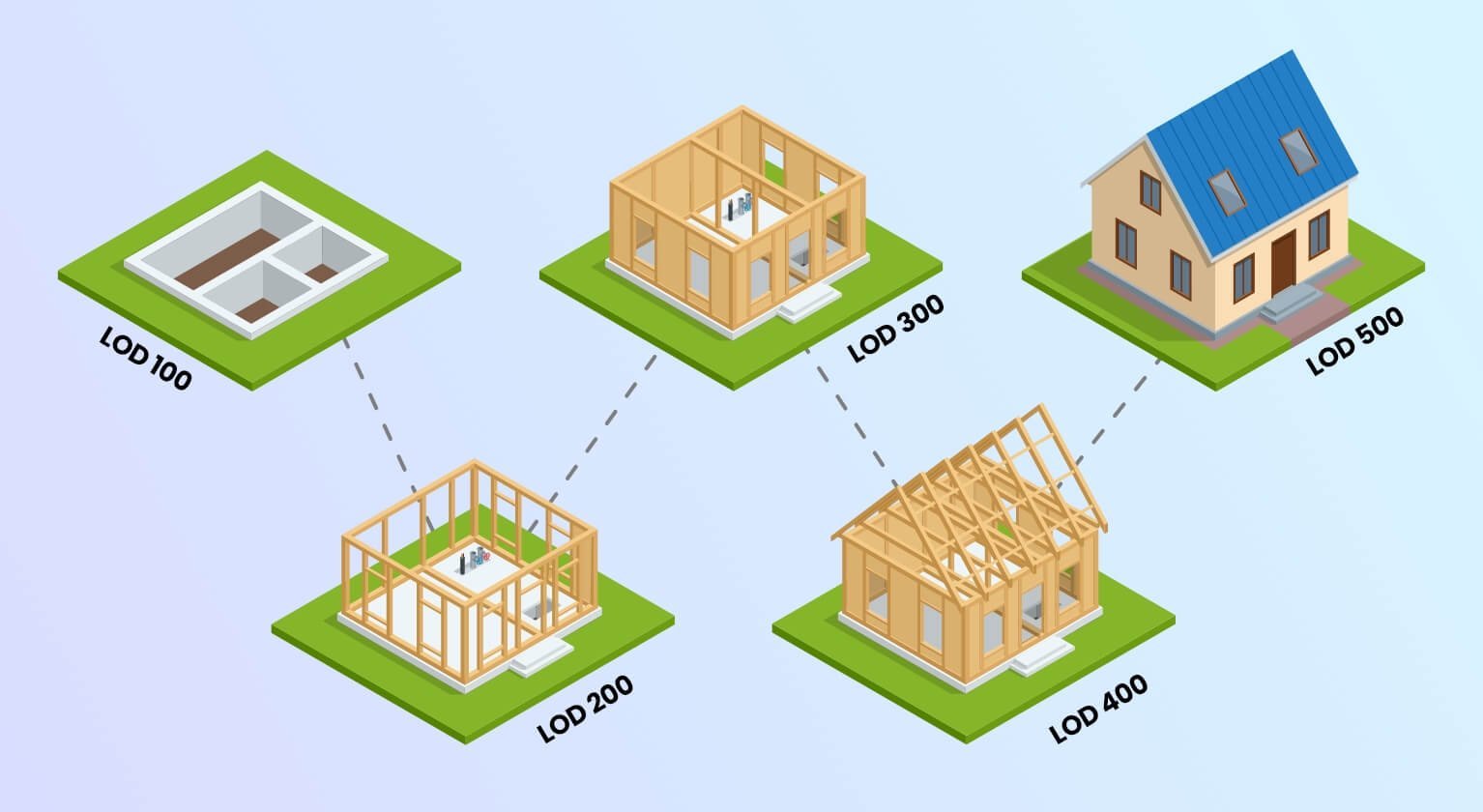
  • Quantity Takeoff and Cost Estimation: Resource and material allocation is a significant aspect of accurate structural detailing. The level of detailing to 400 BIM model enables professionals to stay updated for accurate quantity takeoffs and cost estimation, which drives better project budgeting, less material wastage, and crucial time in resource management planning.
  • Life Cycle Management: BIM work doesn’t end here once the construction is completed. Since 3D BIM models are enriched with precise data on the structure and its elements, they offer accurate facility management, allowing professionals to have updated structural information for future renovations or repairs. In fact, with the CAD work approach, experts lacked accurate documentation for future reference.

These are some of the benefits of CAD to BIM transformation, which fosters improved communication, collaboration, accuracy, and efficiency in steel detailing services. As discussed, structural BIM services are the backbone of any infrastructure. Implementing precise steel detailing is essential for success. Therefore, specialized software and technologies are required to produce accurate results. Let’s explore some of the most efficient technologies that support structural steel detailing services.

Reliable Softwares for Steel Detailing

In the field of architecture and construction, technologies and software have enabled professionals to work accurately and meticulously, offering precise results. Furthermore, AEC is enriched with a plethora of softwares for different services. However it requires specialized skills and software proficiency for seamless digital workflow. Hence it is vital to hire BIM consulting companies who are proficient in offering BIM steel detailing services.

Team of professionals understand the intricacy of the project and ensure to offer the most high quality and accurate outcomes. As a matter of fact, outsourcing BIM companies have access to the latest technology, tools and software that becomes an added benefit. Therefore, here’s a most precise and updated list of softwares that are available for BIM steel detailing.

Softwares for BIM Steel Detailing

Tekla structures
SDS/2
ProSteel
Advance Steel
AutoCAD structural detailing
  • Tekla structures: It is one of the most well known software for automated steel detailing solutions. Due to its powerful 3D modeling and efficiency in managing complex structural design, professionals in AEC widely use it. Moreover it is also compatible with other softwares, ensuring the accuracy and efficiency in structural components such as beams and columns fit perfectly in the design.
  • AutoCAD structural detailing: Another significant software is AutoCAD structural detailing which is specially designed for steel detailing. The softwares features easy use, generated data rich detailed drawings and offers a high level of precision for structural engineers and contractors.
  • SDS/2: SDS/2 software brings comprehensive features and tools to ensure the precision in steel detailing that also includes fabrication and 3D modeling. It is another technology that is widely adopted by structural engineers and detailers for quality, accuracy and efficiency.
  • ProSteel: This software brings a holistic approach and ensures to streamline the entire project with flexibility and scalability. Additionally it manages large complex structural designs efficiently and offers innovative results for fabrication.
  • Advance Steel: Advance steel provides tools for intricate steel detailing and fabrication. However this particular software demands for familiarity with the features and tools to bring out the best results. It also offers compatibility with other softwares enriched with information.

These are some of the key softwares offering BIM for steel structures enabling AEC experts to bring precise results. Moreover utilizing these above mentioned requires significant skills and knowledge while having expertise in the detailing process. It is advisable to outsource steel detailing services by renowned BIM consulting companies, offering tailored and accurate solutions.

In the ever growing landscape of AEC, outsourcing is a common and profitable investment. UniquesCADD is a well known outsourcing BIM company in India offering extensive BIM and CAD services. Our experts provide advanced solutions for structural steel services with implementation of the latest cutting edge technologies and softwares.

Ending Note

Success of any construction project depends on how solid the structural framework is. This includes efficiency in steel detailing, ensuring each structural component fits perfectly. Hence CAD to BIM services plays a pivotal role in offering most precise outcomes for simple and complex structures.

Benefits of Hire BIM Consultants for Large-Scale Projects

Over the past few years, the architecture and construction sector has rapidly increased due to the rising demand for commercial and residential living. As modern construction has taken a turn with highly recognized technology called BIM, it has been a source of making the project successful and long-time efficient. Moreover, the construction process continues progressing and evolving due to experts upgrading to newer and better approaches with significant technologies. BIM has been an innovative approach since its inception and has already made its crucial place on the AEC horizon. Although with rapid technological development, the approach upgrades with improvement in implementation and practices. In the digital economy, more and more AEC companies, project managers, BIM facility managers, and architects are adapting to the growing architecture and construction market.

Building information modeling has been a paramount concept for today’s architects and engineers due to its benefits and ease of use in complex processes. As a matter of fact, governments in many countries have implemented a mandated policy for BIM usage in large-scale projects that may include the development of airports, bridges, public properties, railway stations, metro station projects, factories, and more. From the designing phase to the management of the facility, BIM is utilized in various stages for different projects. Since every project requirement varies from one project to another, it is crucial to learn about the concept of BIM or consider BIM consultancy services for optimum use and outcomes. In the era where BIM usage is growing rapidly among professionals, there’s still a significant lack of knowledge, skills, training, and development. To bridge the gap and attain the full potential of BIM services, opting for BIM consultancy is one of the effective solutions that can help AEC firms get the right expertise of BIM and its related services while ensuring the project’s success. As a matter of fact, BIM implementation by consultants brings higher project quality, efficiency, and the right adoption of technology that enhances the longevity of the infrastructure.

It is necessary to ensure the large-scale project’s efficiency and strength for a more extended period as large infrastructures are costlier, more complex, and typically for high-end urban planning. Due to the vastness of the project, efficiency, accuracy, safety, and reliability of the structure is crucial. Hence, BIM experts address the lengthy process of project modeling, support communication, bring reliable solutions for clashes, and more. As a matter of fact, BIM has created a high demand for BIM consulting services so that professionals in the industry know how groundbreaking technology functions in the modern and contemporary realm. For a better understanding and clear vision, let’s quickly get an overview of BIM for the construction industry, especially for large-scale projects.

Enhance Construction Project with Our BIM Consulting Services

bim services

BIM Technology and Its Input in Large-Scale Projects

The landscape of architecture and construction has a new face card with 3D BIM modeling services, making it simple for architects, engineers, and designers to upscale the infrastructure quality. Building information modeling digitally represents the entire structure, entailing physical and functional characteristics in the 3D view. The 3D model also consists of rich project data, allowing AEC professionals to stay informed, curate accurate construction documentation, help in facility management, and more. As a quickly emerging technology, it brings comprehensive solutions that allow professionals to resolve complex clashes and enhance the model’s accuracy. Further, the 3D model is referred to as on-site groundwork, which not only brings accurate construction but also ensures the completion of the project within the designated time frame.

From the built environment in the 3D model to offering tools and organizational framework, data management of the project and sharing becomes simple. Due to several benefits and work collaboration in a single system, architects, engineers, designers, and collaborators can easily access the structured BIM model, making it easier for large-scale project development. This makes the technology an exceptionally useful resource for increasing project reliability and efficiency. As a matter of fact, 3D BIM services are much more beneficial for large-scale projects such as railway stations, airports, factories, metro stations, bridges, malls, and more. BIM technology’s ability to provide intelligent 3D models with valuable data helps to streamline coordination and communication, minimize cost, reduce waste material, and more.

Since infrastructure project efficiency with BIM is enhanced, it has the capability to manage and deliver accurate outcomes for large-scale projects. As a matter of fact, large-scale projects have unique challenges and requirements; BIM is the most holistic approach to managing complex requirements. While ensuring the functionality and accuracy of the project as BIM services address different challenges and empower professionals to make informed decisions without compromising workers’ safety measures. Following are some reasons why BIM for highways and bridges and other large-scale projects;

Key Reasons to Implement BIM for Highways, Bridges, and Large-Scale Projects

Real-time access
Improved design and visualization
Identify potential issues
Quick communication
Conduct simulations
Massive data management
Enhanced collaboration in a central repository

The list of benefits can go long, as BIM is the most crucial technology in today’s architectural world. Moreover, BIM project management, construction documentation, quick clash detention, and more are the added beneficial factors of using 3D modeling services in large-scale infrastructure projects. As discussed, massive projects have a complex nature, take time to develop, require efficiency, and more; BIM is the only solution. Although to attain all the advantages and have hands on the most accurate 3D BIM model, it is evident that architects or AEC firms should hire BIM specialists. Explore BIM constants, roles, benefits, and key implementation reasons.

Brief About BIM Consultants in AEC Realm

The AEC landscape understands the power of BIM; however, the right implementation is evident to avail benefits and accurate outcomes. From simple projects to complex architecture projects, BIM offers holistic solutions to AEC professionals for the success of the project. Since efficiency, safety measures, and accuracy are constant in any construction project, BIM modeling elevates the project with better collaboration and communication. Therefore, the role of BIM consultants in mega projects is not only evident but a comprehensive approach that makes complex structures successful. BIM consultants are experts well-versed in imperative technology and offer advice, solutions, and guidance on using 3D BIM services in the construction, designing, and maintenance phases.

BIM experts understand the complexity, stay updated with growing advancements, are well-versed with other related services, and know how to optimize the process for utmost efficiency in the given timeframe. Outsourcing BIM consultants stick with the project, from planning and design to post-construction phases, while offering support in facility management. Consulting services ensure that the AEC firm will benefit from the talent pool and enhance its large-scale construction management with accurate BIM usage. This significantly offers unique, reliable, and precise results that fit right into project requirements and satisfy clients. As BIM consulting services enhance the architecture workflow, the experts aim to use sophisticated methods and practices that are error-free. In the constantly growing construction market, a modern look integrated with functional features and a sleek design makes for the best architecture. The use of BIM services and lack of knowledge and skills are gaps that hinder accurate outcomes. Therefore, consultants have become indispensable for well-planned and precisely executed projects in the AEC market. Their knowledge, experience, and skills enable them to make complex and large infrastructure projects easier with streamlined workflow, efficient resource allocation, precision in results, building lifecycle management, and detailed construction documentation. As a matter of fact, outsourcing consultancy from a BIM service provider plays a critical role and brings various benefits such as;

  • Unique design perspective for a modern look
  • Structured and organized BIM data
  • Overall project accuracy
  • Right BIM strategies implementation
  • Quick resolutions for clashes and errors

BIM specialists implement practical methodologies, ease the complexities, and provide holistic solutions to overcome challenges. However, experts’ roles go beyond that as it’s multifaceted involving with several roles and responsibilities the following are;

  • BIM strategy development
  • Adhering to project guidelines and standard codes
  • Building performance analysis
  • Technology implementation
  • Project support
  • Quality assurance
  • Problem-solving
  • Training and guidance

Overcoming challenges and easing the project complexities are among the main goals. Additionally, BIM consulting services stay updated with trends and tools to deliver the best outcomes. The AEC industry has taken a new version, 4.0, which enables professionals to bring exceptional architectural buildings. Technologies like AI, drones, AR/VR, 3D printing, and more are becoming a new standard of quality and efficiency. Hence, AEC firms with a lack of BIM knowledge and skills look to reliable BIM consulting service providers for effective results. Discover key reasons to hire BIM specialists for large-scale construction projects.

Why Hire BIM Consultants for Large Scale Projects?

Outsourcing BIM consulting services is rising due to increasing demand for BIM and lack of knowledge among AEC firms. BIM consulting has become a pivotal role player in the industry to bridge the gap and bring accurate solutions for complex and large infrastructure projects. As discussed above, partnering with BIM experts brings various benefits due to crucial roles and responsibilities. However, their expertise goes beyond just guiding the BIM implementation and workflow; there are plenty of reasons to hire BIM consultants from reliable outsourcing companies.

  • Project visualization and coordination: One of the major reasons to hire a BIM adviser is the enhanced project visualization and coordination in the entire process. The 3D BIM model fosters visualization, which improves the vision for clients and helps understand how the project looks before the groundwork begins. BIM consultant supports collaboration among the other team members, which results in better communication and high-quality BIM implementation in large-scale projects. Better visualization, accuracy and coordination also amplify the ease of the BIM implementation process while creating a seamless workflow.
  • Improved efficiency and accuracy: Efficiency and accuracy have always been paramount to success in architecture and construction projects. AEC firms understand this and desire to partner with the right BIM experts who can enhance BIM efficiency, bring precision to the 3D model and design process, carefully plan the strategies, and accurately present the project data of each phase for detailed construction documentation.
  • Cost savings: Another crucial reason is the cost savings with BIM consulting. AEC professionals or organizations constantly look to cut costs of some of the expenses while focusing on prospects of enhancing desirable outcomes. Outsourcing with the best BIM companies that provide consultancy services is the most economical solution, especially for AEC firms dealing with large-scale projects. Due to cost savings with BIM consulting companies, experts aim to precisely manage the resources, which is crucial in cost reduction and minimizes the waste material.
  • Eliminating risk: BIM consultancy services are important for multiple reasons, including risk mitigation. A minor error in the 3D design can become costly and risky for workers and delay the project. Hence, BIM consultants ensure that all clashes in the digital model are resolved and minimize the risk for the necessary degree of safety and quality in large-scale projects.

Towards the End

Partnering with the right BIM consulting services provider will benefit project quality, efficient processes, and accurate planning. BIM consultants for large-scale infrastructure projects are not only evident but have become necessary for all AEC firms looking for novel solutions.

Future Structural BIM Services Trends to Watch

The transformational phase of the AEC industry seems to stop nowhere. The growth and continuous advancement in technology are among the primary reasons for the AEC’s dynamic face. In the modern era, architecture, engineering, and construction staying ahead of the market curve has become pivotal to delivering the best outcomes. In earlier days compared to traditional methods, AEC has evolved with time and innovation, enabling architects, engineers, and contractors to enhance their architecture practices and bring accurate results. Even today, precision, quality, and efficiency are the pillars of any project success, using the latest technology, tools, and approaches.

As a matter of fact, the construction and architecture process entails multiple stages which significantly demands accuracy and efficiency while solving the complex challenges within the project. It is one of the most hectic and time-consuming processes that demands precise skills, knowledge, and technology. Comparing traditional practices to modern architecture, the complex process has been simplified with advancements in technology and innovation. Today, the AEC industry is ruling on BIM technology, which has not changed the face of the sector but has commenced with other services that alter how architects, designers, and engineers work, execute, and design the process. Any construction project is segmented into different phases and stages, allowing professionals to keep track of and complete the construction as per the process. Since building information modeling is one of the groundbreaking innovations in the landscape of AEC, it is also integrated into the structural stage of any construction process. BIM innovation in structural engineering phase has resulted in seamless and timely completion of projects while ensuring the accuracy of internal structure.

In the advancing modern horizon, BIM has become synonymous with architecture today. Given the benefits, ease, streamlined communication, and better visualization, it alters the traditional practices of construction. As BIM is strategically implemented in different stages of construction, one of the most crucial aspects is structural engineering, which defines the bearing load and strength of the infrastructure. From modern structures to long bridges, the science behind this architecture is the accurate and efficient structural engineering that defines the bearing load. Integrated with building information modeling technology, the structural stage has become more manageable, advanced, and accurate. Structural BIM services in architecture and construction projects ensure the infrastructure’s safety, sustainability, and resilience to environmental factors. Being an indispensable tool in the realm, structural BIM brings multiple benefits. A solid structure framework is evident to ensure safe living and reliance on any environmental factor, such as natural calamity. However, the continuous advancement and innovation in technology have led to an increase in the efficiency of structural BIM. To stay ahead of the curve and bring more advanced results it is evident to look out for structural BIM trends 2025. The following is the future of structural BIM, which will change the face of the realm.

Partner with UniquesCADD Experts to Bring Efficient Outcomes

bim services

Being an indispensable tool in the architecture and construction industry, BIM has opened many doors to opportunities and created a curve of creativity for architects, engineers, and other professionals. Revolutionizing the way infrastructure is designed, BIM is a mandated technology that is implied at every stage of construction due to several factors. With significant transformation in the AEC sector, the future of BIM in construction and other services will not only deliver exceptional results but will offer a new approach to executing the construction project.

In the structural engineering realm advancement enables professionals to deliver better. BIM integration is critical, affecting the entire approach and bringing accurate results. As a matter of fact, it is astonishing how BIM is shaping the future of structural engineering and enhancing the process. However, the growth in technology and innovation alters the process and brings new trends that help bring more advanced and efficient results. Since adopting trends in different areas of the AEC realm changes how professionals design and execute the project, it is evident that the trends should be amended. As point cloud to BIM technology trends changed the approach, trends in structural BIM will alter the process for more accurate results. Let’s look into some of the emerging structural BIM trends 2025.

Emerging Structural BIM Trends Shaping 2025

Integration of Generative Design
IoT and Sensor Integration
AR and VR Integration
Sustainable and Green Building
Advanced Simulation and Analysis
Collaborative and Cloud-Based Platforms
Modular Construction
AI Automation
Blockchain Project Management & Documentation
  • Integration of Generative Design: One of the biggest trends in 2025 in structural BIM is using generative design processes, algorithms, and AI to explore other design options based on the project requirements and guidelines. For structural BIM processes, generative design helps create a more optimized design, which reduces material wastage and increases the strength of the infrastructure. Moreover, the 3D BIM services platform will enable designers and engineers to explore innovative structural solutions, especially for complex projects.
  • Advanced Simulation and Analysis: The future of structural BIM is advanced, accurate, and efficient, integrating advanced simulation and analysis approaches. Real-time updates and accurate structural analysis reports in a BIM collaborative environment will not only help examine performance under different environments but will also bring more accurate reports to understand structural conditions. It is necessary to get real-time updates and analysis reports to make informed decisions, safer structural design, reduce the scope of errors, and enhance safety for on-site construction work.
  • IoT and Sensor Integration: Another significant trend in 2025 of BIM innovation in structural engineering is IoT and sensor use. It is implied to revolutionize how infrastructures are managed and constructed. The integration of sensors and IoT offers real-time data on structural behavior, patterns, and current environmental conditions, which is collected and integrated into the BIM environment for building maintenance, enhanced performance, safety measures, and much more. Implementing IoT solutions and sensors in structural BIM will allow AEC professionals to build an accurate and safe structural framework for the infrastructure, considering the current environmental conditions.
  • Collaborative and Cloud-Based Platforms: Cloud-based platforms or environment and collaborative approaches aren’t new but have become highly vital in the AEC landscape. Since effective collaboration and communication are key to the project’s success, it is evident that the collaborative nature should be enhanced, especially in the structural phase of the project. Future trends in the structural BIM stage also involve cloud-based BIM solutions to enable seamless and effective collaboration, communication, information sharing, and more in real-time. As a matter of fact, enhanced collaboration and seamless information sharing allow stakeholders to work on the same model with recent updates, reducing errors and enhancing project efficiency.
  • AR and VR Integration: Another significant trend for the future of BIM in construction. AR and VR technologies are buzzing concepts in the technology field. Integration of augmented reality and virtual reality in AEC realms alters how clients and stakeholders interact with 3D BIM models and visualize the entire structure with the reflection of the real environment. AR and VR technologies help take visualization to the next level and manipulate clients’ decision-making. The experience of a real-life object environment in a 3D model also helps to streamline the design process with seamless communication among other AEC professionals.
  • Modular Construction: In today’s advanced architecture horizon, modern construction is an evident approach. With the application of ML (machine learning) algorithms, structural designs become optimized based on historical data and bring acute performance results. Modular construction allows AEC professionals to analyze massive datasets through ML, identifying patterns and bringing alternative design solutions. Moreover, criteria such as project budget, structural integrity, and framework are also efficiently analyzed to enhance the design process and streamline the BIM workflow for efficient results.
  • Sustainable and Green Building: Considering the current environmental and climatic issues, the AEC landscape is constantly looking for ways to enhance the sustainability and green building design process. It has rapidly become common for architects and engineers to integrate sustainability in BIM for infrastructure development and promote green building designs. The future of BIM in structural engineering incorporates tools that bring energy analysis solutions, life cycle assessment, and environmental evaluation impact. This ensures the fostering of design structures with minimal resource usage and carbon footprint to meet green building and sustainability standards.
  • AI Automation: The role of AI and automation in structural BIM is increasing due to the demand for enhanced accuracy and quick project completion. AI in structural BIM plays a key role in automating tasks such as clash detection, quantity takeoff, construction stage scheduling, etc. In fact, integrating AI automation allows structural engineers to streamline the 3D BIM workflow while enhancing the structural framework’s resilience and strength. This allows engineers to perform advanced design tasks with informed decision-making approaches.
  • Blockchain Project Management & Documentation: One prominent and growing technology in the architecture and construction industry is blockchain technology. It helps to bring transparent and novel ways to manage projects from simple to complex, along with precisely curated construction documentation. Blockchain methods are utilized to ensure data security, accountability of information, integrity, easy sharing and traceability through the project lifecycle. Moreover, blockchain implementation in structural BIM workflow helps to foster stakeholders’ trust, enhance accuracy, efficiency, and automate the documentation process as per project completion.

These are some of the structural BIM trends in 2025 that have bright and more impactful results. These trends will reshape the structural BIM process and transform how engineers design and construct infrastructure, from producing generative designs to using blockchain technology for construction documentation. Adopting the innovation mentioned above will enhance project outcomes and streamline the project scope with today’s sustainability requirement and scope of improvement in the collaborative process. Moreover, these trends in structural BIM will result in more enhanced outcomes while ensuring upscale accuracy and efficiency in projects. As these trends continue to evolve in the market with innovation, it is evident in the process by BIM experts for desired goals. BIM outsourcing services provider is a viable option for properly applying these trends. Let’s understand briefly why outsourcing BIM service providers can be a reliable solution.

Outsourcing BIM Innovations in Structural Engineering

The AEC landscape is transforming quickly with rapid innovations, new approaches and groundbreaking technology. This constantly helps in advancing the industry that aims to foster any construction project with improved accuracy, efficiency, safety, and reliability. Traditional construction practices do not support modern architecture or complex projects as they demand high-end software use, technical expertise, and a new approach to completing the project. Hence, outsourcing services have become a more comprehensive option. UniquesCADD is a reliable BIM company with extensive years of experience.

A team of professionals offers extensive and reliable BIM consulting services by experts for construction projects. As a matter of fact, our experts bring accurate structural BIM solutions with the integration of the latest trends and technology to bring the best outcomes. Outsourcing such services allows architecture and construction firms to focus on other aspects and enhance productivity. With a plethora of benefits, outsourcing structural BIM services is a novel way to enhance the construction project for the following reasons;

  • Reduce the scope of errors
  • BIM expertise
  • Latest technology
  • Tailored solutions
  • Timely project delivery
  • Streamlined construction process
  • Optimized design

In a Nutshell

Structural BIM services are one of the significant processes in any construction project. Adopting the latest trends and innovations enhances and achieves the desired outcomes as per the market demands with accuracy and reliability in construction.

Impact of 3D Interior Visualization on the Real Estate Industry

Have you ever thought of buying a house or shop? It might be yes. What if there is an attractive and novel way to showcase the property in real time that emits life-like visuals? It would be an amazing experience to look and feel the home with a beautiful interior before it is built. Well, since we live and breathe in the technological world, the evolution of technology is continuous and alters how we perform. Today’s real estate market is dynamic, endlessly transforming with new features, innovation, and comfort. With that kept in mind, the real estate sector has widely accepted technology to offer the best to their clients. It is a fact that in the landscape of real estate and property development, appealing visuals and effective communication are paramount in the industry. Besides, it is challenging to convince buyers of a property that is yet to be constructed.

One of the most comprehensive and game-changing solutions prevails in the real estate industry that enhances the visual appeal and experience for both buyer and seller. 3D interior visualization emerged as an innovative technology that revolutionized the entire real estate market. 3D visuals are attractive and gain more attention, making the property listing more appealing, especially when 97% of home seekers use the internet to find homes. According to some statistics, properties with high-quality and attractive visuals tend to sell 6x faster than listings that don’t have them. Hence, this is where interior visualization fits in the real estate market.

Since buying a home is a big decision, a lot of thought is needed before the final call happens. However, to satisfy the client’s needs, interior visualization services emerge as a game changer for sellers to convince sellers how the ideal home will look and feel. As a matter of fact, the real estate industry has become quite competitive for several reasons, and few players in the market understand the sheer importance of visuals and how the property is showcased.

Experience Your Home with 3D Interior Visualization

bim services

Imagine buying a home in a society, but you cannot look at it in reality as it’s built. However, with 3D interior visualization, you can see how the society and the home will look like with realistic features, elements, components, and walkthroughs. This technology eases the decision-making process and brings clients innovative marketing and life-like visuals so they can visualize their ideal home. As a matter of fact, not just this, but it also helps to enhance the marketing strategies and increases the sale of property. Let’s understand what interior visualization is and how it is a game changer in the real estate market.

3D Interior Visualization in Real Estate Sector: A Game Changer

The thought of buying a home isn’t as easy as buying clothes, but it is a crucial investment for a lifetime. Hence, it becomes necessary to be double-sure before putting a handsome amount of money into the property. Also, it is a daunting and head-scratching decision to make when clients cannot actually visit the property. Therefore, the technological era brings some innovative ways for home buyers to visualize the entire project in 3D, which brings an immersive experience. 3D interior visualization services come into focus and ease buying and selling homes. This innovative process enhances property listing and strengthens the real estate marketing game.

The term interior visualization is a combination of two words. The first is “interior,” which refers to a space’s ambiance, which consists of components such as curtains, furniture, lights, windows, carpets, and more. The second is “visualization,” which refers to visuals or a digital representation of the interior and exterior space, typically in 2D or 3D form. In the dynamic and ever-growing real estate landscape, attractively showcasing the property is all about attracting potential clients and increasing sales with effective marketing techniques. Not only this, interior home renovation becomes easy with 3D visualizations and rendering. As a groundbreaking technology, it effectively transforms an ordinary-looking space into a life-like environment with advanced tools, softwares and skills. In other words, it bridges the gap between the imagination and reality, making the real estate sector more powerful and advanced.

It will be impressive to walk through your home before it is built, experiencing dynamic and interactive visuals that create a life-like environment of natural light, furniture, and more. Consider going through a case study of the project UniquesCADD (interior visualization company), which catered to Renovation and interior design of a residential house.

Advantages of Interior Visualization in the Real Estate Industry

The ever-growing real estate sector is always looking for novel ways to survive fierce competition. As technology is continuous, interior visualization services are one of the groundbreaking technologies for the real estate sector. The industry advances with innovation to deliver the best to its clients and remain at the top of the game.

Buying or selling a property becomes innovative, attractive, and easy with the help of 3D visualization that brings immersive, life-like digital representation. This process fosters a deep connection which is difficult to generate with traditional photographs or videos. Apart from that, 3D visualization services offer a variety of benefits, such as;

3D interior visualization services offer a variety of benefits

Realistic rendering
Captivating potential
Scope of creativity
Better decision making
Enhanced marketing tool
Boosting buyer engagement
Increase sales
Cost-effective
Life-like visuals
Enhancing property presentation

There are more benefits of interior visualization, and can go endlessly. Although this isn’t going to stop here, advancement in rendering and other technologies will make it more efficient. The future of interior visualization services looks promising as the rapidly growing concepts of AR (augmented reality) and VR (Virtual reality) enhance the outcomes and provide a more holistic understanding of landscape and property. As a matter of fact, it also helps real estate sellers to list their properties at different portals and attract potential clients easily, making a handsome amount of ROI.

Ending Note

Interior visualization holds a significant position in the real estate market. It enhances property representation and attracts clients. This process has revolutionized the approach and brought enhanced outcomes for the real estate market. Although the process is complex and demands sheer expertise, skills, and technology to render the space. Therefore, outsourcing by a renowned interior visualization company is better. The outsourcing team can bring fruitful results and ensure each component depicts authentic life-like visuals. UniquesCADD, a prominent BIM company in India, offers effective 3D visualization by experts and cutting-edge technology.

Mechanical Drafting Services Role in the Mechanical Industry

Technology and innovation have become a significant part of the world. In the global economy, industries continuously seek accuracy and precision as they have become cornerstones of success. Efficiency, precision, attention to detail, and accuracy are paramount to every project’s success in the landscape of architecture and engineering. As we live and breathe in the era of technology, everything is outperformed with machines and equipment that enhance the process and offer accurate results. In the landscape of mechanical engineering, design precision is one way to achieve the goals. Considering that technological advancements and the rise of complex designs have surged, mechanical drafting is important for engineers and other professionals.

Mechanical drafting services play a crucial role in the mechanical industry as they offer enhanced and innovative design ideas for development. Technological advancements and emerging innovations are eliminating the traditional approach in the AEC sector. Moreover, it is a crucial process that bridges the gap between concept and reality. The bridge helps to make accurate prototypes for professionals. Mechanical drafting allows engineers to design an idea that is functional, efficient, and fits the requirements. However, the meticulous process demands the right skill set, encompassing a wide range of applications that may include manufacturing, architecture, civil engineering, product design, and more.

With a wide range of applications, mechanical drafting in the mechanical industry is crucial as it is responsible for creating detailed technical drawings, plans, and schematics that are the base of any mechanical project. Designing a piece of new machinery, developing HVAC systems, or projecting the layout of a facility, mechanical drafting service holds great significance. As a matter of fact, this meticulous process brings the idea into a reality that serves the needs of architecture or the mechanical processes.

Precision in Technical Drawings with Mechanical Drafting Services

bim services

In simple terms, machines and other equipment have been in the industry to ensure smooth functioning. Although every small to significant component of the machinery tools must be impeccably designed and drafted, professionals from the mechanical or architecture industry implement mechanical drafting services representing the machine’s assembling and its core functions. Let’s explore in detail about mechanical drafting importance, benefits, and how it helps professionals ease the meticulous process.

Defining Mechanical Drafting Services

In the engineering landscape, accuracy is a must to ensure no errors or clashes occur. Traditionally, hand-sketched blueprints and drawings lacked precision, consumed a lot of time, were prone to errors and rework, and more. As technological advancements prevailed, computer-aided design (CAD) came into existence, significantly easing the complex and time-consuming process of mechanical drawings. Defined in simple terms, mechanical drafting is creating detailed drawings that represent how the machinery or the product will look and function. These detailed drawings act as a blueprint for manufacturing mechanical components.

In fact, mechanical drafting in the mechanical industry offers standardized visual language that helps engineers, manufacturers, and architects understand the design specification and utilize it in the project with proper functionality. The meticulous process of mechanical drafting for industry utilizes CAD software that helps to curate accurate and detailed 2D and 3D models of mechanical components. With CAD software revolutionizing the landscape of mechanical drawings, it has offered experts more efficient and accurate means of modifying, analyzing, and creating mechanical component designs.

Understanding the Importance of Mechanical Drafting

As the definition above suggests, meticulous and detailed technical drawings are mechanical drafting services. The role of technical drawings in the engineering, mechanical, and architecture industries is crucial as these detailed drawings help bring ideas into reality and offer an understanding of every mechanical component with its functionality. Apart from that, mechanical drafting for industry provides a variety of benefits, such as;

Benefits of Mechanical Drafting Service

Precision in design
Streamlined design process
Better visualization
Cost reduction
Compliance with standards
Prototype and testing
  • Precision in design: Accuracy and precision are among the primary advantages of an efficient mechanical drafting service. Drafters and experts can use CAD software to create detailed designs with proper measurements and dimensions to ensure every mechanical component fits seamlessly into the design.
  • Cost reduction: The detailed mechanical drawing process helps professionals to identify design errors before production begins and rework on the design for accuracy. This enhanced process helps to save time and money on rework and potential project delays.
  • Streamlined design process: Mechanical drafting allows engineers and drafters to refine the design more creatively as these drawings are crafted in CAD software. Modifying, updating, and sharing among other professionals makes collaboration seamless without any lack of communication.
  • Compliance with standards: Every mechanical component design entails relevant codes, standards, and safety requirements. Mechanical drawings help drafters avoid potential legal and operational issues by strictly adhering to the standards and codes.
  • Better visualization: A 2D or 3D model of the mechanical components allows stakeholders and other professionals to visualize the product before it can be used. This extensive process also helps reduce the rework and identify any functional issues.
  • Prototype and testing: Mechanical drafting creates a prototype of the machinery or the product that is further used for testing and validation before it can be used functionally.

Outsource Mechanical Drafting Services with UniquesCADD

As discussed, mechanical drafting and design are part of the architecture and construction industry that helps with HVAC systems. This process is often implemented for MEP systems, preferably as MEP drafting services. Furthermore, mechanical CAD drawings enable AEC professionals or MEP drafters to create detailed technical sketches of MEP disciplines separately, with intricate information for each. This technical and meticulous process demands specialized skills, knowledge, extensive technology use, CAD proficiency, and many other factors to achieve the desired results.

Therefore, it is necessary to get the process done by professionals or an expert team to efficiently manage the complex profession of mechanical drafting services. Outsource the engineering drawing services by UniquesCADD, a renowned outsourcing mechanical drafting provider. As a top outsourcing firm, UniquesCADD offers a broad spectrum of 2D and 3D mechanical drawings for design engineers or fabricators by a team of professionals using advanced hi-tech tools for accurate and efficient results. The following are the extensive services;

  • Mechanical fabrication
  • Mechanical drafting
  • Mechanical part drawing
  • Assembly drawing

Final Thoughts

In the advanced realm of the mechanical sector, mechanical drafting services are an exceptional process which is crucial for mechanical professionals or drafters. It enables drafters and engineers to have detailed technical drawings, which further help improve productivity, design process, and accuracy in mechanical projects while minimizing errors.