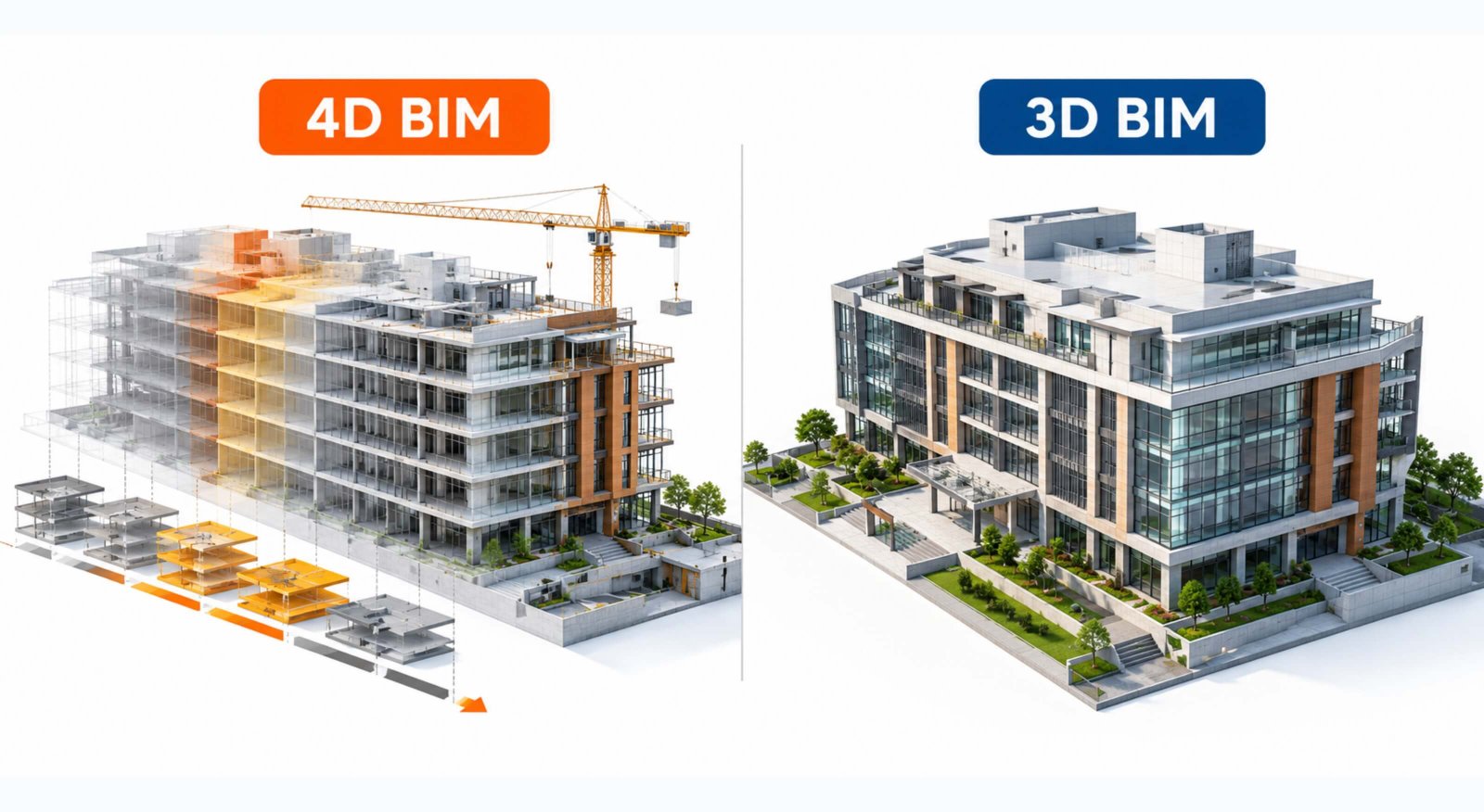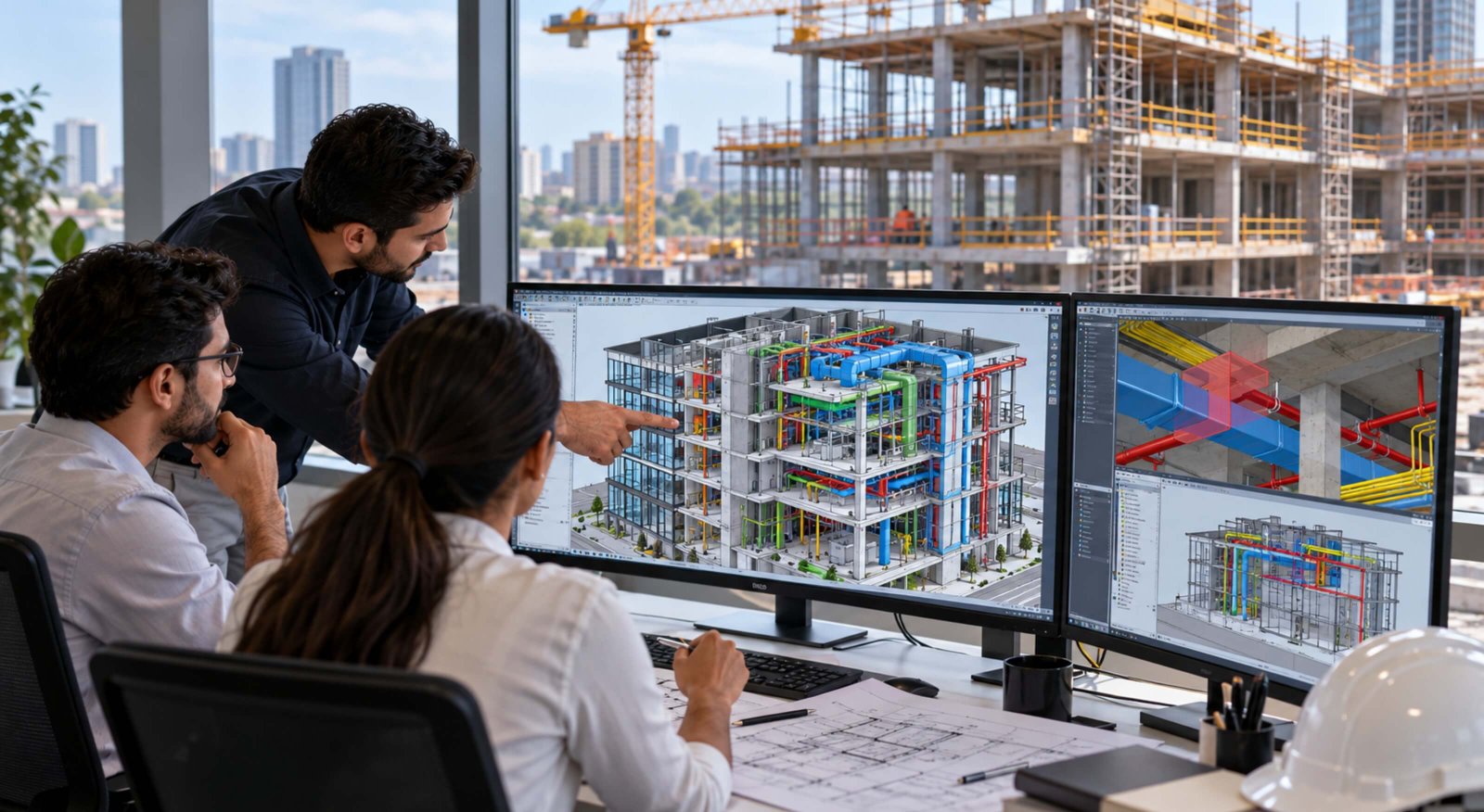
Building information modeling is a key part of the AEC industry in the modern realm. Known with its capabilities and uncountable benefits, architects, engineers, contractors and other professionals improve accuracy and collaboration for seamless construction workflow. However when speaking of BIM technology, coordination among all the systems is equally important that makes it functional, safe and seamlessly fit together. Here BIM coordination plays a critical role although BIM and coordination services work closely together but serve different purposes.
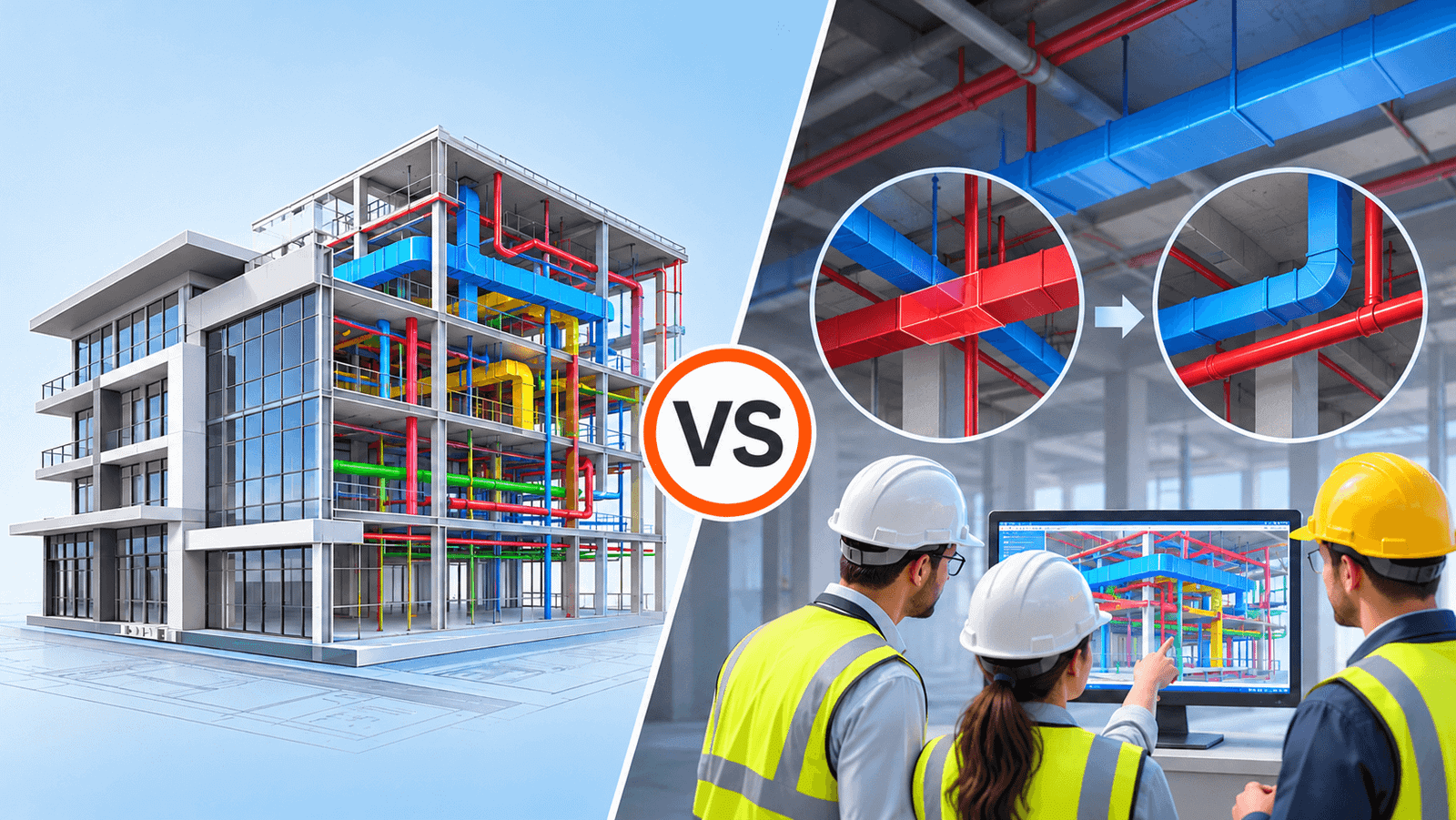
3D BIM modeling is a concept that focuses on creating data rich intelligent 3D model representation building functional characteristics. On the other hand, BIM coordination services ensure the functional characteristics are aligned in the same space without any conflicts. Understanding the key difference between these two services helps AEC first to select the right service, manage project risk and enhance construction efficiency.
Understanding BIM Modeling Services
The construction industry in the modern landscape, building information modeling have become a pivotal part for every AEC professionals. BIM modeling is a process of 3D digital representation of building design with information rich in information. This includes, geometry, materials, dimensions, specification and other building properties. All this information supports construction documentation, quantity takeoff, facility management which is commonly used for architectural, structural, and MEP systems.
Understanding BIM Coordination
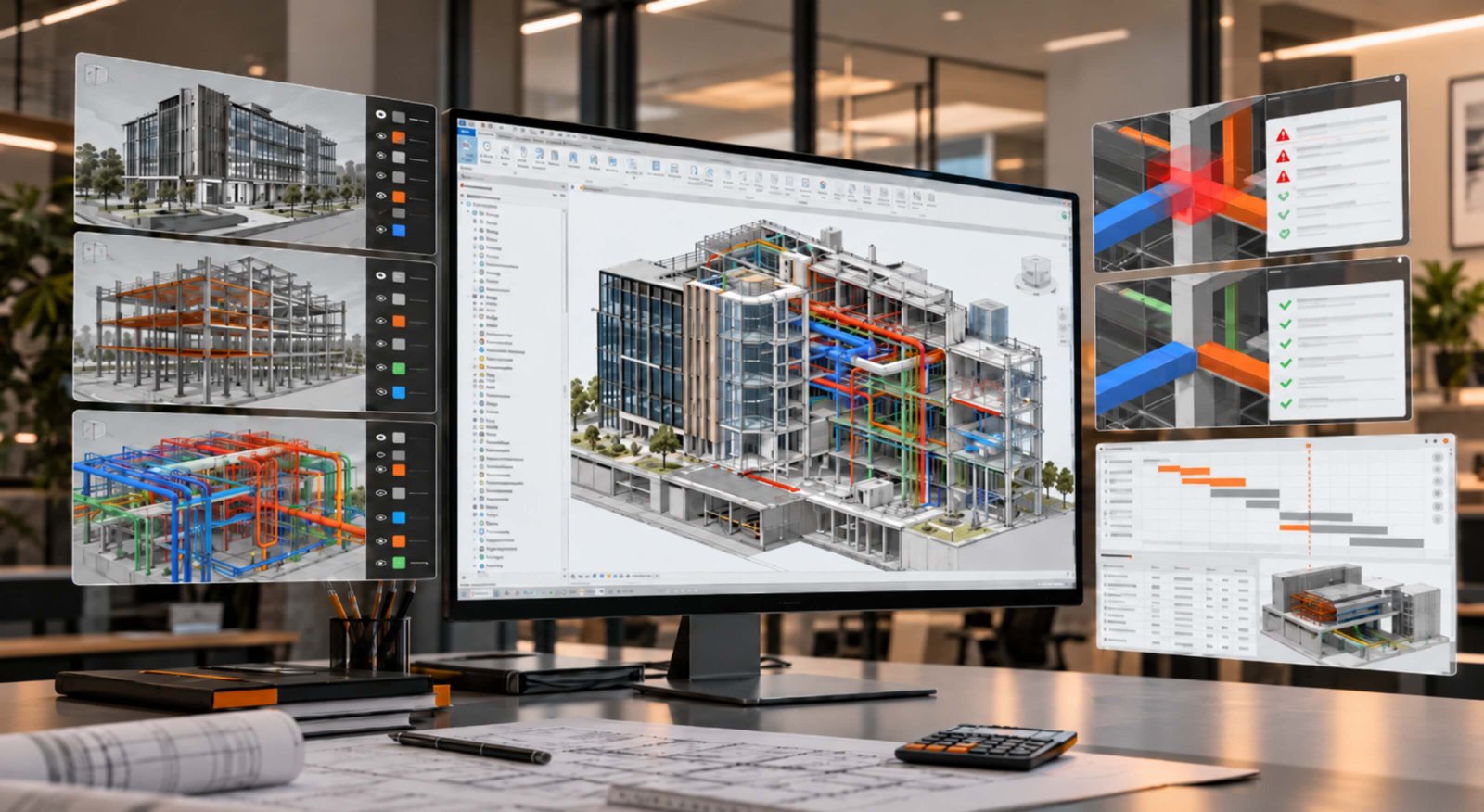
While 3D BIM modeling brings data rich intelligent information about the building, coordination ensures error free installation of all systems. BIM coordination is the process of reviewing and aligning architectural, structural and MEP models to identify design conflicts, resolve inconsistencies and improve collaboration among different disciplines in the project. Moreover, BIM coordination services are not only about aligning different systems but ensuring all these systems all accurately function. The primary objective is to ensure that different building systems can be installed and maintained within the designated space while following the project scope. Typically, coordination includes, clash detection, model integration, conflict resolutions, updates and verification.
BIM Modeling vs. BIM Coordination
Factors
BIM Modeling Services
BIM Coordination Services
Objective
Digital 3D data rich intelligent model
Aligning building components and resolves conflicts
Scope
3D modeling, information development, LOD specific, technical detailing
Clash detection, reviews, clash reports, conflict resolutions
Main Input
Design drawings, point cloud data, project specifications, building requirements
Discipline specific BIM model and other coordination requirements
Tools Used
Autodesk Revit, ArchiCad, tekla and other software
Autodesk Naviswork, Revizto, Autodesk Forma
Key Deliverables
3D Model, schedules and model based drawings
Clash reports, coordinated models and location
End Users
Architects, engineers, BIM modelers and contractors
BIM coordinators, engineers, contractors and design teams
Do You Need BIM Modeling, BIM Coordination, or Both?
The right choice depends on your project’s current stage, model quality, and coordination requirements. Choose BIM modeling alone when you primarily need accurate digital models, CAD-to-BIM conversion, model development, or construction documentation and coordination is not currently required.
Choose BIM coordination when suitable discipline-specific models already exist and your priority is identifying clashes, resolving design conflicts, and aligning building systems. Pick both services when you need models developed from design information and subsequently reviewed for cross-disciplinary compatibility. A typical process begins with BIM modeling, followed by model integration, clash detection, coordination reviews, model revisions, and verification. The exact workflow varies according to project scope and contractual responsibilities. It is also important to remember that BIM coordination does not automatically resolve every design issue. Engineers and designers must review proposed solutions and approve changes within their respective responsibilities.
How to Choose the Right BIM Service Provider
Before selecting a BIM partner, evaluate whether the provider can meet your technical and project-specific requirements. Following are some of the key factors to pick right BIM service provider.
- Relevant experience: Look for experience in your building type and required disciplines.
- Software capabilities: Confirm compatibility with your project’s BIM authoring and coordination platforms.
- LOD and deliverables: Define model detail, information requirements, drawing outputs, and file formats.
- Coordination workflow: Understand how clashes are prioritized, assigned, tracked, and verified.
- Communication: Ensure the team can collaborate effectively with architects, engineers, and contractors.
- Quality assurance: Ask about model checks, naming conventions, standards, and review procedures.
A clearly defined scope helps prevent gaps between modeling and coordination responsibilities and keeps project expectations aligned.
Conclusion
BIM modeling and BIM coordination are complementary services, but they solve different project challenges. BIM modeling develops the digital representation of building systems, while BIM coordination evaluates harmony and identifies conflicts between disciplines. At UniquesCADD, BIM modeling and coordination support by experts helps project teams develop reliable digital models, identify potential clashes, and improve coordination across project.
FAQ

Is BIM modeling the same as BIM coordination?
No. BIM modeling involves creating information-rich digital building models, whereas BIM coordination involves reviewing models from different disciplines to identify and resolve conflicts.
Can BIM coordination be performed without BIM modeling?
Yes, provided suitable discipline-specific BIM models already exist. If the required models are missing or incomplete, additional modeling may be necessary before effective coordination can begin.
Which software is used for BIM modeling and coordination?
Autodesk Revit is widely used for BIM authoring, while Autodesk Navisworks is commonly used for model aggregation and clash detection. Other tools may be used depending on project requirements and the teams involved.
How does BIM coordination help reduce construction rework?
BIM coordination identifies potential conflicts before installation, allowing teams to review routing, dimensions, and spatial requirements earlier. This can reduce avoidable rework, although actual savings depend on project conditions and implementation.
Is BIM coordination necessary for small construction projects?
Not always. Simple projects with limited system complexity may require less formal coordination. However, even smaller projects can benefit from coordination when structural elements and MEP services occupy constrained spaces.