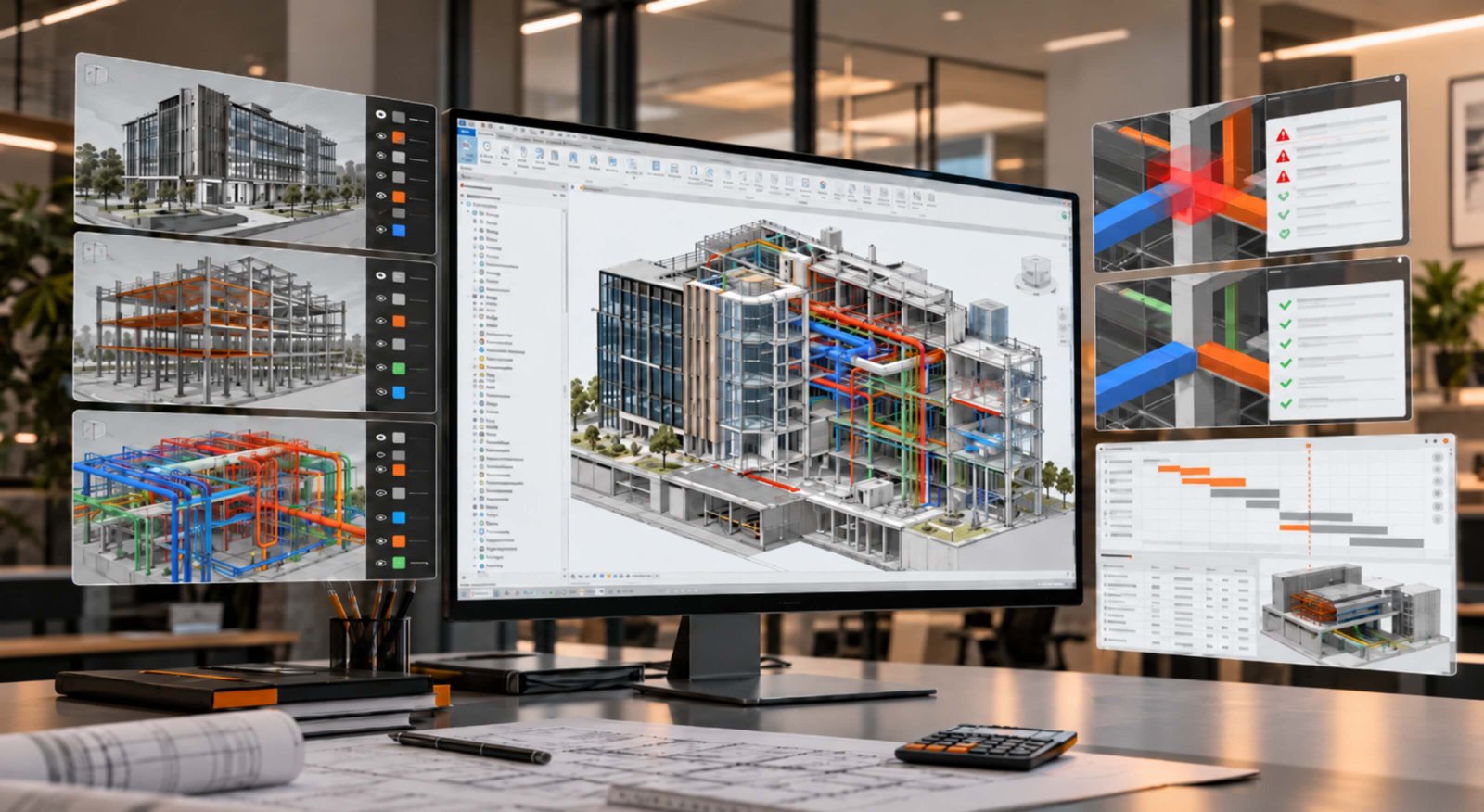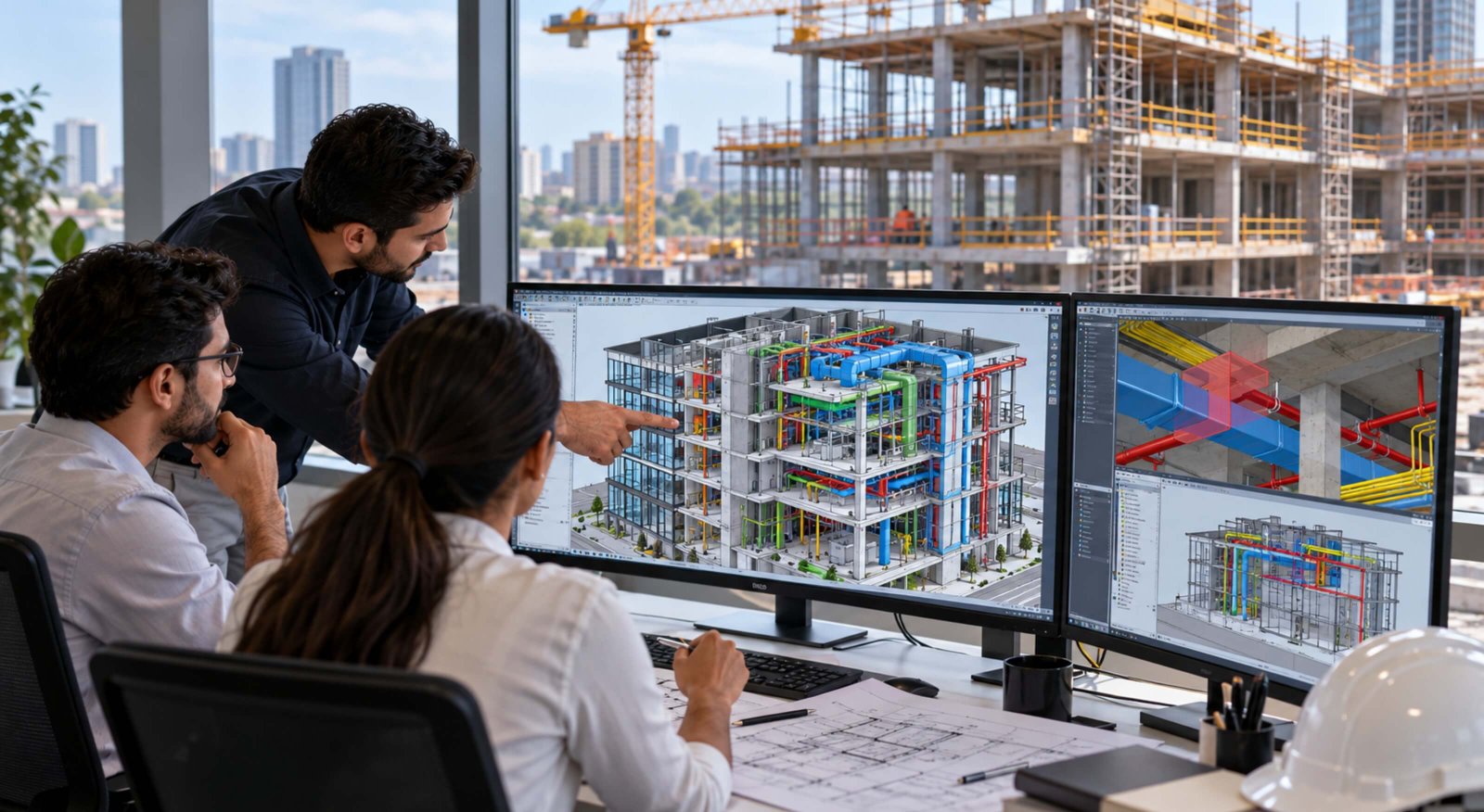
Modern landscape of architecture and construction industry, coordination, efficiency and accuracy are key components for success. Every AEC professional involved in the project carefully manages the complex workflow from planning to finally delivery of the project. The implementation of 3D BIM modeling has altered the outlook of how architectural, structural, MEPF and other components information is created, assessed and planned for the construction project till final delivery. Construction projects involve multiple disciplines, complex building systems, strict deadlines, and budget constraints. Managing these requirements without proper coordination can lead to design conflicts, construction errors, material waste, and project delays.
Building information modeling helps address these challenges by combining building geometry with valuable project information. However, implementing BIM technology effectively requires technical expertise, structured workflows, and collaboration between project stakeholders. Hiring a BIM consultant helps construction companies manage these requirements and improve project coordination. Moreover, BIM consulting experts ensure the project is executed according to planned workflow and standards.
The accuracy in the 3D model supports decision making, precision in timelines and timely project completion. BIM consultation allows AEC professionals to connect workflows, standards and team into a single system supporting consistency and coordination in the process.
What is BIM Consulting?
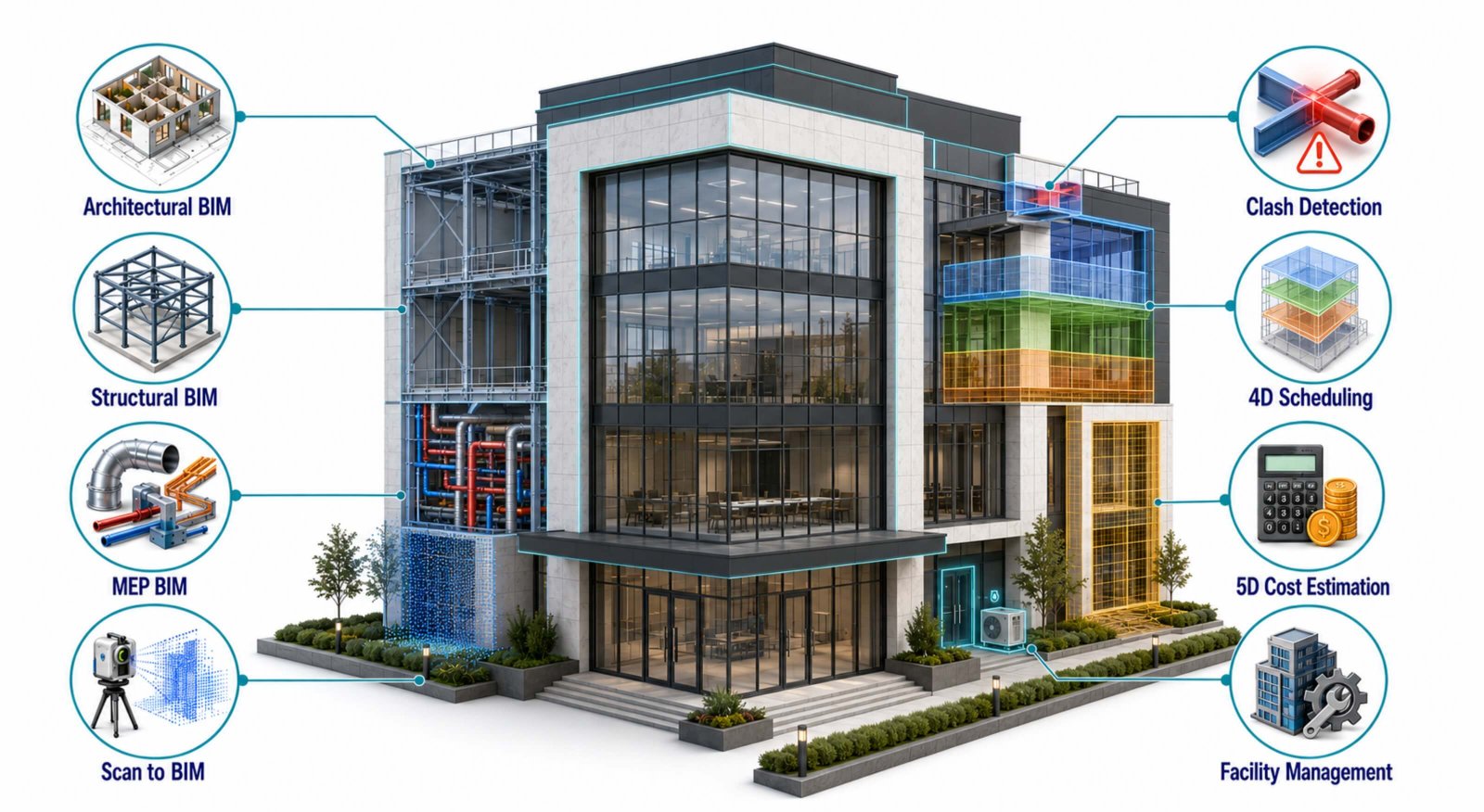
BIM consulting is a process of guiding and assisting AEC professionals for planning, construction management, precision in building information management, drawing objectives and more. Consultants are professionals whose aim is to define BIM standards, process and maintain coordination for information consistency to make informed decisions. A BIM consultant helps AEC experts to implement BIM modeling according to the project requirements along with reviewing the model and supporting information management. Moreover, a BIM consulting service provider also performs the following task;
- BIM modeling: Developing and monitoring architectural BIM, structural BIM and MEP BIM model via popular BIM softwares such as Autodesk.
- Clash detection: Identify potential clashes between different systems while implementing BIM coordination to maintain accuracy.
- BIM implementation: Establishing workflow modeling requirements, naming convention and BIM execution plan.
- Quantity takeoffs: Extract model based quantities to identify material estimation and managing cost of overall project.
- Construction documentation: Support the preparation of coordinated drawings, schedules and other project deliverables.
- Quality control: BIM consultants review the model for accuracy, consistency, efficiency, functional systems, standards and requirement completeness according to the project.
These are the common responsibilities that fall under a BIM consultant however exact responsibilities vary depending on project type, strategic guidance, technicality, coordination services implemented in the project.
Importance of Hire a BIM Consultant
Building information modeling maximizes the construction project success however the right implementation and technical guidance is equally important. BIM consultants bridge the gap between technology and technicality difficulty when applying BIM services. From coordination roles among various teams to managing the project workflow, BIM consulting has become a key aspect to achieve the desired project outcomes.
- Improve Coordination Across Multiple Disciplines: Architects, structural engineers, MEP consultants, and contractors must work together to deliver a coordinated building design. BIM consultants help integrate discipline-specific models and identify inconsistencies between building components. This process improves communication and gives project teams a clearer understanding of how different systems interact before installation begins.
- Identify Design Clashes Before Construction: Conflicts between HVAC ducts, plumbing lines, electrical systems, and structural elements can lead to expensive on-site modifications. BIM consultants use tools such as Autodesk Revit and Navisworks to support clash detection and coordination reviews. Identifying potential conflicts early allows teams to resolve issues before they affect installation activities, helping reduce avoidable rework and disruption.
- Support Cost Estimation and Resource Planning: Building information modling provide useful information about quantities, materials, and building components. Consultants can support quantity takeoffs and help construction teams evaluate design alternatives during cost planning. The accuracy of these outputs depends on model detail, information quality, measurement rules, and the agreed scope. When properly managed, model-based information can support more informed budgeting and resource allocation.
- Improve Project Planning and Scheduling: Construction activities must follow a logical sequence to avoid trade conflicts and unnecessary delays. BIM consultants can support construction planning by coordinating model information and helping teams visualize project requirements. When 3D BIM models are linked to schedules through 4D BIM, project managers can review construction sequences and identify potential scheduling conflicts before work begins.
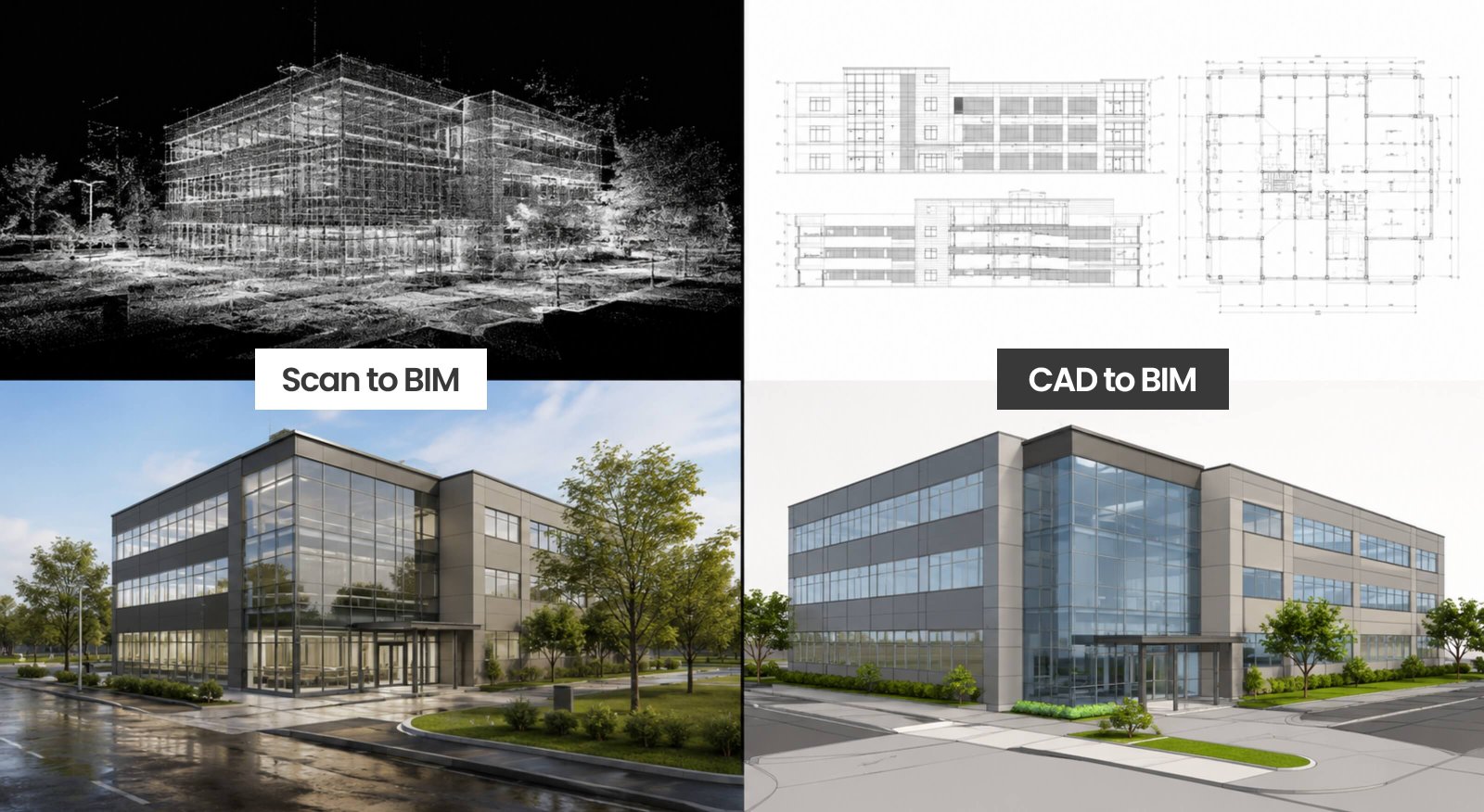
- Access Specialized Expertise and Flexible Resources: Maintaining an in-house BIM team requires skilled professionals, software, training, and ongoing quality management. For companies with changing workloads, these commitments may not always be practical. Hiring an external BIM consultant provides access to specialized services such as MEP BIM coordination, Scan to BIM, structural modeling, clash detection, and construction documentation when needed.
- Maintain Consistent Standards and Deliverables: Large projects often involve multiple consultants and subcontractors who follow different modeling practices. BIM consulting services help to establish common procedures, LOD requirements, quality checks, and information exchange protocols.
How to Hire BIM Consulting Experts?
While BIM consultants have in-depth understanding of BIM processes, technical approach and technologies, their expertise allow AEC professionals with useful insights and key solutions. Partnering with the best BIM consulting companies enables AEC firms to execute the construction project with precision and efficiency. Construction projects consist of various stages where BIM technology is the key solution. The collaborative approach of BIM consultants brings seamless project execution with accuracy and consistency.
Define Your Project Requirements
Identify the services you need, such as BIM modeling, clash detection, MEP coordination, Scan to BIM, or BIM implementation. Specify project milestones, software requirements, deliverables, and expected timelines.
Review Relevant Experience
Look for consultants who have worked on projects with similar building types, complexity, and technical requirements. Reviewing previous project examples can help you assess their modeling quality and coordination experience.
Evaluate Software and Technical Capabilities
Confirm the consultant’s proficiency with the software and file formats required for your project. Depending on the scope, this may include Autodesk Revit, Navisworks, point-cloud processing tools, or other coordination platforms.
Check Quality Assurance Procedures
Ask how models are reviewed, clashes are reported, revisions are managed, and deliverables are checked before submission. Clear quality control procedures help establish accountability and consistent expectations.
Compare Pricing and Scope
Request a detailed proposal that defines responsibilities, deliverables, revision allowances, project timelines, and exclusions. Comparing proposals on the same scope makes it easier to evaluate overall value rather than choosing solely on the lowest price.
Establish Communication and Reporting Processes
Confirm how the consultant will coordinate with your architects, engineers, contractors, and project managers. Agree on meeting schedules, issue-tracking methods, file-sharing procedures, and reporting responsibilities before work begins.
Ending Note
Hiring BIM consultants enables construction companies to improve multiple building systems, identify clashes, maintain coordination, streamlined cost planning and manage project information accurately. BIM consulting is crucial for complex developments, renovation where AEC firms require additional BIM modeling capabilities.
FAQ

What is the main role of a BIM consulting expert?
A BIM consultant helps project teams implement BIM workflows, coordinate building models, establish standards, review design information, and manage project deliverables according to the agreed scope.
When should a firm hire a BIM consultant?
Hiring a BIM consultant during design development or preconstruction can help identify coordination issues early. Consultants can also support renovation projects, construction documentation, and periods when additional technical resources are required.
How can a BIM consultation help reduce construction costs?
BIM consultants can support clash detection, quantity takeoffs, and design coordination. These activities may reduce avoidable rework and material waste, although actual savings depend on project complexity and implementation quality.
What is the difference between a BIM consultant and a BIM modeler?
A BIM modeler primarily creates and updates digital building models. A BIM consultant may also advise on BIM implementation, coordination workflows, modeling standards, quality management, and information exchange. The responsibilities can overlap.
Can a BIM consultant work with an existing construction team?
Yes. BIM consultants can collaborate with in-house architects, engineers, contractors, and BIM coordinators to provide additional modeling capacity, technical expertise, coordination support, or help meet project deadlines.
Is hiring an external BIM consultant better than building an in-house team?
The choice depends on workload, project complexity, budget, and the need for ongoing BIM expertise. External consultants can provide flexible, project-based support, while an in-house team may be more suitable for companies with continuous BIM requirements.