April, 2026 - Uniquescadd

Importance of MEP Drafting for Commercial and High-Rise Buildings

Any construction project demands precision and efficiency, as they are key pillars of project success. In the AEC landscape, there are various construction projects that differ from one another. Commercial, residential, industrial, and other types of projects have different sets of guidelines that are evident to follow. Since every project demands MEP precision, it is the heart of the construction process.

Constructing only a structure isn’t the end goal, but making the infrastructure functional is very important. It is impossible to live in a building that isn’t functional in terms of insufficient water flow, electricity, ventilation, and more. All this makes the building a functional and livable environment for occupants. Nonetheless, MEP components must be installed without any clashes, conflicts, and maintain harmony to avoid any mishappenings in the property.​

To ensure components are seamlessly integrated into designs, MEP BIM services are a comprehensive approach that enables professionals to minimize the scope of errors through enhanced visualization. Due to complexity, MEP components are technically curated for engineers to understand. Here, the MEP drafting services are a game-changer for architects, engineers, and other professionals. The complex nature of MEP demands precision and efficiency, which are key to project success.​

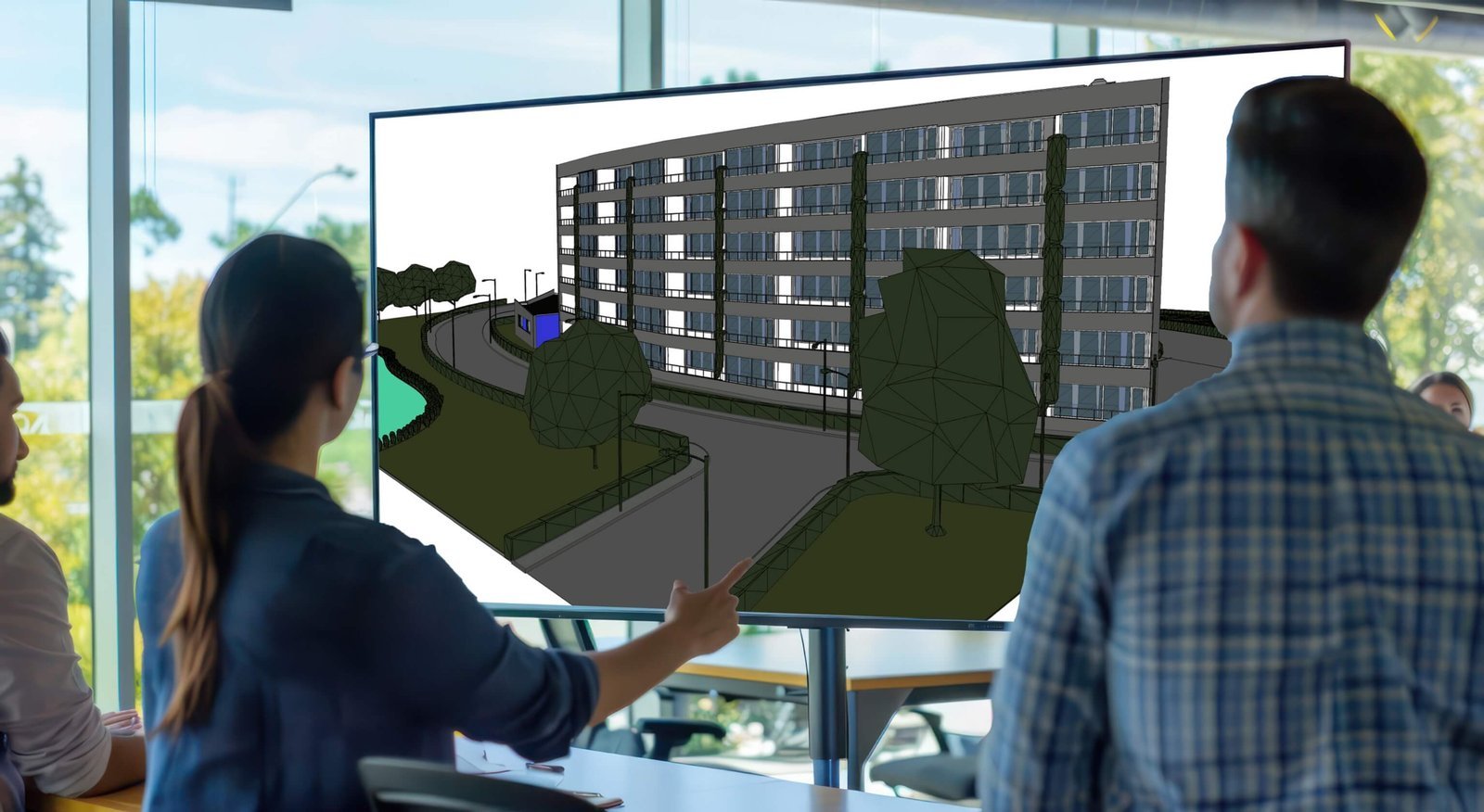
In the modern AEC realm, commercial properties have varying designs and guidelines, although MEP disciplines must adhere to commercial infrastructure design standards. Commercial MEP drafting is a holistic approach that helps to minimize errors and ensure a smoother construction process according to design. Moreover, commercial building designs in the modern era are complex and consist of curved architecture contributing to minimalism, aesthetics, and modern-looking infrastructure. As a matter of fact, high-rise building MEP design and commercial building design ensure the infrastructure safety, longevity, efficiency, and more.

In the modern construction landscape, a building is more than just walls and a roof; it is a complex, living organism. MEP BIM drafting acts as the central nervous system of this organism, providing the technical blueprints that ensure a structure is breathable, powered, and functional.

Let’s explore in detail how MEP drafting has evolved from simple 2D line drawings into high-fidelity, data-rich 3D models that predict a building’s performance before on-ground work begins.

Efficiently Manage High Rise Building with MEP Drafting

bim services

What are MEP Drafting Services?

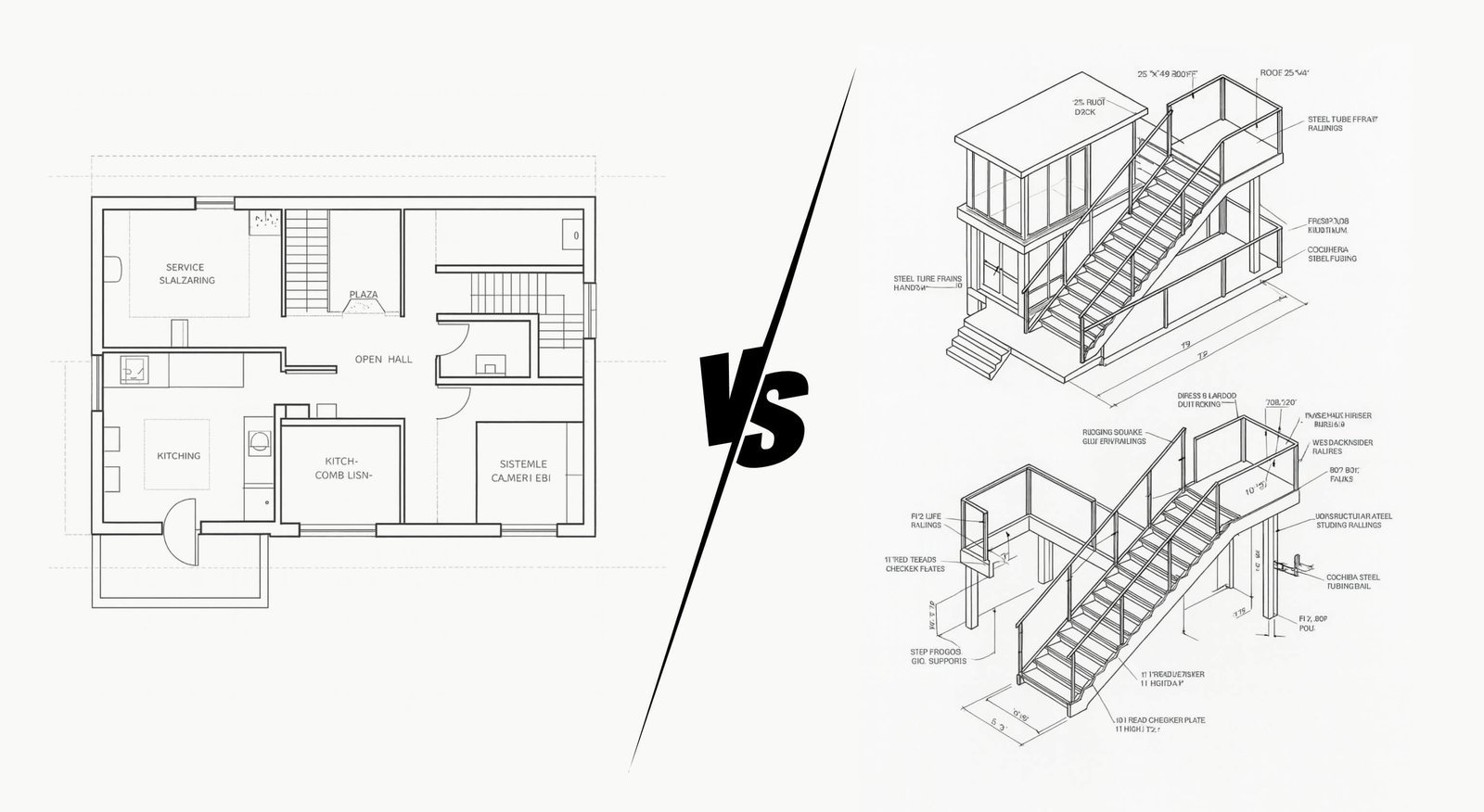
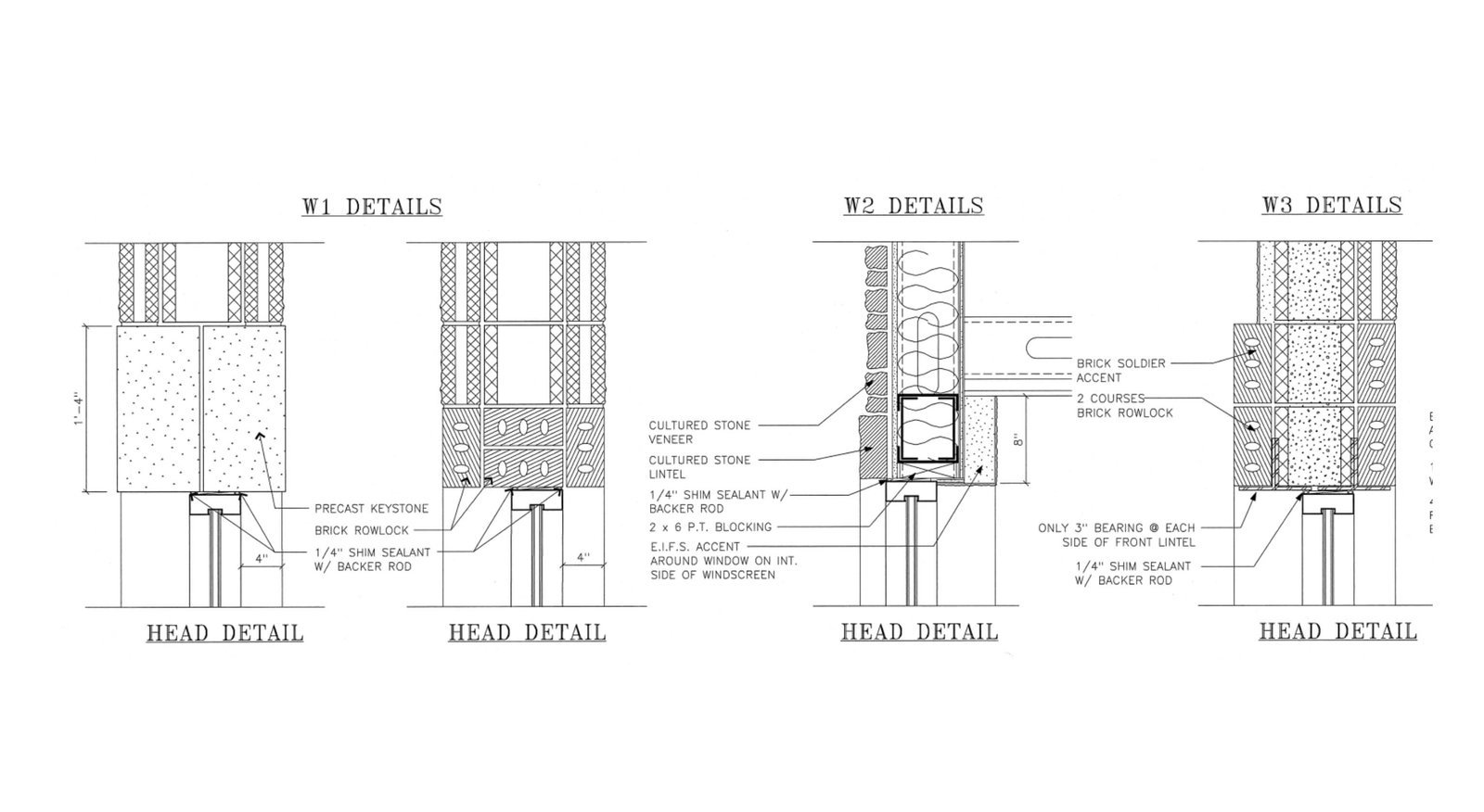
In the vast and evolving fields of architecture and construction, drawings are a major part. Traditionally speaking, constructing a commercial use infrastructure took a significant amount of time in competing. Due to manual methods of measurement and labour, the traditional approach was costly as well as prone to errors. With significant transformation, it was replaced by BIM services that enable AEC professionals to enhance communication, coordination, visualization, and approaches to constructing infrastructure. Today, BIM has become an irreplaceable technology that has evolved with time. However, it doesn’t mean drawings or technical sketches have vanished. MEP shop drawings for separate disciplines are key factors in the installation of MEP components in modern architecture.

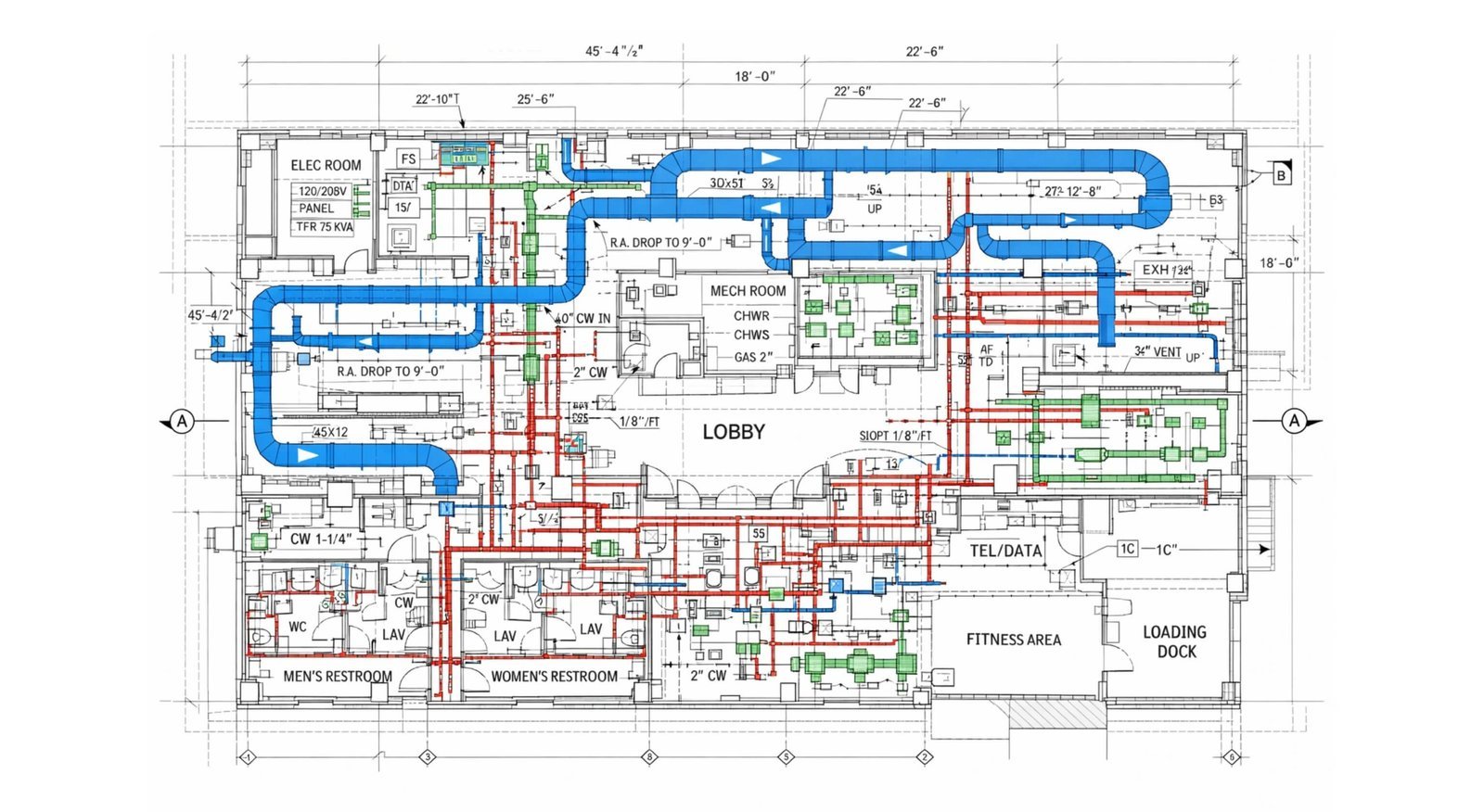
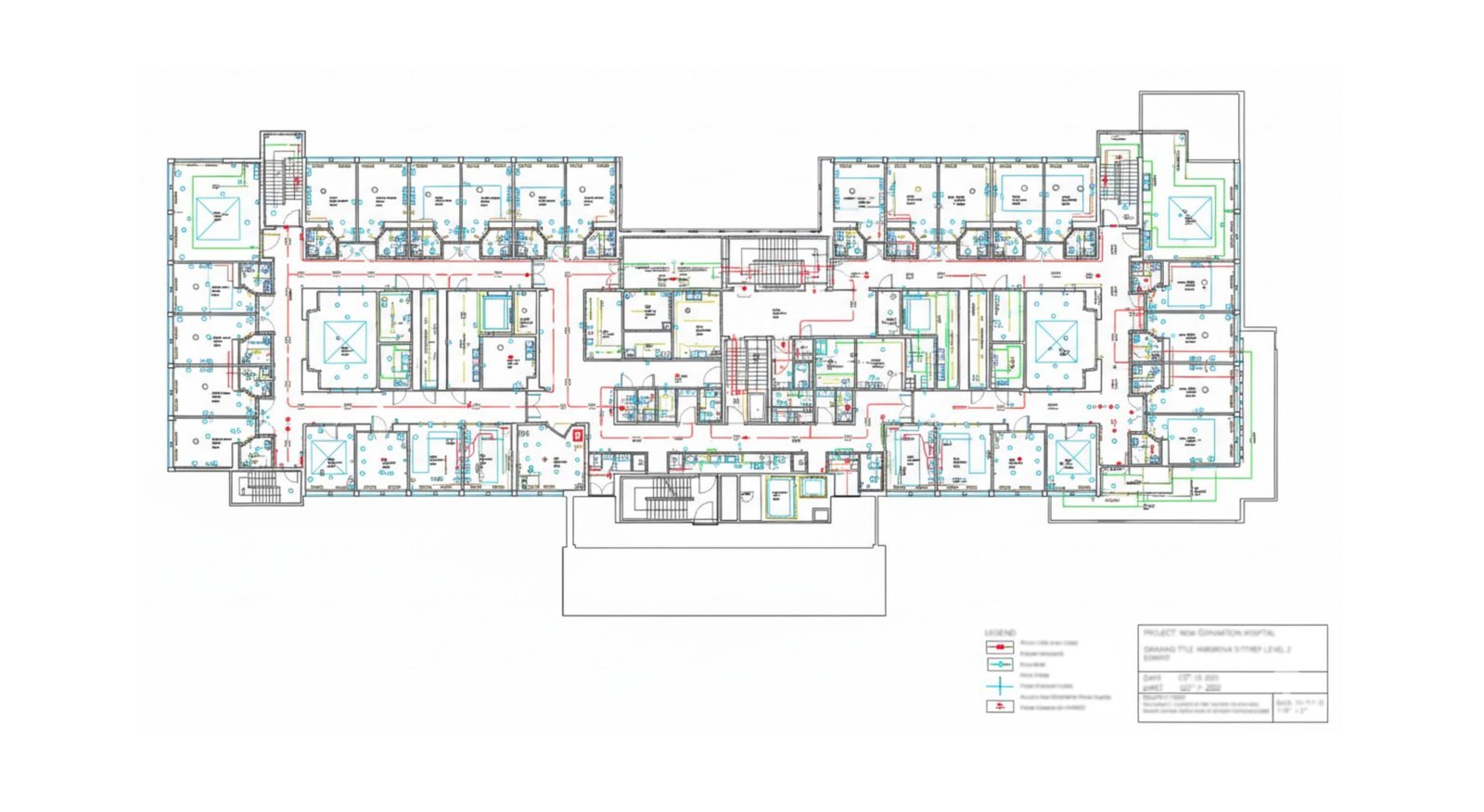
MEP BIM drafting services (Mechanical, Electrical, Plumbing)create detailed technical drawings and 3D models for a building’s essential life-support systems, ensuring HVAC, power, lighting, water, and waste systems are precisely designed, coordinated, and installed for safety, efficiency, and compliance with codes, using software like CAD/BIM to integrate everything seamlessly with architectural plans. These plans guide contractors, prevent costly errors, and ensure occupant comfort and building functionality. MEP drafting services involve creating detailed technical drawings and models for the three core pillars of building infrastructure:​

  • Mechanical (HVAC): Design and layout of Heating, Ventilation, and Air Conditioning systems, including ductwork, chillers, and exhaust systems.
  • Electrical: Power distribution, lighting layouts, emergency power systems, and telecommunications wiring.
  • Plumbing: Water supply, drainage, sewage, gas piping, and advanced fire protection systems (sprinklers).

These three components, along with fire safety, play a crucial role players in successful building design. The significant use of BIM and MEP drafting, construction drawings enables the conversion of engineering outlooks for functional building design. Let’s understand the basic shift and the further importance of commercial MEP drafting.

The Shift to BIM; Building Information Modeling

Traditional CAD (Computer-Aided Design) is being rapidly replaced by BIM (Building Information Modeling). While CAD provides the “geometry,” BIM provides the “intelligence.”​

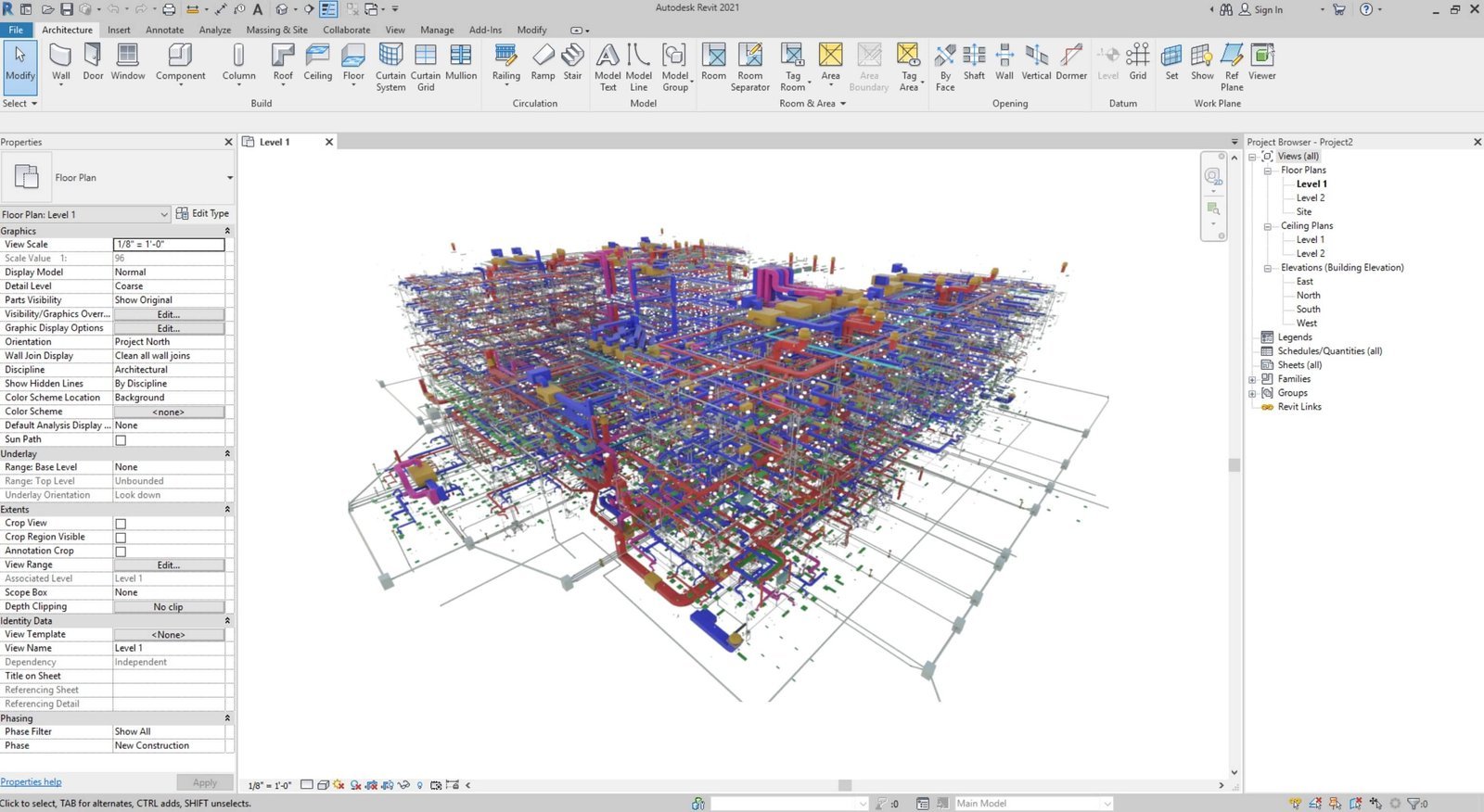
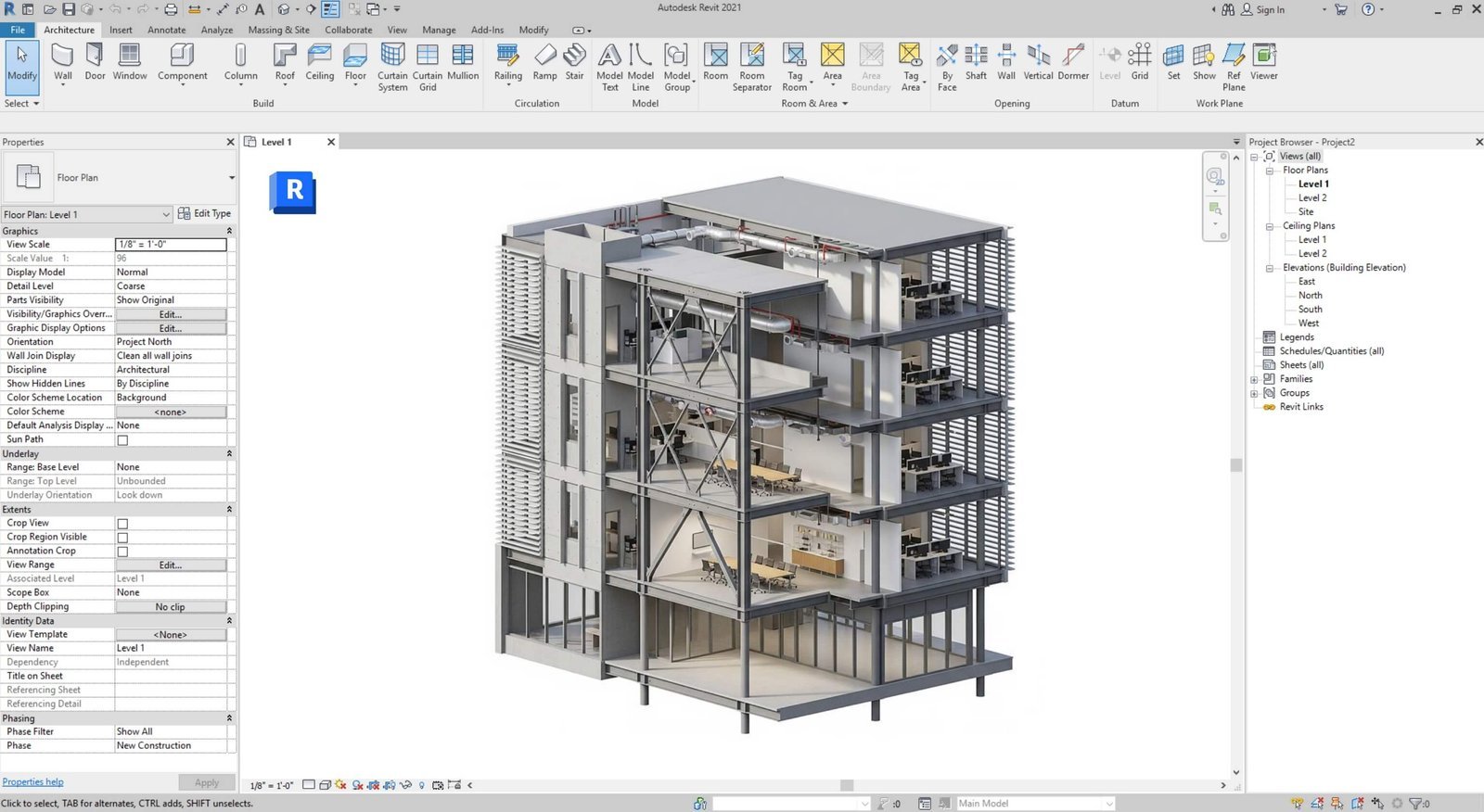
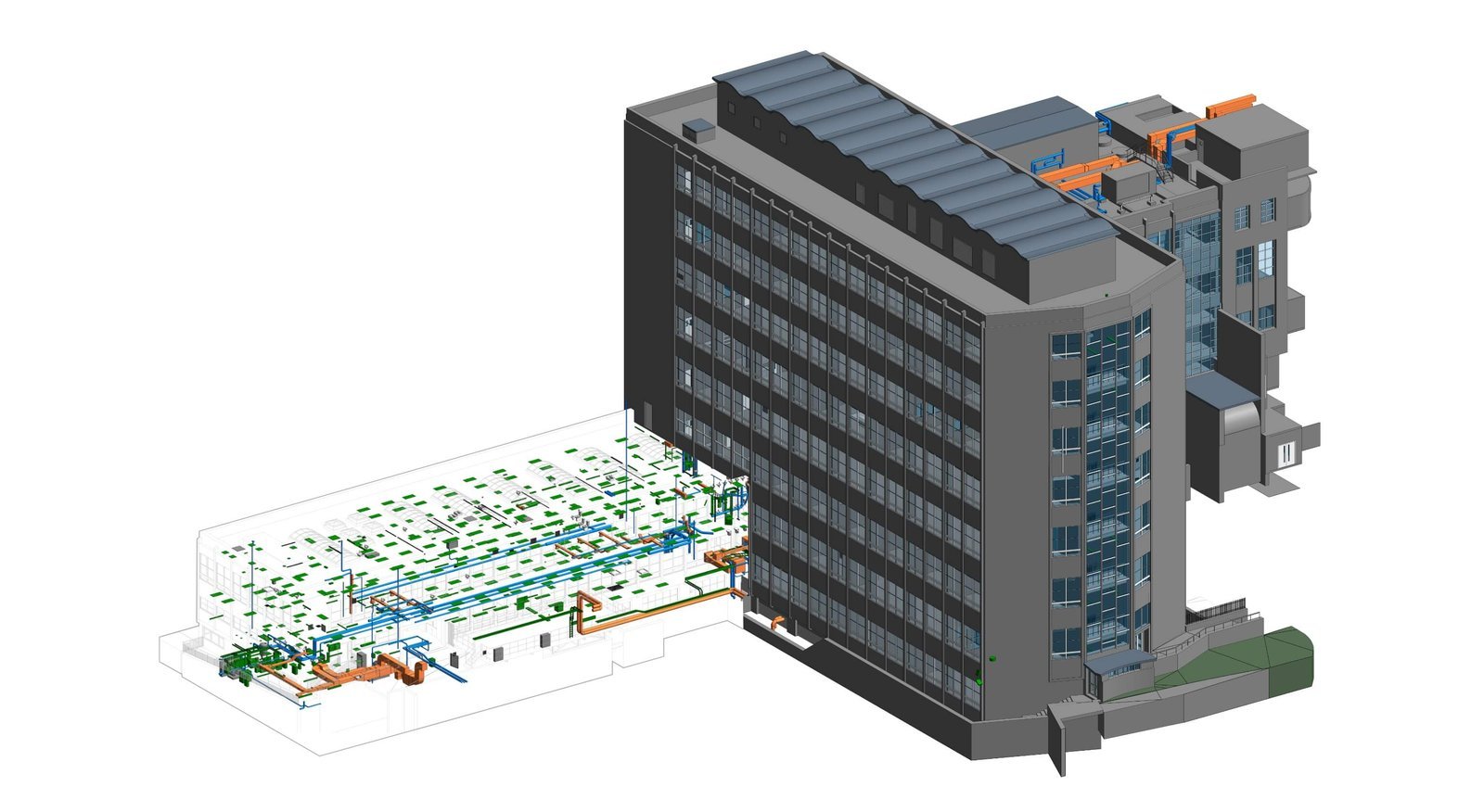
In a BIM environment, a pipe isn’t just a line; it contains data about its material, manufacturer, flow rate, and maintenance schedule. This enables Automated Clash Detection, where software like Autodesk Navisworks automatically flags when a plumbing pipe runs through an electrical panel, saving thousands in on-site rework.​

Key Benefits of Professional MEP Drafting

Advantages of MEP Drafting Approach

Cost Optimization
Safety & Compliance
Energy Efficiency
Long-term Maintenance
  • Cost Optimization: Precise material lists (Bill of Quantities) prevent over-ordering and minimize waste.
  • Energy Efficiency: Accurate drafts enable engineers to simulate airflow and thermal loads, leading to “Green Building” certifications such as LEED.
  • Safety & Compliance: Ensures all layouts adhere to strict local building codes, fire safety standards, and electrical regulations.
  • Long-term Maintenance: Facility managers use these drafts as “digital twins” to locate hidden leaks or faulty wiring decades after construction.​

MEP Drafting for Commercial Building

Mechanical, Electrical, and Plumbing (MEP) systems are the “central nervous system” of any modern structure. In the context of commercial complexes and high-rise buildings, these systems become exponentially more complex.​

While a small residential home might function with basic layouts, a 50-story skyscraper or a sprawling shopping mall requires surgical precision. This is where MEP Drafting—the process of creating detailed technical drawings and 3D models—becomes the difference between a high-performing asset and a logistical nightmare.

MEP Drafting Aspect in Commercial Building

Navigating Vertical Complexity
Energy Efficiency and Sustainability
Safety and Regulatory Compliance
Facilitating Long-Term Maintenance
Clash Detection: Saving Millions Before Breaking Ground

Navigating Vertical Complexity

High-rise buildings face unique physical challenges that standard buildings do not. MEP drafting is essential to manage the “stacking” of services across dozens of floors.

  • Pressure Zoning: In a high-rise, gravity creates immense pressure in plumbing and HVAC systems. MEP drafts specify where to locate pressure-reducing valves (PRVs) and booster pumps to ensure a person on the 40th floor has the same water pressure as someone on the 1st floor.
  • Vertical Shaft Coordination: Space is at a premium in commercial real estate. MEP drafting allows engineers to pack HVAC ducts, electrical risers, and plumbing stacks into tight vertical shafts without them physically overlapping.

Clash Detection: Saving Millions Before Breaking Ground

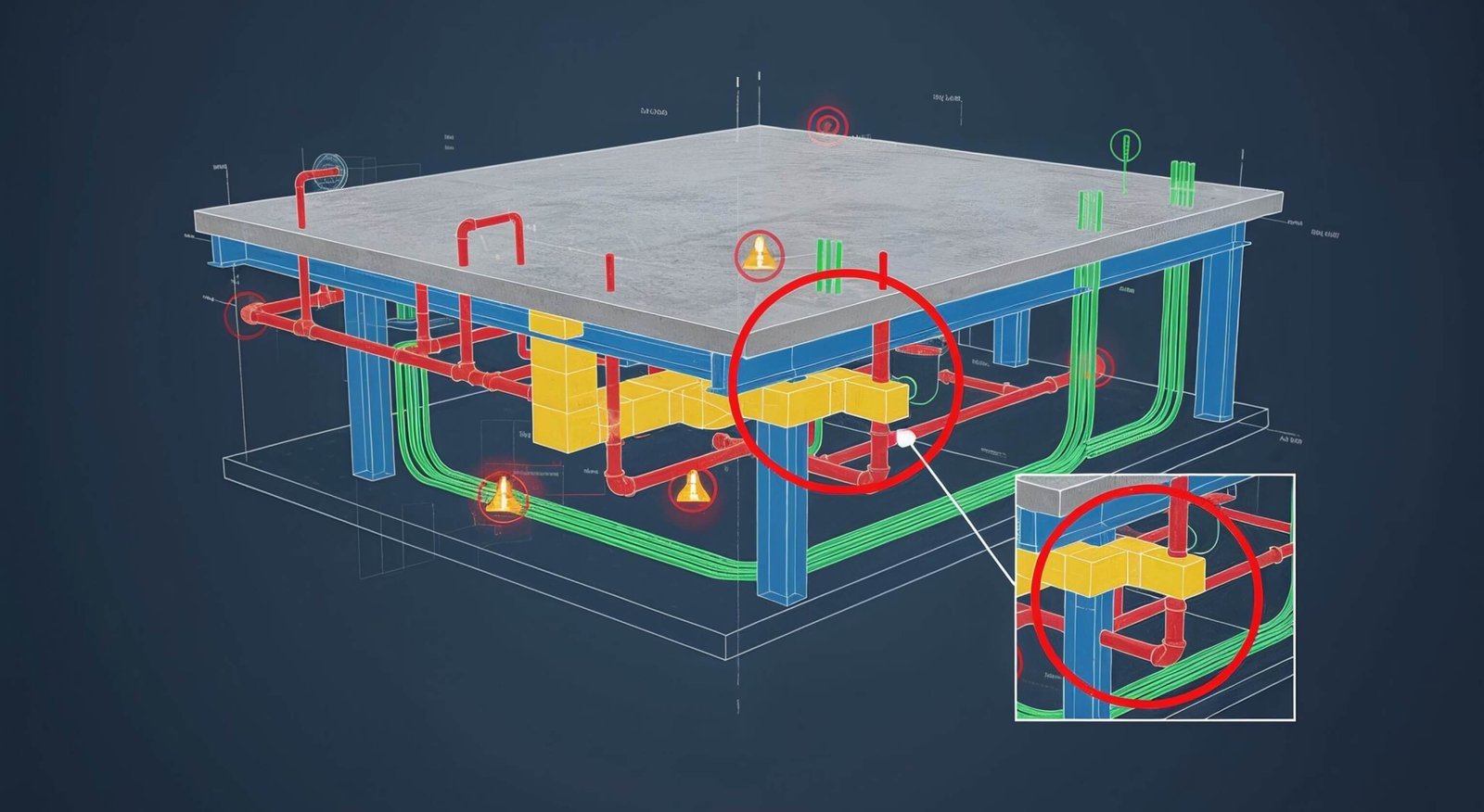
In commercial construction, a “clash” occurs when two building elements—for example, a large air conditioning duct and a structural steel beam—are designed to occupy the same space.

  • The Cost of Errors: Resolving a clash on-site can cost thousands of dollars in labor and materials.
  • The Digital Solution: Through BIM (Building Information Modeling) and advanced MEP drafting, these conflicts are identified in a digital “twin” of the building. Drafters can reroute a pipe or adjust a ceiling height on a screen for free, rather than tearing down a wall on the construction site.

Energy Efficiency and Sustainability

Commercial buildings are massive energy consumers. Detailed MEP drafting is the primary tool used to hit LEED certification or green building standards.

  • Optimized Routing: Shorter, more direct duct and pipe runs reduce the energy needed to move air and water.
  • Integrated Systems: Drafts allow integration of smart sensors, LED lighting controls, and high-efficiency VRF (Variable Refrigerant Flow) systems that respond to building occupancy in real time.

Safety and Regulatory Compliance

For high-occupancy commercial spaces, safety isn’t optional—it’s heavily regulated. MEP drafting ensures that life-safety systems are fail-proof.

  • Fire Protection: Drafts detail the exact placement of sprinklers, smoke detectors, and fire alarms, ensuring 100% coverage in accordance with local fire codes.
  • Emergency Power: In high-rises, elevators and emergency lighting must work during a power failure. Drafting ensures that backup generators and redundant electrical circuits are correctly routed to critical areas.

Facilitating Long-Term Maintenance

A commercial building’s lifespan is 50+ years. MEP drafts (specifically “As-Built” drawings) serve as the ultimate owner’s manual for facility managers.

  • Precision Repairs: When a leak occurs on the 15th floor of a commercial tower, maintenance teams don’t have to guess where the pipes are. They refer to the MEP drafts to pinpoint the exact valve or junction box.
  • Future Renovations: If a new commercial tenant wants to install a commercial kitchen or a server room, accurate MEP drafts show the landlord exactly how much power and drainage capacity is available in that specific zone.

Outsourcing MEP Drafting for Precision

As briefly discussed, MEP construction drawings and drafting are essential to ensure their accuracy and efficiency. Moreover, MEP coordination drawings, drafting, and BIM require expertise, knowledge, and the latest technology. While AEC firms are occupied with a variety of tasks on a project, outsourcing is one holistic approach for professionals. Nonetheless, outsourced MEP drafting services have become quite common in the AEC field, allowing experts to overcome common technical challenges and ensure a smooth construction process. By having accurate, detailed drawings, AEC professionals face fewer conflicts, avoid costly rework, and reduce clashes.

Clash-free MEP drafting design with a team of professionals contributes to streamlining the MEP disciplines into a BIM model without any major design changes. Outsourcing MEP BIM drafting services helps AEC firms to enhance the overall construction process with quality, safety, and precision. Moreover, it is a cost-effective approach that allows AEC professionals to focus on the project’s core task. For commercial high-rise MEP drafting, partnering with a reliable BIM service provider brings a plethora of benefits, such as

  • Dedicated team
  • Streamlined flow
  • Expertise knowledge
  • Cost efficient
  • Quick project turnaround
  • Specialized team
  • Latest technology use

UniquesCADD is a top BIM company with specialization in BIM services and MEP drafting services. With significant years of experience and a professional team, UniquesCADD aims to offer accurate and efficient drafting services for commercial, industrial, and residential project types.

Conclusion

MEP drafting is no longer just a “support” task; it is a foundational requirement for modern architecture. For developers, it reduces risk and overhead; for contractors, it provides a clear roadmap; and for occupants, it ensures a safe, comfortable, and efficient environment.
Role of BIM in Improving Collaboration Across the AECO Industry

The architecture and construction industry has witnessed a transformative growth over the years. A long list of changes has altered the working approach for architects, engineers, and other professionals. Efficiency, accuracy, reliability, and safety have always been key factors in the success of any construction project. Not just this, but ensuring the intricate design and functionality of the building that makes it a livable and comfortable environment for occupants.

Earlier, architecture featured intricate designs executed with traditional methods, including hand-drawn sketches, traditional tools, and manual processes. All these were prone to errors and were significantly time-consuming. While innovations and technologies altered the way architects, engineers, designers, and others work, the AEC industry entered a new level of transformation.

Earlier, the AEC sector was known as architecture, engineering, and construction. However, as the industry rapidly evolved, “O” stands for operations. Today, the significant sector of the economy is popularly known as AECO- architecture, engineering, construction, and operations. A digital revolution that changed the face of industry was also backed by building information modeling technology. BIM replaced traditional, manual methods and offered a long list of benefits, resolving many challenges faced by experts.

In light of that, BIM has reshaped how projects are planned, designed, executed, and maintained. With the digital revolution, AEC is now transformed to AECO- operations that have also simplified the complex and time-consuming process. As a matter of fact, BIM modeling services play a crucial role in the AECO realm, enabling them to enhance complex projects, minimize errors, improve collaboration, and more. Moreover, the continuous technological growth in the AECO realm alters the working approach for AEC experts, thanks to BIM services that offer a plethora of advantages, including improved project execution, enhanced project lifecycle, and more.

BIM for architects, engineers, contractors, and other professionals cannot imagine a project without BIM implementation in the digital landscape. Although this implementation may seem simple, it involves a variety of challenges, especially in the AECO. To briefly understand the significant role of building information modeling in AECO, let’s break down the industry individually and understand how BIM plays a pivotal role.

Streamline Complex project with BIM modeling Services

bim services

Breaking Down AECO Realm

The construction sector has been a key contributor to the overall economy, enabling the nation’s growth with well-built infrastructure and designs. Traditionally, construction was a manual process, from hand-drawn sketches to intensive labour to gather all the materials and more. The manual process in architecture and construction poses various challenges that lead to errors, slow processes, labour-intensive work, significant material waste, project delays, and more. Therefore, to overcome the consecutive challenges in the realm, the digital revolution transformed.

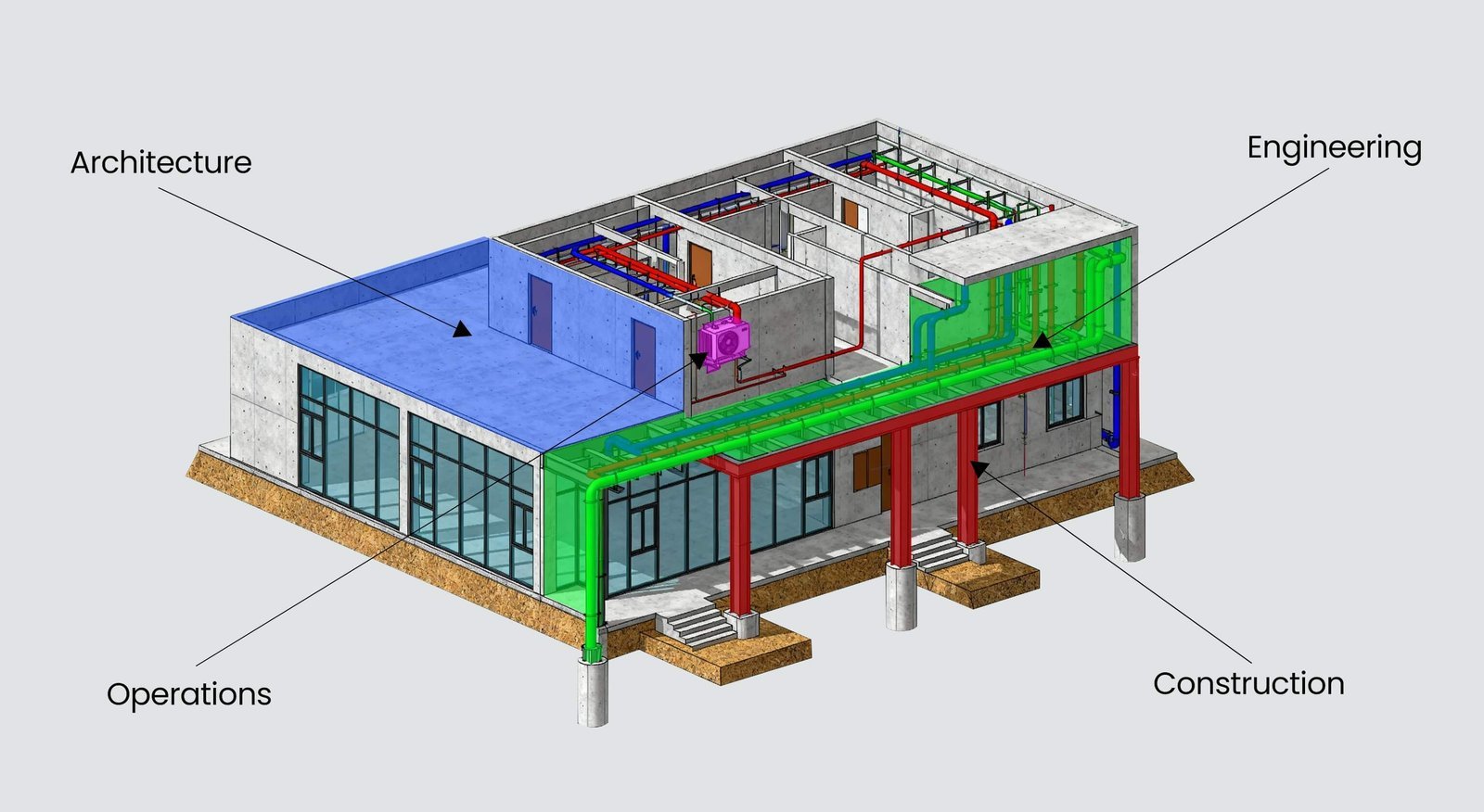
Turning the construction sector into AECO, that is, the architecture, engineering, construction, and operation realm. This digital revolution encompasses the entire project lifecycle, from planning, designing, and executing the site. It involves key sets of AEC professionals, including architects, engineers, contractors, facility managers, and more. Not just this, the modern landscape of AECO heavily relies on digital tools like BIM modeling services that bring enhanced efficiency, precision, and safety, contributing to project success. To better understand this, let’s break down AECO.

Architecture: This involves the initial design and planning phase, where architects and other professionals create a plan and blueprint for the project’s layout at an early stage. The project’s layout provides a clearer understanding of the concrete processes. The architecture stage involves planning and designing how the project will proceed further.

Engineering: In this stage, a technical design phase is conducted that includes structural BIM services, MEP BIM services, and architecture to ensure a digital representation of the plan, typically in a 3D view. Engineering is a field where various types of engineers collaborate to maintain precision.

Construction: This is a specific stage where the onsite process begins. Here, the digitally built model and plans play a crucial role. Contractors and other AEC professionals construct infrastructure in accordance with design plans and specifications, minimizing errors and ensuring precision in groundwork.

Operations: AEC is a vast and evolving sector where “O” operations have recently been added. This phase particularly entails ongoing use and maintenance of the project, including facility management, repairs, system upgrades, and more.

This breakdown of AECO gives a sense of how professionals are segmented by phase. Collaboratively, it enables professionals to work together digitally and offers precision without any scope for errors. As a matter of fact, the AECO industry leverages key technologies, such as BIM modeling services, to enable each expert to enhance project processes, workflows, and overall results.

However, the construction process involves several significant stages that are vital to completing any construction project. The following is the workflow that is evident. The process can be broken down into the following key stages, with each involving specific tasks and collaboration among different stakeholders:

Stages of BIM Integration in Construction Process

Conceptual Design & Planning
Preconstruction & Bid Management
Detailed Design & Documentation
Construction & Field Management
Operations & Maintenance
  • Conceptual Design & Planning: This initial phase involves creating initial sketches, ideas, and detailed plans based on client requirements. Architects and engineers perform site analyses to inform design choices, often using generative design and AI tools to explore alternatives and optimize for sustainability and performance.
  • Detailed Design & Documentation: The design is refined, materials are selected, and engineering systems (structural, mechanical, electrical, plumbing) are incorporated. This stage results in detailed 3D models and 2D construction documents, including drawings and specifications. BIM plays a central role here, centralizing information for all agents.
  • Preconstruction & Bid Management: Project data is used to plan construction logistics, estimate costs, and manage the bidding process. AI-powered tools help identify potential risks, generate submittal logs from specifications, and perform quantity takeoffs, ensuring accuracy and efficiency before physical work begins.
  • Construction & Field Management: The physical asset is built according to the construction documents. This phase involves project management, scheduling, quality control, and safety management. Onsite teams use software to access real-time project data, track progress, manage issues, and document site conditions with photos and reports.
  • Operations & Maintenance: After construction, the building or infrastructure is managed and maintained throughout its lifecycle. This stage often uses digital twins (dynamic, virtual representations of real-world systems with real-time sensor data) to predict maintenance needs, optimize energy use, and monitor overall performance, resulting in significant cost savings and improved sustainability.

Nonetheless, BIM offers a variety of advantages, and its role has become prominent as AEC professionals cannot proceed without a 3D data-rich mode. Let’s shed some light on the benefits of BIM in AECO.

Significance for AECO Industry BIM Adoption

Traditionally, the AECO industry has faced multiple challenges across various aspects of construction projects. Intricate design, on-time project delivery, seamless processes, efficiency and precision, budget constraints, and more were challenges initially faced with traditional practices. However, with the evolution in technology and the introduction of 3D BIM, the game has leveled up, offering valuable insights, seamless communication and collaboration, visualization, and more.

AECO professionals can easily collaborate, ensuring that every phase of construction is executed seamlessly. Moreover, BIM is the whole truth, serving as a common platform that allows professionals to collaborate and communicate efficiently. From the level of detailing to seamless integration of structural, architectural, and MEP design, 3D BIM is a powerful tool for the industry.

In simple words, BIM for architects, engineers, contractors, and other stakeholders is a non-negotiable concept that provides insights to help make informed decisions. Building information modeling is a digital representation of a project’s physical and functional characteristics that enables experts to ensure precision, efficiency, safety, and more.

As a matter of fact, the AECO industry’s BIM adoption has transformed how projects are planned, designed, and executed, from facilitating better decision-making to minimizing waste and ensuring a more sustainable project lifecycle. BIM isn’t just a tool but a vast concept that helps architects, engineers, and other professionals streamline complex processes and foster efficient collaboration. As a matter of fact, the AEC industry demands effective communication and collaboration that result in project success. Nonetheless, BIM coordination workflow and seamless functional approach bring a variety of benefits, as follows;

Key Advantages of BIM coordination

Improved project visualization
Enhanced project maintenance
Cost and time savings
Efficient resource utilization
Communication and collaboration
Efficient planning and execution
Reduced rework
On-time project delivery
  • Improved project visualization: One of the major benefits of BIM modeling in the AECO industry is the 3D view it provides, enabling better visualization of construction, architectural, structural, MEP, and other aspects. This 3D view enables informed decision-making and better results, without errors or clashes with other components.
  • Communication and collaboration: Every construction project varies from each other in different aspects. However, a common thread across every project is communication and collaboration for optimized, accurate outcomes. BIM collaboration in AECO is a vital factor that allows experts to ensure precision. Miscommunication can lead to incorrect decisions among professionals and impact the project’s overall outcome.
  • Enhanced project maintenance: Constructing any infrastructure isn’t the end goal; however, its accurate maintenance makes the project successful. The project lifecycle of any building is a crucial aspect supported by BIM, offering key insights into infrastructure, precise construction documentation, efficient renovation understanding, and more.
  • Efficient planning and execution: With the help of BIM coordination workflow, AEC professionals can seamlessly design, plan, and execute the project with a 3D view. This enables detailed information, a curve of creativity for designers, easy design changes when required, and accurate integration across all disciplines.
  • Cost and time savings: Building information modeling is a time-saving and cost-efficient tool in the AEC industry. Sticking to a project budget is a key factor for project success. Moreover, with BIM implementation, experts can save significant rework costs, minimize waste material, ensure accurate resource allocation, and more. This allows them to stay within the project budget and reduce material waste.
  • Reduced rework: With 3D visualization and an intelligent, data-rich model, the scope of errors, clashes, and conflicts is reduced. This allows professionals to view the model, understand it, and make changes accordingly without adjusting the components of the infrastructure. Moreover, a 3D view also reduces errors on site, enabling less rework in the design stage.
  • Efficient resource utilization: In any construction project, a variety of materials are used, many experts are on the ground, and other aspects are also considered. With the help of BIM modeling services, AECO professionals can allocate resources more effectively and ensure efficient use without onsite waste.
  • On-time project delivery: Building information modeling is a key enabler of seamless efficiency, precision, and workflow. With accurate communication, collaboration, visualization, and the ability to minimize rework, on-time project delivery is ensured. This results in successful project completion and real-time updates with AECO professionals.

These are the key benefits of BIM in AECO; however, it continues to evolve as technology advances. As a matter of fact, BIM supports energy savings and material recycling, which are crucial to today’s modern demands. With endless benefits and result-oriented tools, it is evident that partnering with a renowned BIM outsourcing company is the right choice. Why ? Let’s find out.

Why Outsourcing BIM Services in AECO Landscape

The AEC landscape is vast, fast-growing, and constantly updating with various trends and technologies. In the modern architecture realm, many companies have yet to adopt BIM as a tool and face key workflow challenges. Although in the AECO industry, BIM adoption isn’t the endgame but the beginning of a streamlined approach for simple to complex projects. This adoption of new technology demands expertise, knowledge, and skills, as well as the ability to understand complex projects.

Moreover, BIM adoption is not only about a shift in technology and the adoption of new tools, but also about a significant change in processes, perspectives, and approaches for executing projects. Hence, outsourcing 3D BIM modeling is a comprehensive solution for AEC firms. Third-party service providers help with BIM modeling without the worry of investing in tools, hiring resources, or investing large amounts of capital.

A renowned BIM company ensures it delivers desired outcomes, efficient customer support, and accuracy and efficiency in BIM projects. UniquesCADD is a top BIM company offering a wide range of BIM services, from structural BIM services to architectural visualization. With a team of experienced professionals, uniquesCADD aims to provide accurate results within the desired timeline.

Final Words

BIM modeling services are powerful tools that have given the AECO industry a new face. It enables professionals to save time, improve accuracy, streamline processes, and enhance communication and collaboration. Therefore, from optimizing processes to maintaining the project lifecycle, BIM modeling is the comprehensive answer.

Role of MEP Drafting in Hospital and Healthcare Facility Design

The architecture and construction realm has witnessed transformations that have not only led to accurate results but also up-scaled the industry. Modern, sleek design today is a key part of the architecture and construction sector, uniquely blending with sustainability, efficiency, and reliability. Looking back in history, keenly designed architecture is a significant part of the industry as an intricate work of art for new AEC professionals.

AEC landscapes have adopted and advanced with technology and innovation, replacing manual approaches and easing complexity. Speaking of complex construction, the healthcare sector entails significant architectural complexity due to different requirements and the utmost accuracy in design. Healthcare facilities such as hospitals, clinics, specialized medical centers (trauma centers, psychiatric hospitals, etc.), research labs, and more.

All these healthcare facilities represent a complex building environment, design, and unparalleled demands compared to commercial or residential infrastructure in the architecture and construction realm. MEP is a key role player that acts as the heart of any infrastructure, enabling it to make the environment livable and comfortable for occupants.

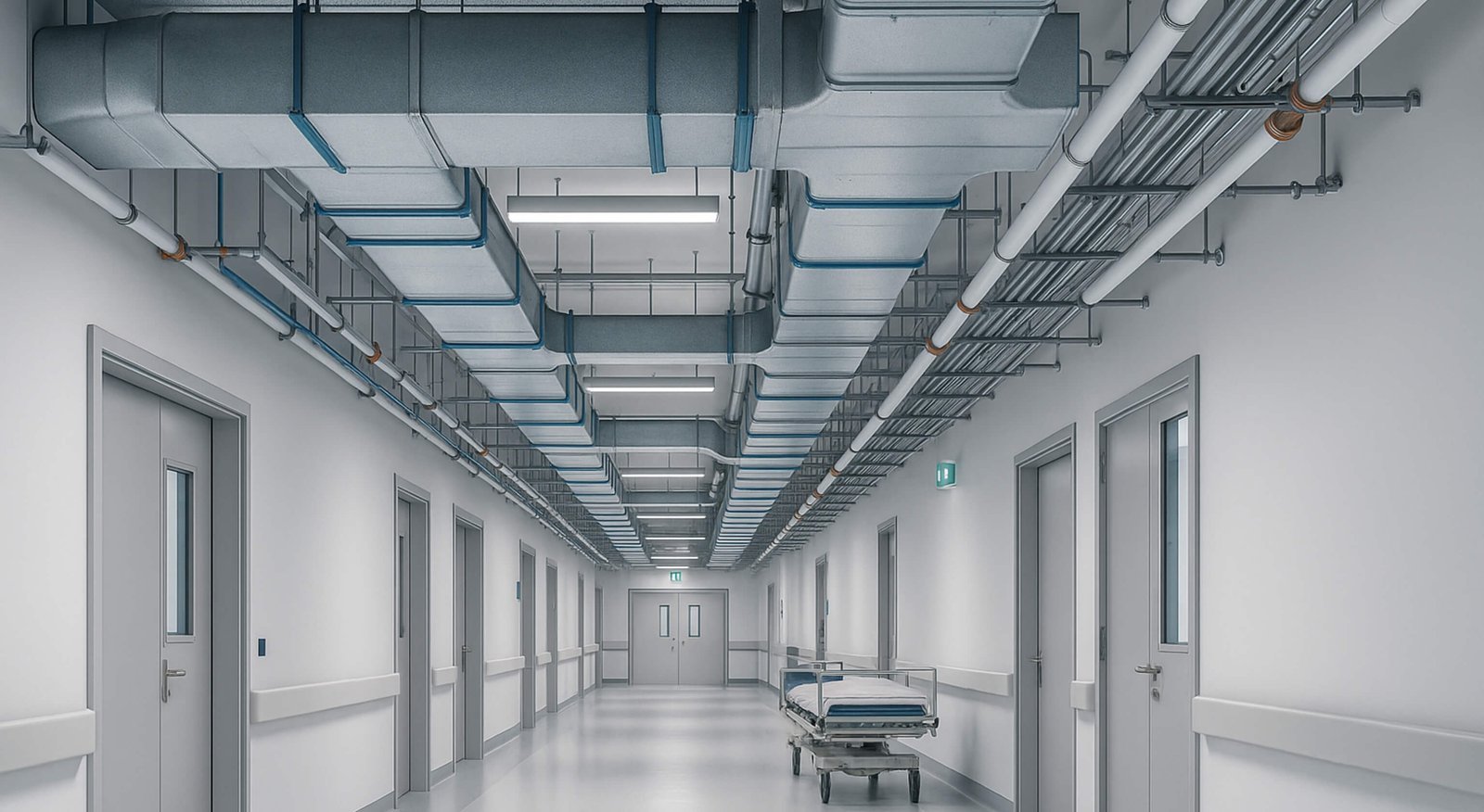
MEP is an evident role player in all types of architecture, but is a major player in healthcare facility construction. Healthcare infrastructure is built differently for various reasons, including patient safety, the use of different materials, efficient design, sanitizers, medical equipment, infection control systems, medical gas supply, and more.

These reasons help give the gist of how crucial it is for AEC professionals to maintain accuracy, efficiency, and reliability in healthcare facility construction. Considering the modern realm and design, hospitals and other healthcare facilities leverage the power of MEP services as mechanical, electrical, plumbing, and fire safety are the lifelines for a dynamic environment in the healthcare construction project.

As a matter of fact, MEP is a concept in which every component must strictly harmonize with other components, such as architectural and structural components. Before MEP components are constructed in the BIM model, mechanical, electrical, and plumbing components are drawn with the help of MEP drafting services. These technical sketches and drawings provide a brief overview of how these three fire safety elements will integrate into healthcare facilities’ construction projects.

Nonetheless, mechanical, electrical, plumbing, and fire safety designs play an evident role in meeting dynamic demands and ensuring that healthcare facilities operate efficiently and safely. To begin with, let’s briefly understand mechanical drafting services, along with other disciplines, and how they are key players in the construction of healthcare facilities.

Accurate Hospital Facility Construction with MEP Drafting Solutions

bim services

Overview of MEP Drafting

Modern construction is based on the degree of precision, efficiency, accuracy, and coordination in planning and execution. While every stage and every aspect of construction play vital roles, MEP systems or components are the most crucial. Let’s just say a building lacks an adequate power supply, drainage, or proper ventilation. It becomes impossible to live there due to a lack of basic facilities and a high risk of mishappenings. Therefore, this highlights the importance of accurate MEP systems. In any construction project, regardless of type and size, these components must be carefully integrated into the design and construction process. To ensure efficiency and accuracy, MEP drafting services play a significant role, providing a detailed representation of all three components and fire safety.

These technical and detailed drawings act as a blueprint that helps facilitate a seamless construction workflow and efficient team collaboration. With primary integration of MEP BIM modeling and MEP CAD drafting, a detailed and accurate representation of MEP systems allows offering intricate details for AEC professionals to clearly understand the complexity. As a matter of fact, drafting demands for expertise and partnering with a CAD service provider is a holistic approach for precision and efficiency.

CAD drafting is the primary step in creating detailed technical sketches; however, it requires proficiency with software and expertise to achieve desired outcomes. MEP drafting services here include 2D and 3D detailed drawings for the design and installation of all components. Utilizing advanced software and tools, mechanical, electrical, and plumbing drafting is represented with precision and clarity to integrate with architectural and structural designs. As the name suggests, there are three main key aspects, following are;

  • Mechanical drafting service
  • Electrical drafting service
  • Plumbing service

The added component in recent times is fire safety, which usually entails fire alarms, sprinklers, evacuation plans, and more. With the help of accurate MEP drafting services, components are coordinated, synchronized, and seamlessly integrated into building design without interpretation. MEP drafting offers AEC professionals a comprehensive guide and ensures a seamless workflow. Not only this, but MEP drafting offers a variety of advantages, such as:

Key Benefits of MEP Drafting Service

Seamless integration
Construction efficiency
Streamlined construction workflow
Error-free design
Easy and accurate MEP installations
Compliance with industry standards
Coordination between AEC professionals

The list of benefits for MEP drawings can go on endlessly for construction projects. Regardless of project type and size, MEP drafting is a critical role player; however, MEP services for healthcare facilities are a game-changer, ensuring patient safety, seamless hospital workflow, better equipment, and more. Let’s look in detail at how MEP drawings for hospitals, clinics, and other medical facilities play a crucial role.

Healthcare Facilities MEP Drafting Design

Understanding in detail MEP drafting and how it has become a non-negotiable approach for architects, designers, engineers, and other professionals. Constructing any infrastructure involves multiple stages, each demanding accuracy and efficiency. On the other hand, healthcare facility construction is much more complex than residential or commercial construction. Healthcare facilities such as hospitals, clinics, research labs, specialized medical centers, and others have complex environments due to varying infrastructure requirements.

Without a doubt, the healthcare sector is crucial for seamless functioning and, of course, patient care. Inefficient design, planning, and execution can lead to significant loss and can be a matter of life and death. Here, MEP services for healthcare facilities are not only important but a necessity. Imagine an emergency room is far from the ICU; this can be a life-threatening design, inefficient planning, and a lack of precision. To avoid any hassle, having a flawless MEP design is significant and plays a key role. Healthcare MEP drafting services is categorized under three aspects, which include;

  • Mechanical drafting services: This is essential to healthcare facilities in providing services that support patients’ well-being and care. These systems entail HVAC, elevators, escalators, medical gas supply, temperature control, air circulation for a comfortable environment, and more. As a matter of fact, MEP services for healthcare facilities efficiently make a comfortable environment by filtering and purifying air, preventing infections, and improving overall healthcare facility design.
  • Electrical drafting services: Electrical drafting services are paramount in healthcare facilities, ensuring sufficient power backup for life support, patient monitoring devices, and other electrical equipment. A seamless electrical design is essential for an uninterrupted power supply. Additionally, it entails proper lighting design that significantly contributes to patients’ and healthcare professionals’ comfort.
  • Plumbing drafting services: ensuring access to clean water and a water supply is essential for healthcare centers. Any hospital, clinic, or other facility must have clean water for patient safety. Additionally, every hospital, regardless of size, must offer potable water while contributing efficiently to waste management systems. As a matter of fact, having a proper, accurate drainage system, including backflow prevention plans and design, prevents water contamination. The plumbing drafting plan also includes water treatment systems for filtration and disinfection.

These essential components of healthcare MEP drafting significantly contribute to successful healthcare facility construction. Flawless MEP design is key to efficient, safe building environments; however, healthcare MEP drafting services come with their fair share of challenges. Explore them further in detail.

Why Healthcare MEP is Uniquely Challenging

Healthcare facilities operate 24/7, treating patients with varying vulnerabilities and housing highly sophisticated, sensitive equipment. This complexity necessitates an extremely high standard for MEP design.

Common MEP Healthcare Challenges

Infection Control
Stringent Regulations
Patient Comfort
Air Filtration
Lighting Design
Special Waste Systems
Redundancy and Reliability
Equipment Integration
Air Pressure Control
Medical Gas Systems
Specialized Systems
Fixture Selection
Clean Water & Backflow Prevention
  • Infection Control: The design must actively prevent the spread of airborne and waterborne pathogens, particularly in sterile areas such as operating rooms and isolation wards.
  • Redundancy and Reliability: Power, ventilation, and critical medical gas systems must have robust backup and redundancy to ensure continuous operation during emergencies or power outages.
  • Stringent Regulations: Healthcare facilities must comply with rigorous codes and standards, including local building codes and those set by specialized organizations (e.g., ASHRAE, NFPA, FGI Guidelines).
  • Equipment Integration: MEP must be seamlessly coordinated with specialized medical equipment, such as MRI machines, X-ray scanners, and surgical lighting, which have unique power, cooling, and spatial requirements.
  • Patient Comfort: HVAC systems must maintain precise temperature and humidity levels not just for health but also for patient well-being and recovery.
  • Air Pressure Control: Operating rooms and isolation rooms require strict positive or negative air pressure differentials to prevent contaminants from entering or leaving the space. Drafting must detail pressure cascades.
  • Air Filtration: High-efficiency filters, such as HEPA filters, are mandated for critical areas, and the ductwork design must accommodate their size and maintenance needs.
  • Medical Gas Systems: Drafting includes piping for critical gases like oxygen, medical air, nitrogen, and vacuum. This requires meticulous detail on central storage, distribution lines, alarms, and zone valve locations for safety shut-off.
  • Lighting Design: Lighting must be carefully designed—not just for general illumination, but also for specific tasks (e.g., high-luminosity surgical lights) and patient comfort (e.g., dimmer-controlled, ambient lighting in patient rooms).
  • Specialized Systems: Drawings must include layouts for nurse call systems, CCTV, public address systems, and advanced data/IT infrastructure necessary for modern diagnostics and patient records.
  • Clean Water & Backflow Prevention: Drawings ensure a continuous supply of clean water and detail rigorous backflow prevention assemblies to avoid contamination of the potable water system.
  • Special Waste Systems: Piping for laboratory drains and infectious waste disposal requires specialized materials and routing to adhere to environmental and health regulations.
  • Fixture Selection: Selection and detailing of hands-free sinks and specialized surgical scrub stations are crucial for infection control.

These challenges are significant and often occur during the construction of healthcare facilities. Given the demand and use of materials, the challenges mentioned above have an efficient solution: MEP drafting services for healthcare building construction. Being a complex and lengthy process, it requires the use of the latest technologies, knowledge of the process and codes, and the ability to understand complexity.

Therefore, outsourcing MEP BIM services and drafting solutions is a holistic approach for AEC firms. Given the complexity of drafting, outsourcing MEP drafting for hospitals offers advantages for AEC firms and enables them to manage other key processes.

Outsource MEP Drafting Design

In the constantly evolving field, keeping track of technologies and software is a must. Outsourcing to a renowned MEP drafting service provider is a comprehensive and beneficial approach. UniquesCADD is a top MEP BIM modeling service, specializing in MEP drafting solutions by use of the latest technologies and a team of professionals. An outsourcing service provider ensures accuracy, efficiency, and reliability.

Conclusion

The successful MEP drafting for hospitals and other healthcare facilities is a delicate balance of engineering, regulatory compliance, and keen attention to detail. It’s about creating an infrastructure that ensures a safe, hygienic, and comfortable healing environment for every patient and staff member. Implementing MEP services for healthcare facilities is key to the successful functioning of infrastructure.

Top Scan to BIM Companies in 2026: Who’s Leading the Market

The AEC landscape has evolved rapidly with the rise in technology and constant innovation that streamlines the complex process. Constructing any infrastructure is a complex process demanding precision, efficiency, and reliability. Any project’s success depends on the accuracy of the construction and how well the building is maintained. The AEC industry is not only about constructing new infrastructures but also about renovating existing buildings to ensure safety, extend their lifecycle, maintain equipment condition, and more. Over the years, any construction building gets weak due to various reasons such as insufficient maintenance, environmental factors, and more. After a certain time, the structure of the building becomes weak, eventually requiring renovation to prevent any mishaps.

The architecture and construction landscape has potentially evolved with time and technology, leading to significant outcomes, improved precision in complex processes, and various benefits. As there is no introduction needed for building information modeling, it is also a beneficial technology for renovating buildings. Existing infrastructures are complex to renovate due to a lack of documentation, old drawings, missing details, manual measurements, and much more, leading to significant mistakes and delays. Hence, with evolving technology, scan to BIM, or popularly known as point cloud to BIM plays a crucial role in renovating the infrastructure.

As a matter of fact, the rising popularity of scan to BIM has transformed how construction firms and professionals renovate the infrastructure. The global market for scan to BIM services is projected to reach US$673 Million by 2031, CAGR 5.3%. This percentage showcases the increased usage of technology in the architecture and construction realm, enabling AEC firms to compete in the market as the best providers of scan to BIM services. Combining advanced techniques such as laser scanning with 3D BIM modeling allows professionals to view building insights for renovation, ensuring accuracy, safety, and adherence to construction standards. Any leading scan to BIM firms offers a wide range of services for residential, commercial, and infrastructure sectors.

Renovating any project has become easier and more profitable, thanks to advanced technologies, which have transformed the way architects and other experts design, build, renovate, and manage structures. This demands the right use of technologies and software, proficiency in processes, expertise in managing complex projects, and more. Hence, AEC firms in today’s rapidly evolving market tend to partner with scan to BIM company for efficiency and precision. Let’s explore key aspects of outsourcing scan to BIM. It is beneficial and leading scan to BIM firms partnering with the most suitable company.

Partner with UniquesCADD for Precise Scan to BIM Project

bim services

Major Aspects for Scan to BIM Outsourcing Companies

The demand for accurate scans to BIM or, per se, point cloud to BIM modeling services has exponentially grown. As a popular concept in the architecture and construction industry, it requires expertise in processes, proficiency in software, the ability to manage complex projects, and expert knowledge and guidance for successful renovation. As AEC firms are constantly occupied with a plethora of tasks and find novel ways to cut costs, outsourcing point cloud to BIM services is a comprehensive solution, enabling them to adopt a hands-on, accurate scan-to-BIM approach. Moreover, there is a growing demand for precision 3D models for surveying, designing, planning, renovating, and executing projects according to specific requirements.

Since historic or older buildings lack construction documentation, laser scanning or photogrammetry techniques allow the collection of data points that are further integrated into the BIM model. The integration process, being a crucial segment, demands accuracy and efficiency for the right BIM model.

Moreover, outsourcing firms offer a variety of aspects in the infrastructure, such as architectural, MEP, structural, and others. Outsourcing concepts have exponentially grown, thanks to a variety of benefits. However, identifying the appropriate and suitable scan to BIM outsourcing companies is evident for accurate results. The following are the key aspects to consider before partnering with a leading point cloud to BIM service provider.

Key Factors to Consider Scan to BIM Service Provider

Years of Experience
Resources
Technology and Software expertise
Effective solutions
Pricing Plans
Reviews and Client Testimonials
Range of Services
Project Delivery

These are some of the key factors that are essential to consider before partnering with scan to BIM company. The outsourcing market is vast, especially in the modern era, with various leading scan to BIM firms offering high-quality results and accuracy. Here’s a list of the top BIM companies in 2026 that are leading in the market for their exceptional services and client satisfaction ratio.

Top Scan to BIM Companies 2026

AEC firms tend to outsource BIM services, architectural services, structural services, MEP BIM services, interior visualization, and more for a new project. However, when it comes to renovating an existing infrastructure, scan-to-BIM services are the key players. The following are leading BIM firms in 2026, renowned for being experts in the process, delivering profitable outcomes, providing desired solutions, and being recognized in the AEC market.

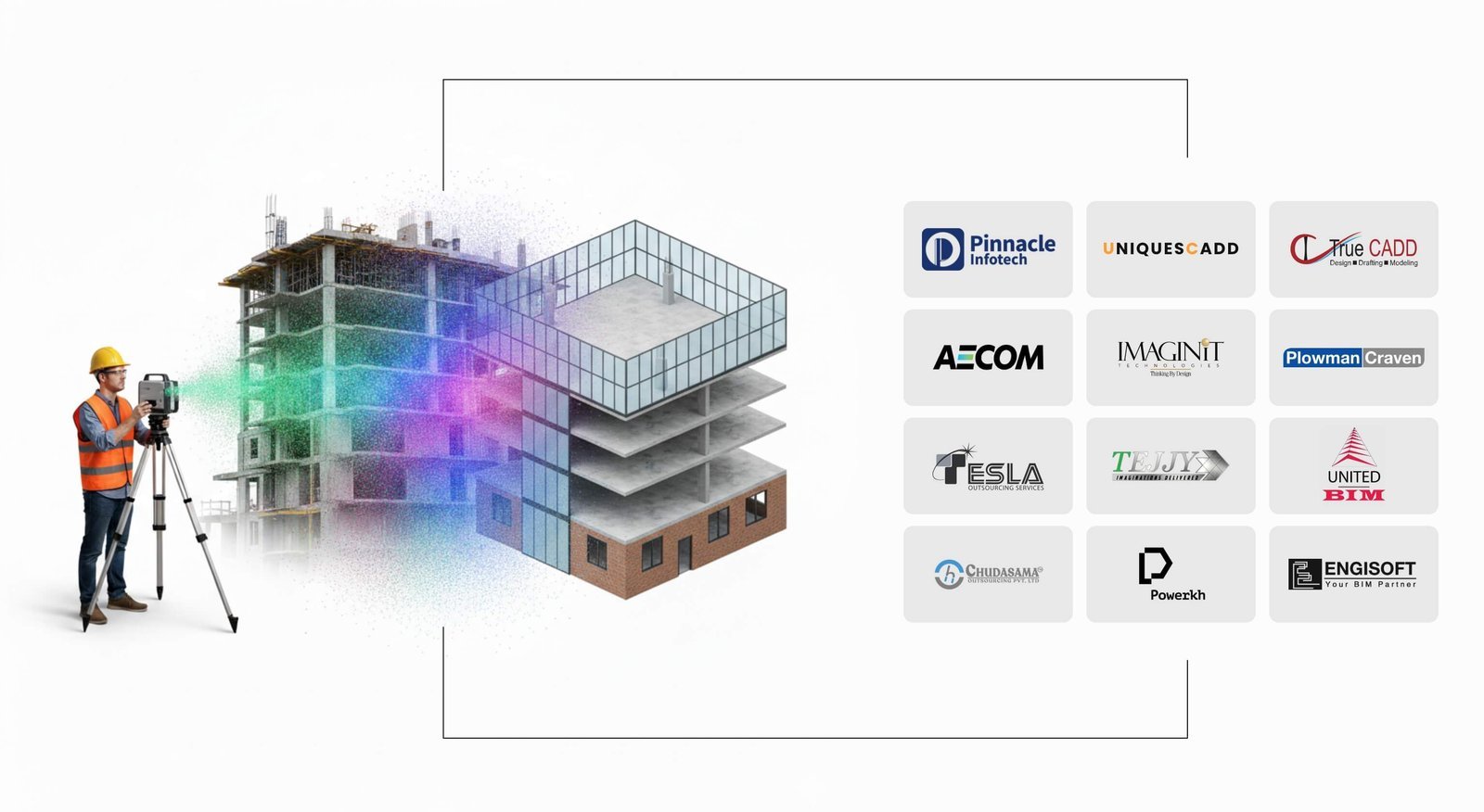
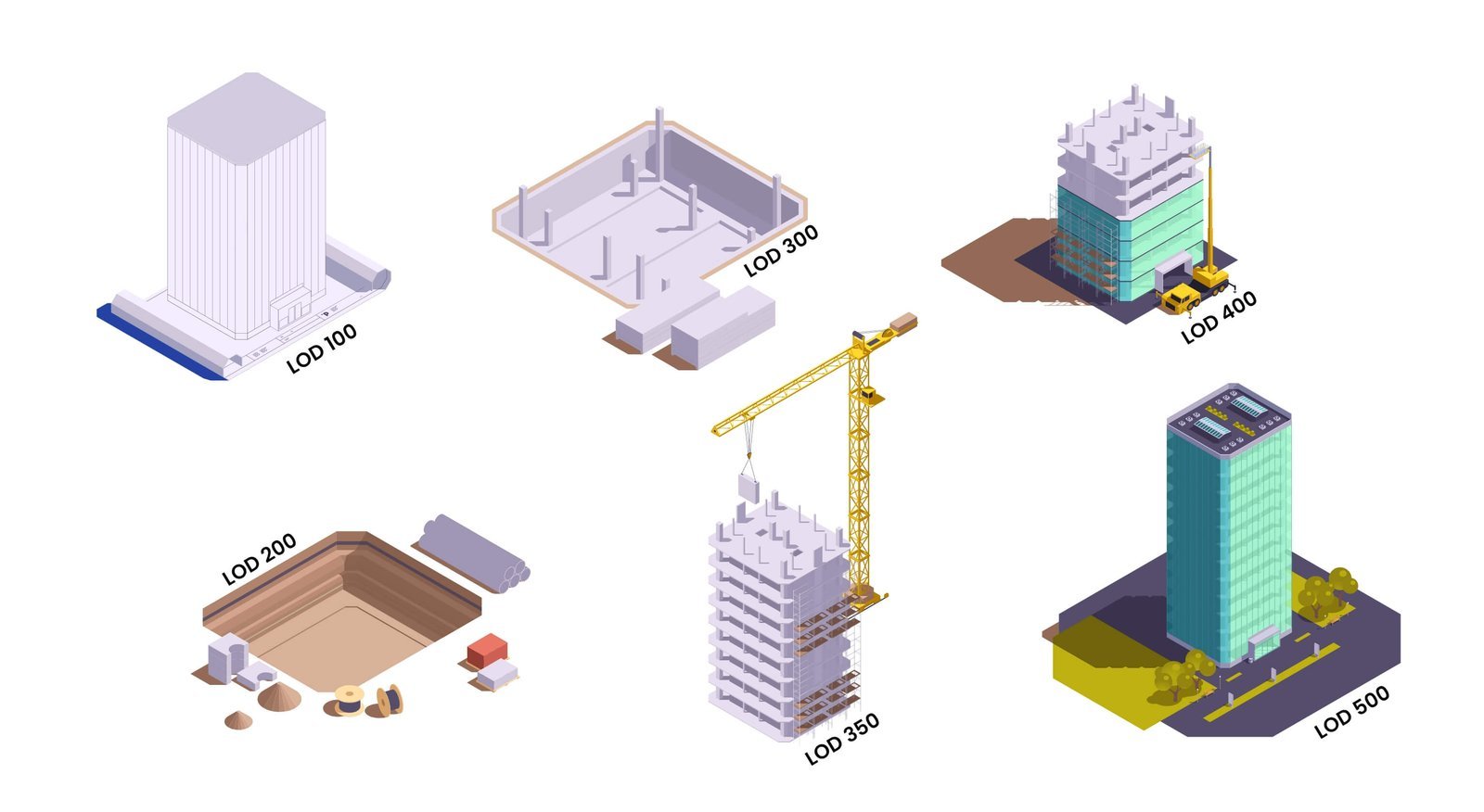
  • Pinnacle Infotech Solutions: Known for high-volume, cost-effective Scan to BIM services globally. Expertise spans architectural, structural, and MEP BIM services up to LOD 500. Strong track record in complex projects, renovations, and facility management integration.
  • UniquesCADD: A well-regarded BIM services provider with a range of services, such as MEP BIM services and CAD outsourcing service provider, delivers exceptional services for renovation projects. The firm has a team of experts, the right technology, best-in-class infrastructure, suitable pricing plans, and a renowned global clientele. Scan to BIM experts bring high-quality solutions along with consistent support through the project.
  • TrueCADD: Highly experienced in processing and managing high volumes of scanned data. Specializes in accurate point cloud to BIM conversion for complex architectural, structural, and MEP projects for renovation and retrofitting, with a strong presence in the US and UK.
  • AECOM Infrastructure: A global leader in infrastructure. While primarily a design and engineering firm, they are a massive user and integrator of BIM and Scan to BIM workflows for large, complex, and high-profile projects worldwide (airports, transit, etc.). Focus on BIM integration for digital twins and asset lifecycle management.
  • IMAGINiT Technologies: Focuses heavily on BIM technology consulting, implementation, and training. They offer high-end Scan to BIM services, often coupled with their expertise in Autodesk software (Revit, ReCap) and workflow optimization for architectural, engineering, and construction firms in North America.
  • Plowman Craven: A highly reputable UK-based company specializing in precise surveying, laser scanning, and Scan to BIM. Known for exceptional accuracy and detailed models for commercial, infrastructure, and heritage preservation projects. They are innovators in reality capture techniques.
  • Tesla Outsourcing Services: Known for converting point cloud data into detailed BIM models with very high accuracy. Strong focus on creating as-built models for renovation, refurbishment, and facility management purposes across architectural, structural, and MEP disciplines.
  • Tejjy Inc.: Offers comprehensive Scan to BIM services and is well-regarded for BIM coordination and clash detection, alongside as-built model creation. Utilizes 3D laser scanning to support renovation, as-built documentation, and facility management across various LODs.
  • United-BIM: A focused provider of Scan to BIM and related BIM/VDC services. They leverage point cloud data to create detailed 3D models for architects, engineers, and contractors, emphasizing digital transformation and streamlining construction workflows.
  • Chudasama Outsourcing: With over 15 years of experience, this outsourcing firm provides Scan-to-BIM solutions to clients across multiple countries. It offers point cloud to BIM conversion, MEP services, and 3D laser scanning and modeling.
  • Powerkh: Known for providing advanced Scan to BIM and Virtual Design & Construction (VDC) services. Strong emphasis on digital twin creation, model coordination, and clash detection from point cloud data, serving architects, engineers, and developers internationally.
  • Engisoft Engineering: A consistent name in the outsourcing market, Engisoft Engineering offers point cloud to BIM services for different categories of the AEC sector. Their services are categorized into various stages of the process, enabling smooth, efficient, and accurate workflow.

These are the best scan to BIM service providers. However, there are other players in the market, making their name and competing to create a specific benchmark. As competition rises and technological development continues to evolve, every outsourcing service provider aims to harness the power of cutting-edge technology to deliver the most desirable results. While the market is dynamic in nature, a few tech advancements in 2026 are going to impact the current process for the scan-to-BIM approach. Explore the development in the market for outsourcing service providers for point cloud to BIM.

The market is constantly developing with technologies, new approaches, and innovations. The architecture and construction industry has rapidly evolved with CAD and BIM services, eliminating the manual and traditional methods. To stay ahead in the competition and deliver accurate project results, it is evident that harnessing the power of the latest technology is essential. The following are some of the possible trends that will reshape the entire BIM scanning market.

Trends in Point Cloud to BIM

Integration of AI and Machine Learning (ML)
Enhanced visualization with AR/VR
Real-time scanning and monitoring
Development of Digital Twin technology
  • Integration of AI and Machine Learning (ML): Using AI to automate the extraction of features from point cloud data will significantly increase efficiency.
  • Real-time scanning and monitoring: The use of advanced laser scanning for continuous, real-time data collection will help monitor construction progress and reduce errors.
  • Enhanced visualization with AR/VR: Integrating Scan-to-BIM models with augmented and virtual reality will provide better visualization for clients and stakeholders, improving collaboration and understanding.
  • Development of Digital Twin technology: Scan-to-BIM is a foundational part of creating “digital twins,” which are used for facility management and performance analysis over the entire building lifecycle.

The above-mentioned key trends are reshaping the approach and promising the most accurate and advanced results with a streamlined process. These innovations will also simplify the complex strategies for renovating and enable AEC experts to deliver high-quality outcomes without any conflicts and delays. Therefore, it is essential to outsource to firms that constantly adopt new trends and technologies to achieve efficient results and enhance workflow.

Why Outsource Scan to BIM to UniquesCAD?

As briefly discussed in various scans of BIM firms, outsourcing is a crucial and beneficial result for AEC firms. In a constantly evolving market, AEC firms look for novel ways to get hands-on with accurate project outcomes. Despite having an in-house team for scanning to BIM, companies tend to outsource to top service providers due to the numerous benefits of outsourcing. UniquesCADD is one of the top outsourcing CAD and BIM service providers, offering a wide range of other services, including,

MEP BIM services, scan to BIM, shop drawings, visualisations, and more. The team at UniquesCADD aims to deliver the project on time and with high quality by leveraging the latest technology, a strategic approach, and keen attention to detail. A team of professionals ensures staying connected with the project till the end for accuracy and efficiency. Following are some of the key benefits of outsourcing with UniquesCADD;

  • High-quality project results
  • On-time project delivery
  • Dedicated resources
  • Transparent pricing
  • Accuracy and efficiency

Ending Note

AEC companies tend to outsource scanning to BIM services for efficiency and accuracy, which brings desired results. The outsourcing market has become vast, and numerous players offer scan-to-BIM services provided by a team of experts.

How Global Firms Are Leveraging MEP BIM for Competitive Advantage

The architecture and construction industry has witnessed a rapid evolution that has resulted in precision, efficiency, reliability, and more safety precautions. The emergence of technology and the integration of reliable resources enable architects, engineers, designers, contractors, and other professionals to enhance the overall outcome while strictly aligning with design intent without any errors.

Typically, in any construction project, regardless of size or type, errors and conflicts are common. Traditionally speaking, the architecture industry used to manually resolve mistakes that cost a fortune, significant time, and labor, leading to delays in completion and more. However, with technology and the easy adoption of approaches, AEC professionals can resolve errors without worrying about extra investment.

Thanks to the rising and most beneficial approach called building information modeling, which has transformed the working process for AEC experts and significantly improved the completion of complex construction projects. As a matter of fact, BIM brings efficiency, accuracy, and reliability, which are critical factors for modern construction landscapes. In any construction project, there are a variety of stages that require precision, keen attention to detail, and ensure efficiency in the design. Among various stages and key aspects, MEP is a significant part as it is considered the heart of the building.

MEP defines the functionality of an infrastructure, ensuring safe and liveable environments for occupants, from proper air ventilation to appropriate distribution of electricity and seamless water flow. With global BIM implementation, the MEP stage is redefined with precision, featuring keenly curated complex systems, accurate installation, and more. As a matter of fact, MEP integrated with BIM helps AEC professionals maintain harmony between all components and other architectural aspects.

The role of MEP BIM modeling services is a game-changer in the industry, enabling the synchronization of mechanical, electrical, and plumbing systems. Moreover, it has changed the entire approach for how projects are designed and executed. With the MEP BIM modeling process, AEC professionals can seamlessly plan, design, and implement the project with minimized scope of errors along with enhanced safety. To begin with, briefly explore MEP BIM and how it is a beneficial aspect for global construction firms.

Enhance Overall Building Performance with Accurate MEP BIM Services

bim services

Understanding MEP BIM Services in Detail

AEC is a vast, rapidly growing, and difficult sector. Over a decade, architecture and construction firms have gained a significant position in the market. Seamlessly adapting innovations, technologies, and approaches, AEC professionals constantly look ahead for ways to enhance the current construction process. With the rising demand for sustainable solutions and the reduction of the carbon footprint as primary goals, architecture and construction are adapting to innovations. As construction projects, regardless of size, nature, and type, become more complex in design, it has become evident to maintain accuracy and efficiency at the infrastructure stage.

Architectural, structural, MEP, and more are crucial parts of the construction process and require keen attention to detail for precision. As a matter of fact, among all the stages, MEP is vital and complicated due to the need to maintain synchronization among mechanical, electrical, and plumbing aspects. Integration of BIM technology allows AEC experts to ensure precision, efficiency, and reliability. MEP BIM modeling services have become a significant part of the modern architecture and construction industry, maintaining dynamic coordination and ensuring alignment with the design.

Nonetheless, digital transformation in construction offers a transformative shift by bringing a plethora of benefits, including improved management, reduced errors and clashes, optimization, seamless execution, enhanced safety measures, and more. Traditionally, MEP was a cumbersome and time-consuming process fraught with potential errors that impacted onsite construction. With integration of MEP BIM and MEP coordination services, architects and engineers can ensure precision and efficiency while maintaining harmony in all three components. This also helps to stay aligned with the intended design and creates a streamlined workflow for every professional.

In simple terms, adopting MEP BIM modeling services involves using BIM modeling to design, coordinate, and implement MEP in a 3D BIM model. For example, integrating HVAC systems into the model requires keen attention to designing them alongside the project’s design. This requires accurate implementation of HVAC BIM services, enabling professionals to maintain precision, identify clashes early, and more. Not only this, but the adoption of MEP BIM in construction projects brings a variety of benefits. Let’s dive deeper into this.

Key Advantages of MEP BIM in Projects

In the era of modern construction, new sleek designs, efficient space utilization, sustainable practices, and more are slowly becoming key parts of architecture. Nonetheless, this helps the AEC sector reduce its carbon footprint, contribute to environmental conservation, and support green building designs and more. The significant role of MEP modeling services allows architects and designers to ensure precision, safety, and efficiency.

The traditional approach missed these qualities, which often became challenging by the end of the project. Thanks to thriving technology and innovation, the benefits of MEP BIM are endless in today’s modern era. MEP BIM services offer architectural firms reduced rework and clash detection, resulting in time and cost savings. They also provide improved interdisciplinary coordination, enhanced visualizations, streamlined communication, and more accurate cost estimation. Ultimately, these services help firms win bids by demonstrating advanced capabilities and delivering higher-quality projects. Benefits for architectural firms are:

Perks of MEP BIM for Projects

Reduced Rework & Cost Savings
Improved Collaboration
Accurate Cost Estimation
Streamlined Prefabrication
Enhanced Accuracy & Precision
Better Visualization
Increased Productivity & Efficiency
Competitive Advantage
  • Reduced Rework & Cost Savings: By identifying MEP clashes early in the design process, firms avoid costly onsite modifications and rework, saving time and resources.
  • Enhanced Accuracy & Precision: MEP BIM modeling creates highly accurate and detailed 3D models, minimizing design errors and inconsistencies.
  • Improved Collaboration: A centralized, BIM-based model facilitates better communication and collaboration among architects, MEP engineers, and other stakeholders on a unified platform.
  • Better Visualization: 3D models provide clearer, more immersive visualizations, helping firms showcase their designs and capabilities to clients more effectively.
  • Accurate Cost Estimation: BIM-based tools provide precise quantity takeoffs and cost estimations, improving financial planning and helping win bids.
  • Increased Productivity & Efficiency: Automation of tasks and optimized workflows through BIM tools enhances productivity and allows firms to deliver projects faster.
  • Streamlined Prefabrication: Accurate BIM models can serve as fabrication-ready blueprints for MEP components, supporting off-site prefabrication and faster installation.
  • Competitive Advantage: Adopting MEP BIM services allows firms to move beyond traditional methods, offering sophisticated, modern workflows and a competitive edge in the market.

Benefits of MEP BIM for Global Firms

Global firms leverage Mechanical, Electrical, and Plumbing, Building Information Modeling to gain a competitive advantage by improving coordination, increasing efficiency, and reducing costs throughout a building’s lifecycle. By creating a precise, data-rich digital representation of a project’s MEP systems, firms can make more informed decisions, streamline complex workflows, and deliver superior results.

MEP BIM Importance for Global Firms

Centralized platform
Pre-construction clash detection
Effective coordination
Energy efficiency and analysis
Digital twins for lifecycle management
Accurate cost estimation and quantity takeoffs
Improved modular and prefabricated construction
  • Centralized platform: One of the significant advantages of global BIM implementation is the shared, cloud-based BIM model, which offers rich insights and details for all project stakeholders, including architects, engineers, and contractors. This centralized platform ensures that everyone works with the most accurate and up-to-date information, minimizing errors and communication gaps.
  • Effective coordination: BIM adoption improves coordination and communication among professionals and enables MEP systems disciplines, architectural, and structural designs to be streamlined and accurate as per design. Additionally, BIM MEP coordination services would allow professionals to coordinate different stages of construction seamlessly. Furthermore, this prevents potential clashes or conflicts, often resulting in costly rework and delayed construction projects.
  • Pre-construction clash detection: BIM software automatically identifies and resolves potential clashes between MEP systems before construction begins. Although BIM clash detection services here have become a key player for precision and efficiency. This proactive approach eliminates expensive onsite rework and minimizes delays. Any project with an error-free design streamlines the workflow without delays, resulting in success.
  • Accurate cost estimation and quantity takeoffs: The data-rich BIM model allows for highly precise quantity takeoffs and cost estimations. With the help of 5D BIM, this capability improves budget planning, tracks costs in real-time, and reduces material waste. As a matter of fact, for global firms, this is one of the key perks of saving on costs, ensuring timely project delivery, and precise MEP equipment or material usage.
  • Improved modular and prefabricated construction: BIM for MEP supports off-site prefabrication of MEP components or elements by providing exact dimensions and specifications according to the project for fabrication. This manufacturing process drastically reduces onsite assembly time, minimizes waste, maintains safety, and ensures higher precision.
  • Energy efficiency and analysis: BIM enables engineers and professionals to conduct detailed energy analysis and simulations on HVAC and lighting systems. This allows for the design of more energy-efficient and sustainable buildings, which can lead to lower operational costs and help achieve green building certifications. Moreover, it helps to achieve sustainable design demands and save the environment.
  • Digital twins for lifecycle management: Digital transformation in construction offers long-term advantages. Firms create a digital twin of the infrastructure, which is a live, dynamic replica of the physical asset. This allows facility managers to access embedded data about MEP systems, supporting ongoing maintenance and operations, also making the renovation much easier.

Real Life Projects for MEP BIM

The world is big, and the AEC industry has come a long way. From the beautiful historical monuments we see today with detailed carvings, there are modern architectural structures around the world that undoubtedly represent modern design, precision, and safety. The following are some of the real-life projects that were completed with the help of MEP BIM modeling services.

  • South American hospital: A global MEP consultant used BIM to coordinate a large hospital complex, which had particular MEP requirements for LEED certification.
  • Iconic skyscraper: For New York’s One World Trade Center, 3D BIM modeling was essential for coordinating complex architectural and structural designs, preventing clashes, and sequencing construction.
  • Middle East airport: By using MEP BIM modeling services, a Muscat-based contracting company saved significant time, manual labour work, and $7 million on an airport project by preventing rework.
  • Indian infrastructure: Major projects like the Bangalore International Airport expansion and the Nagpur and Delhi Metro Rail projects used 5D BIM for better visualization, cost estimation, and management, and also MEP coordination services for the public transport network.

These are some key examples that serve as living proof of digital transformation in the construction industry. They demonstrate how precision, safety, time, and cost savings, efficiency, and more are seamlessly achieved with the proper use of technology and expert guidance. As a matter of fact, the benefits of MEP BIM are numerous, but they require expertise, technical proficiency, and a solid understanding of the approach to achieve the desired project goals.

Outsourcing MEP BIM for Accurate Outcomes

As briefly discussed regarding MEP BIM and its key benefits, it is clear that this approach requires a streamlined workflow and software proficiency. With technological innovation and constantly developing software, it becomes challenging to keep up with the updates and implement them. Global AEC firms continually look for efficient and cost-effective approaches for MEP BIM services. Typically, any AEC firm is occupied with a plethora of tasks; outsourcing MEP BIM modeling services is a significant and beneficial concept.

Partnering with third-party service providers brings significant benefits and helps to gain desired results. The following are some of the considerable advantages of partnering with a top BIM company;

  • Access to technology and experts
  • Accuracy and efficiency
  • Streamlined process
  • On-time project delivery

The list of benefits can be extensive; however, partnering with the right firm is essential. UniquesCADD is a renowned provider of MEP BIM services, with many years of experience and a pool of talent for MEP.

Final Takeaways

Integration of MEP BIM modeling services in modern AEC projects enables the maintenance of precision and harmony among all three components. This also helps in smart prefabrication for onsite installation.

What is Clash Detection in BIM and Why It’s Essential for Construction Projects

Building information modeling has rapidly increased in the architecture and construction industry, and has transformed how AEC professionals work. From streamlining the complex process to enhancing overall building performance, BIM plays a pivotal role. BIM is today a game-changer in the AEC industry, revolutionizing architecture, engineering, and construction.

It’s more than just 3D modeling; it’s a process involving the creation and management of structured, coordinated information about a project. In the evolving state of architecture and construction, even with BIM adoption, a variety of complex stages demand accuracy, efficiency, reliability, and more.

A minor clash, error, or conflict can result in significant losses, misaligned design, an unsafe environment, and low building performance, all of which can impact the overall project. Once the 3D model is curated with rich, intelligent data, the 3D BIM model represents the digital visual of the project, including structural elements, architectural aspects, interior views, and more. However, the integration of a variety of systems, from MEP coordination services to interior visualization, BIM is one of the key solutions.

To ensure that each construction aspect is integrated with precision and faces no challenges, clash detection in construction is crucial, particularly in modern construction practices. Moreover, clashes in the construction approach are a common occurrence that may happen in the early stages of design, causing significant losses in the architectural project. The BIM model is rich in information, and adopting BIM clash detection enables AEC experts to quickly identify potential clashes and implement strategic resolutions.

At its core, building information modeling entails the creation as well as the management of the physical characteristics of infrastructure. Here, clash detection techniques enable experts to get a quick glance at errors that can be costly. Let’s understand the details of clash detection and its critical functions within the BIM workflow.

Enhance Architecture Project with Clash Detection

bim services

Quick Overview of Clash Detection in Construction

Beginning with any new task, project, or approach, errors are common and expected. These errors or conflicts can result in high costs, low-quality outcomes, an insignificant workflow, an unsafe building environment, overwhelming rework, and the investment of crucial time. Traditionally, errors and conflicts were identified when the on-ground construction began or was completed. The significant rework, added cost of materials and labour, and more result in time-consuming tasks as well as loss to the infrastructure project. With advancements in technology, construction project efficiency and accuracy are increased with the help of a strategic approach to clash detection.

In the simplest terms, clash detection services involve identifying areas where two or more building components overlap in the same physical space within the project’s digital model. Let’s consider, for example, a structural steel beam passing right through a large HVAC duct, or a plumbing pipe intersecting with an electrical conduit—these are referred to as “clashes” in architectural design. Here, MEP coordination services are implemented, along with clash detection, to identify and rectify issues.

These issues or conflicts, left undiscovered until the construction phase, can lead to costly rework, significant delays, and potential safety hazards. This is why clash detection services are essential to implement for early detection, resolution, and prevention of added expenses. As a matter of fact, the collision detection approach is helpful for every stage of the construction, especially in the MEP stage and the structural stage.

Typically, clash detection utilizes specialized BIM software to automatically analyze the 3D model, merge models from different disciplines, such as architecture, structural, and MEP, and identify these interferences. Not only detection of potential errors, but this approach also offers various benefits in the architecture and construction projects, following are;

  • Reduced rework
  • Optimized material use
  • Enhanced project visualization
  • Streamlined workflow
  • Avoiding delays
  • Risk mitigation

These benefits are just a few examples, as the list can be extensive and vary from project to project. However, the concept of clash detection does not end here, as it is categorized into different types for better understanding in the 3D BIM model. In the modern AEC sector, technology is leveraged to its full potential. Let’s understand the types of clashes in BIM modeling.

Understanding Briefly About Types of Clashes

As any architecture project involves different stages, errors are common, and conflict resolution techniques have become a key aspect of success and maintaining project efficiency. As clashes, conflicts, or errors are just an intersection of two construction aspects, but are not always the same. Here are the main types of clashes in construction projects.

  • Hard Clashes: This is the most common type, where two objects physically intersect or pass through each other (e.g., a pipe going through a concrete wall).
  • Soft Clashes (or Clearance Clashes): These occur when objects do not directly intersect but violate a specified tolerance or clearance zone required for access, maintenance, or insulation e.g., insufficient space is left around a valve for a technician to operate it.
  • Workflow Clashes (or 4D Clashes): These relate to scheduling and time. They occur when construction activities or material deliveries overlap in a way that causes a problem on the job sitee.g., the planned installation of scaffolding blocking a critical access point during a separate scheduled activity.

Those mentioned above are the significant types of clash detection in BIM, highlighted in designated colors for easy understanding and clarity. As a matter of fact, each clash type helps architects, designers, contractors, and other experts to eliminate the design changes as well as costly rework, leading to project success. Clash detection services play a major role in BIM services, considering the numerous benefits and complexity of modern architecture projects. Explore in detail about the role of the clash detection workflow in construction.

The Essential Role of Clash Detection in Construction

In the field of architecture and the construction industry, clash detection isn’t just a technical check of different aspects of construction but is considered a proactive quality assurance measure, driving efficiency, precision, reliability, safety, collaboration, and profitability across the entire project lifecycle. Here’s why it’s essential,

Importance of Clash Detection in AEC Projects

Cost savings and rework reduction
Improved coordination
Schedule projects and minimize delays
Better Quality Control and Safety
  • Cost savings and rework reduction: The most compelling reason to implement Clash Detection is its direct impact on the bottom line. Finding a design conflict in the digital model costs virtually nothing to fix—a quick model adjustment. Finding that same conflict on the construction site requires stopping work, engaging multiple trades, ordering new materials, and tearing out and reinstalling existing work. Fixing errors during the design phase is exponentially cheaper than fixing them during construction. Clash detection shifts problem-solving from the field to the office.
  • Schedule projects and minimize delays: Undiscovered clashes are a primary source of construction delays. When a conflict is found on-site, work stops, Request for Information (RFI) cycles begin, design changes are made, and new materials are ordered. This domino effect can derail the entire project schedule. By resolving hundreds of potential clashes before breaking ground, Clash Detection ensures a smoother, more predictable construction process, helping the project finish on time.
  • Improved coordination: BIM models are typically created by separate specialist teams: architects, structural engineers, and MEP (Mechanical, Electrical, and Plumbing) engineers. Clash Detection forces these teams to work closely together. The process involves weekly or bi-weekly “Clash Review Meetings” where all stakeholders review the clash reports together. This fosters a shared understanding of the design intent and ensures all systems work seamlessly within the shared physical space. This enhanced coordination is key to achieving a truly “buildable” design.
  • Better Quality Control and Safety: A fully coordinated and clash-free model translates directly to higher construction quality. Trades can install components confidently, knowing their work won’t interfere with others. Furthermore, by identifying spatial issues and clearance violations (soft clashes), the process ensures that critical equipment is accessible for long-term maintenance, leading to safer and more functional buildings post-construction.

These are some of the reasons that highlight the importance of clash detection in BIM. As a collaborative and proactive process, it includes significant steps that ensure the proper implementation and ability to harness the power of identifying and resolving the problem. Here’s a detailed view of the process.

Steps for Accurate Clash Detection

In the architecture and construction industry, clashes are common, as discussed. However, these clashes and errors are resolved through a comprehensive approach that utilizes clash detection techniques. The process is systematic and collaborative, typically following these steps:

Clash Detection Process in Construction Project

Model aggregation
Tolerance setting
Review and prioritization
Clash definition
Automatic clash run
Resolution and model revision
Re-run and validation
  • Model aggregation: All discipline models, such as architecture, structure, MEP, fire protection, etc., are imported and merged into a central coordination software, typically Autodesk Navisworks, Solibri, or Bentley Systems.
  • Clash definition: The coordination team defines which models should be checked against each other, for example, HVAC vs. Structural Steel, Plumbing vs. Electrical Conduit.
  • Tolerance setting: Specific clearance tolerances for soft clashes are defined (e.g., check for a 6-inch gap around all mechanical units).
  • Automatic clash run: The software runs the defined checks and generates a detailed Clash Report.
  • Review and prioritization: The coordination team reviews the thousands of potential clashes, filtering out “false positives” and prioritizing critical clashes based on severity and location.
  • Resolution and model revision: The assigned discipline (e.g., the HVAC team) reviews the specific clash, adjusts their model (e.g., raises or offsets a duct), and re-issues the updated model.
  • Re-run and validation: The coordination process is repeated to ensure the fix didn’t introduce a new clash elsewhere.

Insights into Outsourcing Clash Detection Services

By deeply understanding clash detection and its significance in construction, it is a complex process, or, per se, an approach. As the 3D BIM model is data-rich and offers a variety of benefits, implementing conflict detection enables AEC professionals to identify errors at an early stage of design, thereby decreasing potential rework and material wastage, and allowing them to take a proactive approach, among others. This demands technology proficiency, software expertise, experience, well-versed in process, keen attention to detail, and more.

As AEC firms consistently seek ways to reduce added expenses, outsourcing BIM clash detection services is a significant and beneficial solution. The team of professionals has experience in clash detection, understanding the complex design, software proficiency, and more. Partnering with reliable BIM services providers with significant expertise in clash detection can be key to the project’s success at cost-effective pricing plans.

UniquesCADD is a renowned outsourcing BIM company in India, with a team of experts experienced in clash detection and modeling. Offering project accuracy, timely delivery, and consistent support, our professionals ensure efficiency with a cost-effective model.

Final Say

Clash detection services are more than just a software approach or function; they are a project de-risking strategy that enables AEC professionals to quickly identify and resolve conflicts. It represents reactive problem-solving on the construction site, transitioning to proactive coordination in the digital environment, and enhances overall building performance. Any complex construction project seeking to minimize waste, avoid delays, and ensure the highest quality of build, leveraging the power of BIM clash detection is not just an advantage; it has become a necessity.

Shop Drawings vs. Design Drawings: Key Differences to Know

The architecture and construction realm is consistently growing with precision, efficient solutions, and sustainable practices. Technology and innovation are primary factors that have pushed the AEC sector to reap the benefits of a streamlined and accurate approach. Traditional methods no longer serve their purpose in the digital and modern era, as the demand for precision, reliability, sustainability, safety, and other qualities has increased among the public.

With the significant integration of technologies such as building information modeling, Revit families, and others, the work approach to the construction process has improved; however, drawings, designs, and blueprints still play a crucial role. Before 3D BIM modeling is made, a static, detailed, and generic drawing of the project is curated. This acts as a blueprint to understand the idea, concept, and design strategy for the infrastructure. Moreover, such blueprints help minimize significant costs and errors.

Drawings are the visual elements that enable AEC professionals to gain a quick insight into project planning. For accuracy in modern construction, drawings are the initial step in the planning and designing stage, as they help to bring the idea to paper. Moreover, these drawings also indicate whether the planned design is feasible and if it requires any changes according to the project’s requirements.

Usually, in the construction landscape, complexity depends on the design; accurate drawings bring efficient planning and design completion. For project success, drawings lay the foundation for the concept or idea; however, these simple drawings aren’t enough for successful project modeling. These drawings are further classified with technical details, labeling, dimensions, and other relevant information, enabling AEC professionals to gain a deeper understanding.

In the vast world of architecture and construction, shop drawings and design drawings are key aspects in any project. One is the foundational factor, and the other is detailed and technical sketches that offer precise information for 3D modeling and further stages of development. Design drawings, also known as construction drawings and shop drawings, have their advantages, but they are crucial as each type offers distinct benefits.

Moreover, the importance of drawings in the AEC realm enables professionals to design and manufacture with precision for fabrication. Architectural, structural, and MEP shop drawings services are the crucial aspects. On the other hand, design or construction drawings facilitate a detailed understanding of the concept. The difference between the two is thin yet vital; therefore, let’s examine each of their unique characteristics, roles, benefits, and more to ensure clarity.

Upscale Architecture Projects with Accurate Shop and Design Drawings

bim services

Key Insights to Design Drawings in Construction

Architecture and construction projects initially require drawings that depict the idea and concept. Typically beneficial for the planning, designing, and fabrication stage, blueprints or sketches are a vital part of the process. As briefly discussed, the construction industry consists of two types of drawings, each with a significant role to play. In the field of AEC, where precision and efficiency are paramount to project success, drawings are evident in the initial stages, allowing architects, engineers, and contractors to accurately understand the project design. During the initial stages, the design drawing is the foremost step.

Typically, these are technical illustrations or visual sketches that help in communicating the plans for a project, visualize the idea into a representation, enabling AEC professionals to construct with precision. As a matter of fact, design drawings are aesthetic visuals for communicating the plan and also include various types of drawings, such as concept, schematic, and detail drawings, and detail specific elements like structural elements, MEP components, architectural, and more. Architectural drawings, or per se design drawings, have three main purposes, as follows;

  • Communication: Design drawings are a key aspect of communication for AEC professionals, as they depict the designer’s vision to guide other professionals involved in the project.
  • Development: Initially, curated drawings are used for development, providing a foundation for detailed plans that allow professionals to refine them accordingly.
  • Guidance: Drawings for projects provide architects, engineers, and contractors with information to guide actual construction or fabrication processes, enabling them to match the design intent.

The above-mentioned points reflect the importance and purpose of the construction drawings. It offers accuracy in the subsequent process and helps architects, as well as BIM experts, to curate precise 3D BIM models. Design drawings also encompass various types that aid in fulfilling the intent of AEC professionals. The following are some of the key types of drawings for the initial stage of the construction.

Various Types of Drawings in Construction Projects

Concept drawings
Detailed drawings
Electrical drawings
Assembly drawings
Section drawings
Schematic drawings
Structural drawings
Plumbing drawings
Elevation drawings
As-built drawings

As design sketches or blueprints are vital for the fabrication and design stage of the project, they serve as an early stage of development, communicating the design intent and concept. Not only does it clarify the intent of design, but it also serves as a universal language for architects, contractors, and other professionals. The following are primary benefits of design drawings;

  • Enhanced safety
  • Detailed specification
  • Translation of ideas and concepts
  • Quality assurance
  • Streamlined production
  • Better communication
  • Minimized errors
  • Efficient project development

Design or construction drawings aren’t the only type, but it go into detailed and technical shop drawing services. Explore further in detail about shop drawing and understand what is the key difference between design drawing and shop drawing.

Overview of Shop Drawing Services

Architecture and construction are industries where technological advancements and consistent growth are integral. To accurately complete the construction project with precision and efficiency, drawings play a significant role. From the design stage to fabrication, blueprints or sketches help AEC professionals convey design intent, understand the concept, and enable architects and engineers to proceed accurately with the process.

Detailed or technical drawings are a pivotal part of any construction project, with specifications for every professional involved in the project. Technical, detailed drawings in construction are called shop drawings, which are essential for structural, MEP, and other elements. As a matter of fact, shop drawings involved specific details, dimensions, fabrication details, component installation, such as structural elements, building systems, custom-made products, and more.

Moreover, shop drawings enable us to bridge the gap between the design concept and the actual construction process, providing a technical representation of project execution. This represents the importance of shop drawings for AEC projects, as they include information about materials, dimensions, tolerances, requirements, and critical details for contractors and fabricators. Moreover, shop drawings in architecture and construction are complex in nature as they require intricate detailing.

This demands professional expertise, knowledge, software knowledge, and more. Therefore, outsource shop drawings is a holistic solution for AEC firms to get hands-on, precise, detailed technical sketches. Typically, the shop drawing approach is vital for construction, fabrication, and manufacturing due to a variety of reasons, such as;

  • Precise communication and coordination
  • Detailed representation
  • Fabrication guidance
  • Quality control
  • Early clash detection

The above-mentioned reasons also reflect the beneficial outcomes in the AEC realm. However, in the architecture and construction industry, different stages of the project require different shop drawings, such as

  • Architectural shop drawings
  • Structural shop drawings
  • MEP shop drawings
  • Millwork shop drawings

For different stages, shop drawings help represent the detailed technical aspects, enabling architects, engineers, and other contractors to understand the layout, elements for fabrication, and more. As a matter of fact, shop drawing offers significant perks in the AEC project, as follows;

Advantages of Shop Drawing Service

Improved communication and coordination
Enhanced efficiency
Streamlined fabrication
Higher quality outcomes
Accurate costing
Reduced errors

The list of benefits can be extensive for shop drawing services, but it may seem similar to design drawings, as each set of blueprints offers insights for AEC professionals and is significant for construction projects. However, there is a substantial difference between shop drawings and design drawings; let’s explore it in detail.

Shop Drawing Vs. Design Drawing: Major Difference

As briefly discussed, shop drawings and design blueprints offer a range of benefits and are essential for any architectural project, regardless of its nature or size. Each type of drawing serves a distinct purpose and plays a crucial role in ensuring precise, safe, efficient, and reliable construction processes. These drawings are used for 3D modeling, enabling AEC professionals to stay on the same page and understand the project’s design intent. As a matter of fact, shop drawing vs design drawing has been a crucial debate in the architecture and construction industry.

As they serve different purposes, it is notable to understand key differences. One offers an overall layout, style, aesthetic visuals, and project vision, while the other provides detailed and technical drawings, including dimensions, component locations, material properties, and more. Understanding the key difference between architectural drawings and design drawings can greatly enhance communication and collaboration among the design team, fabrication team, and execution team. The following states are the key aspects that differentiate one from another.

These are the major factors that influence shop drawings and design drawings, reflecting both differences and importance in the architecture and construction industry. As a matter of fact, each plays a crucial role for AEC professionals and contributes to the project’s success. At its core, each drawing aspect provides information for 3D modeling and the seamless execution of the project.

While a design drawing conveys the intent, a shop drawing provides detailed specifications of the components and their assembly. As these are critical processes that require expertise, outsourced shop drawings are the key solution for AEC firms to execute projects accurately. Outsourcing service providers ensure precision and efficiency in the blueprints by leveraging the right technology. UniquesCADD is a top BIM company in India, offering seamless shop drawings as well as design drawings by a team of professionals.

Final Takeaway

In the field of architecture and the construction industry, the importance of shop drawings and design drawings lies in facilitating a seamless construction process, ensuring the accurate fabrication, assembly, and installation of components.

Advanced Revit Family Creation Techniques for Complex Design

Building information modeling is a valuable tool in the modern architecture and construction landscape. Adopting the latest technology and the increasing complexity of design are significant challenges for AEC professionals. As BIM is a crucial aspect in today’s AEC realm, it has evolved with a variety of different approaches and tools that not only simplify the challenge but also bring accurate outcomes.

Staying updated with tools and technologies is vital for architects, designers, engineers, and other professionals to cater to the needs of construction projects accurately. Among various advancements, Revit revolutionized the industry, which was developed by Autodesk. In simple terms, Revit is a BIM software that enables AEC professionals to design, simulate, and visualize construction projects.

Building information modeling has become a go-to tool for AEC professionals due to its significant benefits and visual representation of the entire model. As BIM offers a 3D data-rich model, every aspect of the building is integrated, from accurate windows to designer staircases to attractive painting on walls, along with the right lighting. The model also incorporates materials and textures that enable stakeholders to gain a deep understanding of how the project will appear. All the objects in reality in our surroundings are integrated into a model to achieve a realistic look and feel, which also simplifies the monotonous task for AEC professionals.

One of the powerful features of Revit is the capability to create families for the projects. These families played a crucial role in designing the model and served as a foundation for accuracy and efficiency. With consistent advancements and growing technology, the complexity of design in architectural projects is rapidly increasing.

Integrating Revit family services into the BIM model enables AEC professionals to enhance the quality of design and input objects that accurately reflect the real world. The integration of advanced Revit family creation into the 3D BIM model presents challenges that can be time-consuming. It is evident to adopt some quick techniques that simplify the process and save crucial time. However, let’s begin with an in-depth understanding of Revit family creation services.

Manage Complex Designs with Advanced Revit Family Techniques

bim services

What is a Revit Family and Its Key Features

In the growing landscape of architecture and the construction industry, Revit families serve as the building blocks of models, comprising parametric components. It is a specialized service that enables architects, designers, engineers, and other professionals to develop Revit families and customize them according to the specific demands and requirements of projects.

As a matter of fact, these components are usually defined in the software, such as windows, doors, furniture, HVAC units, structural elements, and more. However, one can easily customize the components according to the defined geometry. From architectural BIM family creation to MEP families, Revit has become a valuable tool in today’s modern landscape, offering a variety of perks and being essential for a project’s success. Usually, Revit families are categorized into three segments, as follows;

  • System Families: Built-in, predefined families (walls, floors, ceilings, etc.) that cannot be modified.
  • Loadable Families: Customizable components that can be created, loaded, and reused across multiple projects in the future.
  • In-Place Families: Families that are created and modified within a project and are unique to that specific project file. These cannot be used for different projects.

As mentioned above, Revit families are specifically beneficial for large-scale and complex design projects that require custom furniture, systems, or lighting textures. Inbuilt families or system families are not customizable and cannot be used. Whereas professionals may use loadable families to store for future projects or in place families that allow both creation and modification. All this enables AEC professionals to save significant time and expedite the complex process. Not only this, but advanced Revit family creation services have various benefits, as follows;

Various Benefits of Revit Family Creation

Time saving
Consistency
Optimized performance
Improved design accuracy
Enhanced collaboration
Sustainability
  • Time saving: Custom families reduce the need for repetitive modeling tasks, allowing teams to focus on design and coordination rather than creating families from scratch.
  • Improved design accuracy: Custom families are created with precision, reducing errors that can occur from using generic or poorly constructed families.
  • Consistency: Standardized families ensure uniformity in design elements across multiple projects, streamlining collaboration and project execution.
  • Enhanced collaboration: A shared library of custom families facilitates collaboration across various disciplines, including architecture, engineering, and construction.
  • Optimized performance: Efficient families, designed with file size and performance in mind, ensure smooth model handling, even in large and complex projects.
  • Sustainability: Optimized Revit families creation allows for better material usage and more efficient energy modeling, especially in highly detailed MEP elements or design families.

There are various benefits to Revit families; however, implementing the right one allows you to reap all the perks according to project requirements. As it entails various advantages, there are different features for complex Revit family modeling, enabling professionals to maintain accuracy and efficiency, as follows;

  • Parametric components: In the parametric Revit families, users can curate data-rich, intelligent components according to their requirements and model.
  • Collaborative design: AEC professionals can enhance collaboration in the single model with the help of Revit, which leads to minimizing the scope of errors and rework.
  • Visualization and analysis: As Revit families comprise various components, they enhance visualization through 3D walkthroughs and rendering, resulting in better design understandability. Moreover, Revit also helps in the analysis of tools for performance simulation and energy analysis.

The features mentioned above are the key ones. Utilizing the power of Revit family services for architecture and construction projects brings a variety of benefits; however, complex design plans require a few tricks and techniques for seamless execution. As the AEC sector continues to rise, complexity in design is increasing, which entails several challenges and may also slow down the design process. This can consume crucial time and may lead to a delay as well. Therefore, it is evident to utilize 3D BIM Revit family techniques to simplify complexity and achieve an accurate design model. Being a powerful aspect of the AEC realm, it is vast and continues to evolve in response to technological advancements.

Complex architecture design requires keen attention to detail and accuracy in creating Revit families. In fact, MEP Revit families in complex designs are essential to ensure precision and synchronization among all disciplines. Let’s briefly understand some key techniques for advanced Revit families.

Advanced Techniques for Revit Family Creation

As briefly discussed, the creation of architectural Revit families and their importance has evolved with the rise in technology. As a BIM software, it has quickly gained popularity due to its ability to enhance project quality and contribute to efficiency and accuracy throughout the project lifecycle. With continuous development and the rise of technological approaches, the complexity of design is increasing.

This demands advanced techniques, workflows, and approaches to ensure that complex construction and architectural designs are catered to with utmost efficiency and accuracy, resulting in project success. Furthermore, common Revit family creation tips cannot provide precise solutions for complex designs, and hence, they require the implementation of advanced techniques to achieve the desired outcomes.

In fact, advanced techniques and approaches are becoming increasingly significant and crucial for AEC professionals to stay ahead in the competition and deliver accurate and exceptional project outcomes. Such techniques enable the curation of more data-rich, precise modeling, enhanced collaboration, efficient data management, and other benefits. All this results in an optimized workflow, minimized errors, sustainable design as required, safe and adhered-to standard MEP designs, and more. The following are some key techniques for Revit family services.

Techniques for Revit Family Creation

Modeling Methods
Nested Families
Parametric Revit families
Collaboration and coordination
Complex family geometry
  • Modeling Methods: Leveraging the power of advanced modeling enables AEC professionals to create specific and efficient designs for their projects. This consists of adaptive components, which are powerful tools for curating components that adapt to different conditions and parameters. Such elements or components are specifically used to create customer curtain walls, trusses, or any other aspect that requires flexibility. With adaptive components, designers and architects ensure that the components adjust seamlessly to project changes and deliver the required outcomes.
  • Parametric Revit families: These types of families are a significant part of Revit creation services, as they help create components that can be modified according to size, shape, and predefined parameters. From creating parametric families to advanced family editor techniques, it is crucial for complex building design. Creating parametric Revit components involves streamlining reference planes, dimensions, and constraints to ensure the family behaves as intended. With visibility settings and conditional statements, it creates families according to the construction project requirements.
  • Nested Families: These are part of parametric revit families that are embedded within another family, creating modularity and reusability. For complex designs, nested families enable AEC experts to create smaller, manageable components (such as door handles, mullions, or light fixtures) and subsequently group them into larger assemblies. This makes component modifications much easier, as there is only a need to update the nested family and have those updates propagate across all instances, stages, or throughout the project.
  • Collaboration and coordination: Another Revit family best practices is to utilize the best collaboration and coordination tools. In fact, it is a significant aspect of the BIM workflow that enables all AEC professionals to stay on the same page and align with the updated project progress. Worksharing and collaboration tools in Revit enable multiple experts to work on the same project simultaneously. Tools like BIM 360 help enhance collaboration by providing cloud-based project management and real-time updates.
  • Complex family geometry: Using sweeps, revolves, and lofted forms for geometrically complex designs, Revit enables AEC experts to employ various methods to create 3D shapes, including sweeps, revolves, and lofted forms. These tools also help create more organic, curved, or freeform shapes, which are essential for complex architectural elements such as sculptural facades, intricate structural components, or custom furniture, ensuring accuracy and efficiency in the model.

These are various techniques for creating advanced Revit families for complex project designs. To ensure every design fulfills the approach and achieves the desired results, Revit families help maintain accuracy and efficiency. From enhancing communication, collaboration, precision, and maintaining consistency, these techniques allow AEC professionals to manage the complexity and challenges in the design stages. As a matter of fact, the advanced Revit family brings true potential for AEC experts to manage intricate design processes that include architectural, structural, MEP, and more.

From enhancing collaboration to ensuring each aspect of a construction project is curated with precision. However, considering the rapid pace of technological developments and the vital nature of this approach, utilizing the power of Revit requires expertise, proficiency in software, knowledge, and keen attention to detail. Here, AEC firms outsource Revit family creation services to reliable service providers. Understand how outsourcing Revit family services is beneficial.

Outsourcing Revit Family Creation

The AEC industry is constantly advancing, and staying ahead of the competition is a crucial aspect for growth. Utilizing advanced technologies and approaches in architecture and construction projects, expertise, knowledge, and proficiency in software are essential to achieve the desired goals. AEC firms are typically burdened with a variety of tasks and consistently seek ways to reduce costs. Hiring an in-house team for Revit family creation can be an added expense, as it involves hiring talent, providing required infrastructure, purchasing tools and software with licenses, dedicating significant time, overseeing the team, and managing market fluctuations, among other expenses.

All this becomes an added expense for AEC firms. Here, the key solution is to outsource the Revit family to a reliable BIM company. Outsourcing service providers ensure the project is accurately catered to, aligning with the goals. In fact, outsourcing experts leverage the power of the latest technology with a well-trained team of professionals who understand the process, strategically plan, and bring about the desired outcomes. Moreover, outsourcing service companies ensure accuracy, precision, and quick project delivery along with consistent support.

UniquesCADD is a top BIM service provider with expertise in Revit family creation services by a team of experts at cost-effective plans. With the use of the latest technology and the ability to manage large and complex projects, UniquesCADD aims to deliver the project with utmost efficiency and accuracy.

In a Nutshell

Revit is the most powerful tool that quickly became valuable for AEC professionals. Utilizing the latest tools, software, and technologies, implementing tips and techniques can help to cater to complex design projects.

Impact of BIM on Large-Scale Infrastructure Project Management

The construction industry has undergone a significant transformation, driven by various technological developments and innovations, from manually designing and executing projects to the digital construction process, which leads to more accurate project outcomes. The modern curve in the architecture and construction realm continues to advance with new approaches and significant tools. Thanks to digital tools and approaches, construction planning, design, execution, and management have become easier processes. This is developed using building information modeling technology, which offers significant solutions to enhance the entire process and maximize the building lifecycle at every phase.

Not only for designing and planning, but BIM architectural services are useful in facility management and even for renovation projects. The architecture and construction landscape is not limited to constructing houses or commercial shops, but goes beyond this. Infrastructure projects, including factories, roads, tunnels, bridges, stations, airports, and more, require utmost accuracy and efficiency in design. As the public is the end user of such projects, it is highly essential to maintain precision to ensure safety precautions and the durability of the project.

Here, the role of BIM in infrastructure development is highlighted, as it offers a digital 3D representation of the project’s physical and functional characteristics. Moreover, any nation is defined by its infrastructure development, which is why it is crucial to ensure the accuracy and performance of infrastructure projects. Additionally, infrastructure projects are complex, large, and multifaceted, with a variety of challenges. Hence, implementing building information modeling services is a key solution, enabling engineers and architects to construct large infrastructure projects with precision and safety.

Infrastructure in any country keeps everything moving and simple living. Imagine if there were no bridges or tunnels, no electrical houses for power lines, and no roads or streets. It is nearly impossible to live without any basic infrastructure. Hence, with crucial importance, accurate, efficient, and safe infrastructure development is a need.

From seamless highways that connect cities to having a developed electrical workflow that reaches every home, large-scale projects are at the heart of a nation, with BIM consultants on board for the right implementation and outcomes. With the help of BIM services for infrastructure projects, it is evident that implementing them can lead to increased accuracy and efficiency. Let’s explore in detail the large-scale construction project planning with BIM; however, let’s take a deep dive into understanding what’s involved in infrastructure projects.

Manage Large-Scale Projects with Precise BIM Modeling Services

bim services

Understanding Large-Scale Infrastructure Projects

A country is developed with efficient and accurate infrastructure development, as it is beneficial for the public, enhances the quality of life, and increases the nation’s value. Infrastructure projects are not limited to roads and bridges; they also encompass the construction of dams, power plants, waste management facilities, essential factories, and more. Furthermore, infrastructure encompasses structures, systems, and services that support operations. Typically, this infrastructure is designed to support economic growth and includes large transportation hubs, such as railway stations, airports, ports, and other facilities. Other than this, infrastructure project development includes the following;

  • Developing new highways
  • Bridge connectivity
  • Efficient sewer and waste management system
  • Seamless electrical power houses
  • Unground fibre optic cables
  • Airports, bus stations, metro, and railway lines

Infrastructure projects are a key part of economic development and hence demand streamlined execution. A slight indifference can be dicey or unsafe for the public to use and may cause significant harm. The government uses these as opportunities to develop the nation with efficient facilities for the public to utilize. Developing and managing these large-scale infrastructure projects requires utmost accuracy, a seamless workflow, and zero scope for errors, among other factors, to ensure the project’s success, safety, and longevity.

BIM architectural services are a game-changer for infrastructure construction projects, enabling professionals to streamline the complex design process and ensure safety, efficiency, and accuracy in large-scale infrastructure projects. Discover how BIM plays a vital role in managing extensive infrastructure projects.

Significant Role of BIM in Infrastructure Development

Considering the rapid evolution in the AEC sector, many engineers, architects, and other professionals have adopted the latest technological approaches. As traditional workflows were prone to errors, time-consuming, and yielded insignificant outcomes, laborious BIM construction project management quickly became a go-to tool for AEC professionals. Moreover, the architecture and construction industry continues to grow and evolve to ensure the seamless management and execution of large-scale infrastructure projects. Traditionally speaking, commencing a large-scale project, such as a dam, bridge, or railway station, was complex and demanded utmost accuracy to ensure safety and longevity.

However, traditional construction methods failed to cater to the complexity as well as the ability to address every challenge. For the modern architecture and construction industry, BIM modeling services are key players, enabling AEC experts to plan, design, execute, and manage projects seamlessly.

With the unaccountable benefits of BIM architectural services, it is an indispensable tool for large-scale projects, allowing experts to coordinate, efficiently complete, stay within budget constraints, minimize the scope of errors, ensure safety, and manage the project. As a matter of fact, BIM for infrastructure projects has enabled AEC professionals to enhance project management, making it more efficient, sustainable, and profitable.

Architecture and construction are vast industries that are involved with changing dynamic demands and require keen attention to detail for integrating the latest curves. Typically, large-scale projects have complex designs and have their fair share of challenges. Coordination and communication among all AEC professionals for such large projects is not easy. Scope for errors, miscommunication, and data exchange can be significant in such extensive projects.

Having a common digital platform with access to professionals allows everyone to stay on the same page. Moreover, constructing large infrastructures is not only the end, but their efficient management is equally vital for safety and longevity. BIM project management in construction is a game-changer for experts. The digital 3D data-rich model offers deep insights and enhanced visualization, while resolving challenges and facilitating communication and collaboration. Explore some benefits of BIM in infrastructure management.

Key Advantages of BIM for Infrastructure Development

For large-scale infrastructure projects, managing the complexity and challenges with efficiency. Moreover, adhering to compliance and delivering projects on time are equally essential for completing large projects. Infrastructure projects require accurate planning, detailed design, and meticulous attention to detail, as well as maintaining functionality and more.

Often complex in nature, such projects involve various stakeholders and technical expertise to ensure the project is safe, efficient, and long-term functional. Large-scale construction project planning with BIM is a key solution to addressing all challenges and streamlining complexity. Not only this, but BIM services also offer a plethora of benefits in large construction projects, adding value to them. Explore further in detail.

BIM Benefits for Large Scale Projects

Design and visualization
Cost and time savings
Better data management
Risk management
Improve coordination and communication
  • Improve coordination and communication: Utilizing the power of BIM offers a common data environment or a platform of information where everyone involved in the project can access the same data. This results in enhanced communication and coordination, empowering informed decision-making. Moreover, with real-time access and updated information, all the AEC professionals and stakeholders can stay on the same page.
  • Design and visualization: One of the significant advantages of utilizing BIM is the ability to visualize the entire project and execute the design idea efficiently. Through various software, professionals can view the project in a detailed, precise, and efficient manner. This helps identify potential issues in the design, including clashes and their resolution, streamlines the execution process, and more, before actual construction starts.
  • Better data management: Construction projects have a variety of data that is useful to every stakeholder. Managing bulk volume of information for large projects is a herculean task. However, with the help of BIM architectural services, professionals can easily manage the lump sum data throughout the project lifecycle, reducing the risk of data loss, theft, and any other mishap.
  • Cost and time savings: BIM for infrastructure projects represents a revolution that enables significant time savings, enhances collaboration, and ensures design accuracy. This reduces the potential for rework and errors, helping to stay on the project timeline. BIM offers the identification of conflicts at an early stage, which prevents the overhead cost of materials and equipment and prevents potential delays.
  • Risk management: Constructing large-scale projects is a complex and challenging endeavor. BIM for large projects helps mitigate risk by providing detailed information throughout the project, offering a proactive risk management approach that enhances project quality, stability, functionality, and predictability.

These are the significant benefits of BIM in large projects. BIM construction project management enables AEC professionals to ensure that large-scale infrastructure is both safe and functional. However, to fully reap the benefits of building information modeling, it is vital to implement the right solution with the right expertise. A BIM service provider is a comprehensive approach to managing such vast and complex projects. Additionally, partnering with the right BIM expert helps outline strategies, ensures accurate implementation, and manages and executes the process efficiently. The following are some key BIM elements that can be beneficial in large-scale construction.

Key BIM Elements for Large-Scale Projects

As briefly discussed, the benefits of BIM implementation in complex infrastructure projects are vital to understand the elements. BIM solutions help ensure quality, efficiency, and accuracy; however, applying the right elements in the project is equally necessary to reap all the benefits. In fact, BIM services in the AEC industry have transformed the approach that architects, engineers, and other professionals used to execute large-scale projects. With BIM modeling services, professionals ensure accuracy at each stage. For this, it is important to implement the right BIM solution with the right software. The following are the key solutions to consider;

BIM Elements in Infrastructure Construction Projects

3D Modeling
4D & 5D modeling
Clash detection and coordination
Facility management
  • 3D Modeling: BIM creates a 3D model that allows for exploring different design options and conducting simulations. The model also provides information on cost, safety, time, clashes, resolutions, and other relevant details.
  • Clash detection and coordination: For large-scale projects, clash detection services and BIM coordination play a significant role. BIM professionals utilize various software to identify conflicts during the design phase that may lead to cost and time overruns. This ensures seamless project execution and brings accurate project outcomes.
  • 4D & 5D modeling: 4D and 5D BIM modeling are crucial aspects. 4D BIM for large infrastructure projects involves time-related data with visual representation for better planning and coordination of other processes. 5D BIM is beneficial in terms of cost-related data and estimation, which helps make informed decisions, prevents material wastage, and more.
  • Facility management: Constructing the building isn’t the end goal, but its management is equally important. With BIM modeling services, facility managers have detailed information for efficient maintenance, operation, and construction documentation, all of which is recorded for future reference.

Those mentioned above are some of the solutions that are useful for large-scale projects and bring desired outcomes. Maintaining accuracy, efficiency, and safety in large-scale projects, such as bridges, highways, dams, airports, and more, is also evident in managing their longevity. This makes building information modeling an invaluable technology for AEC professionals, enabling them to manage the complex nature of projects, adhere to timelines, ensure safety, maintain facilities, and more.

Therefore, BIM architectural services have a significant impact on large-scale projects. However, implementing BIM for big projects isn’t simple. It demands expertise, proficiency in tools and technology, practical strategies, and more for optimal outcomes. Outsourcing BIM services to reliable outsourcing firms helps to ensure the desirable outcomes. UniquesCADD is a top BIM company with expertise in BIM services for infrastructure and industrial projects. With a team of professionals and the use of cutting-edge technology, UniquesCADD brings seamless 3D BIM modeling for desired project completion.

Final Thought

The AEC realm encompasses a range of small to large-scale projects that require precision and efficiency for project success. BIM architectural services for large infrastructure projects offer a multitude of benefits, ultimately leading to project success.