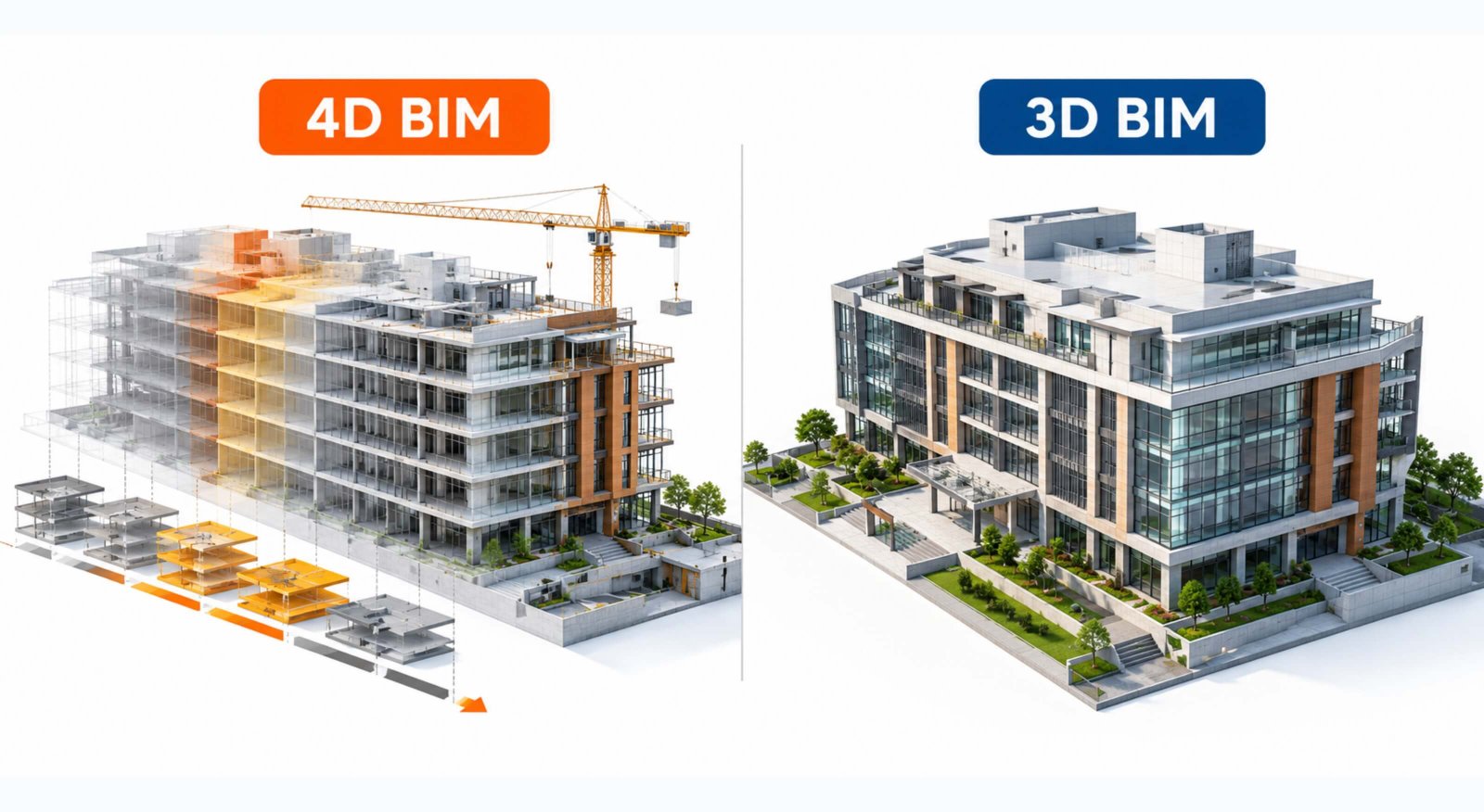
AI is changing how BIM professionals design, model, coordinate, and deliver construction projects. Tasks that once required hours of manual effort can now be completed faster with AI-powered automation, intelligent modeling tools, and automated quality checks. In 2026, AI is becoming an important part of Building Information Modeling, helping architects, engineers, BIM modelers, and construction professionals reduce repetitive work, improve accuracy, and accelerate project delivery. However, the 40% time-saving figure should be treated as a potential productivity gain rather than a guaranteed industry-wide benchmark. Actual savings depend on project complexity, software, model quality, and how effectively AI is implemented.
How AI Is Transforming BIM Modeling in 2026
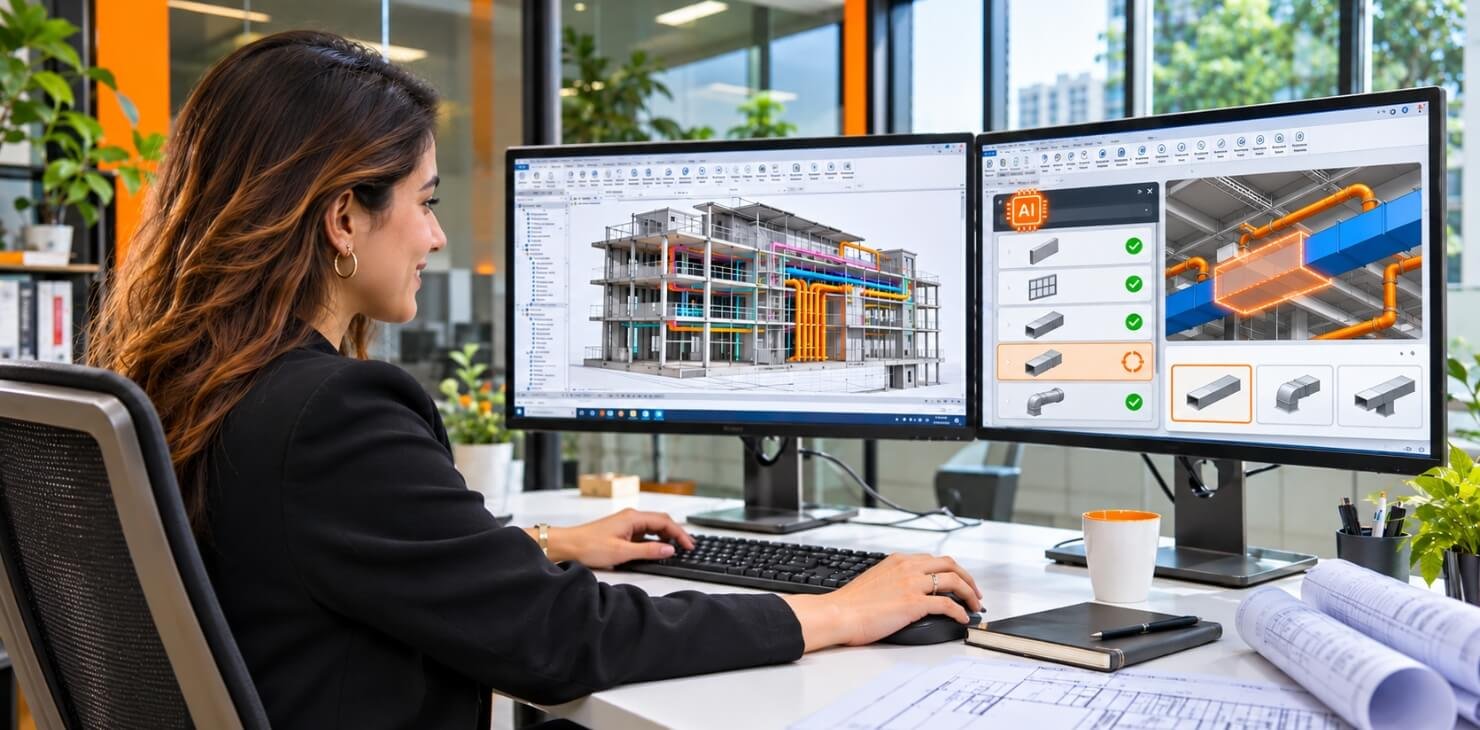
Traditional BIM modeling involves several time-consuming activities, including creating building elements, assigning parameters, generating families, coordinating disciplines, and preparing construction documentation. AI-powered tools are helping automate parts of these workflows. Instead of relying entirely on manual modeling, BIM professionals can use intelligent systems to generate elements, analyze design information, identify inconsistencies, and automate repetitive operations. Some important AI developments include:
- Automated modeling: AI-assisted workflows can generate basic building elements from sketches, drawings, and design inputs.
- Intelligent design assistance: AI helps explore multiple design alternatives based on project requirements.
- Automated documentation: Repetitive tasks such as creating schedules, annotations, and views can be streamlined.
- Model analysis: AI can help identify inconsistencies and highlight areas requiring attention.
- Workflow automation: Tools such as Dynamo, pyRevit, and AI-assisted scripting reduce repetitive modeling operations.
These developments allow BIM teams to spend less time on repetitive production work and more time on design decisions, coordination, and quality control.
Five Ways AI Is Reducing BIM Modeling Time
Automating Repetitive Revit Tasks
Revit modeling involves many repetitive activities, such as placing components, creating views, generating schedules, and updating model information. AI-assisted automation can simplify these processes through natural-language instructions, scripts, and predefined workflows. This reduces repetitive work and helps maintain consistency across project deliverables.
Faster 3D Modeling Through Generative Design
Generative design uses algorithms and project parameters to explore multiple design possibilities. Architects can define requirements such as:
- Building dimensions
- Space requirements
- Room configurations
- Structural limitations
- Energy efficiency goals
Faster BIM Documentation and Drawing Preparation
Documentation is another area where BIM professionals spend considerable time. Preparing drawing sheets, annotations, schedules, and views manually can become repetitive, particularly in large projects. AI-powered tools and automation scripts can help with:
- Generating schedules
- Organizing drawing information
- Updating annotations
- Creating multiple views
- Checking documentation consistency
Improved BIM Coordination and Clash Detection
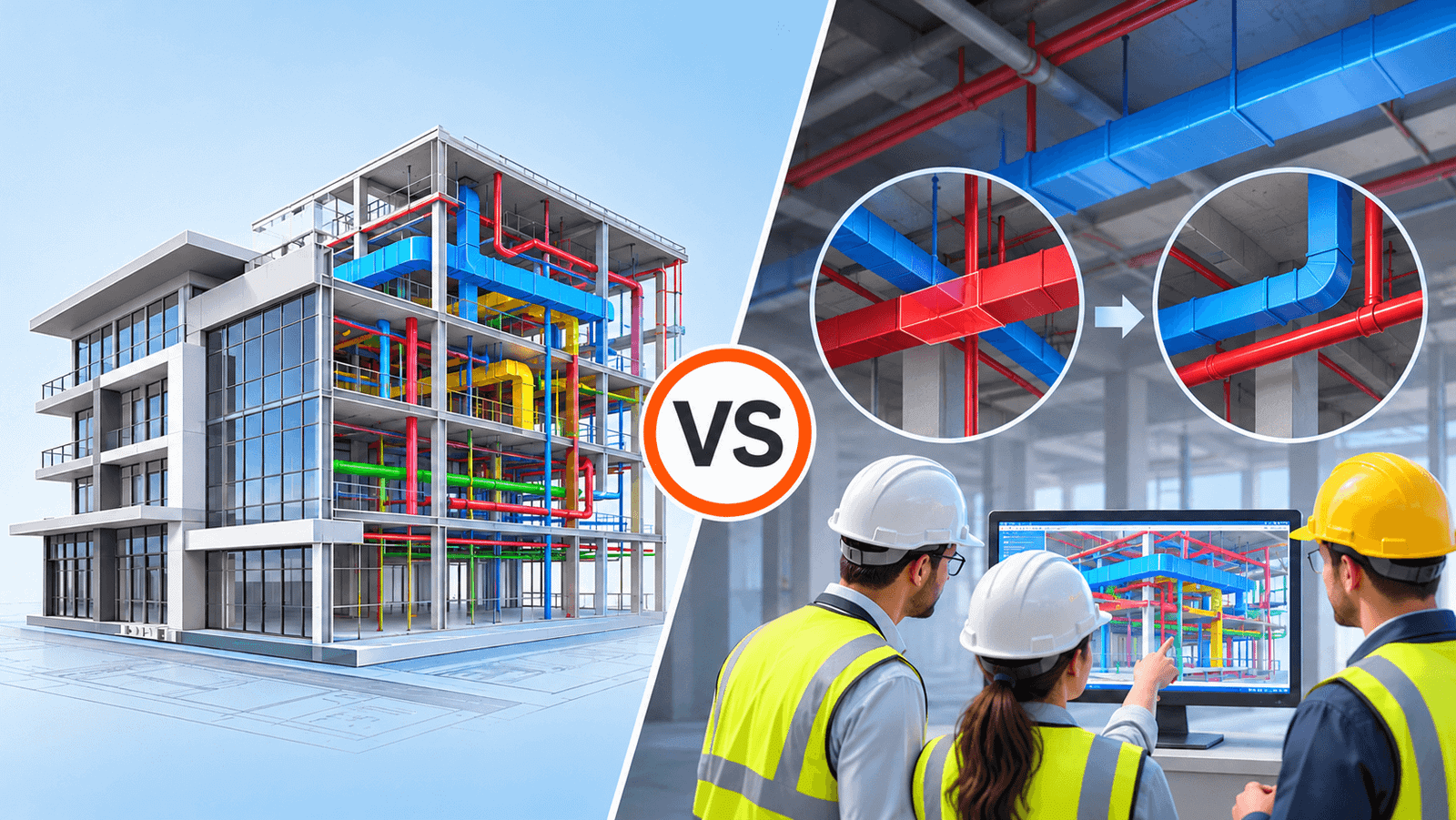
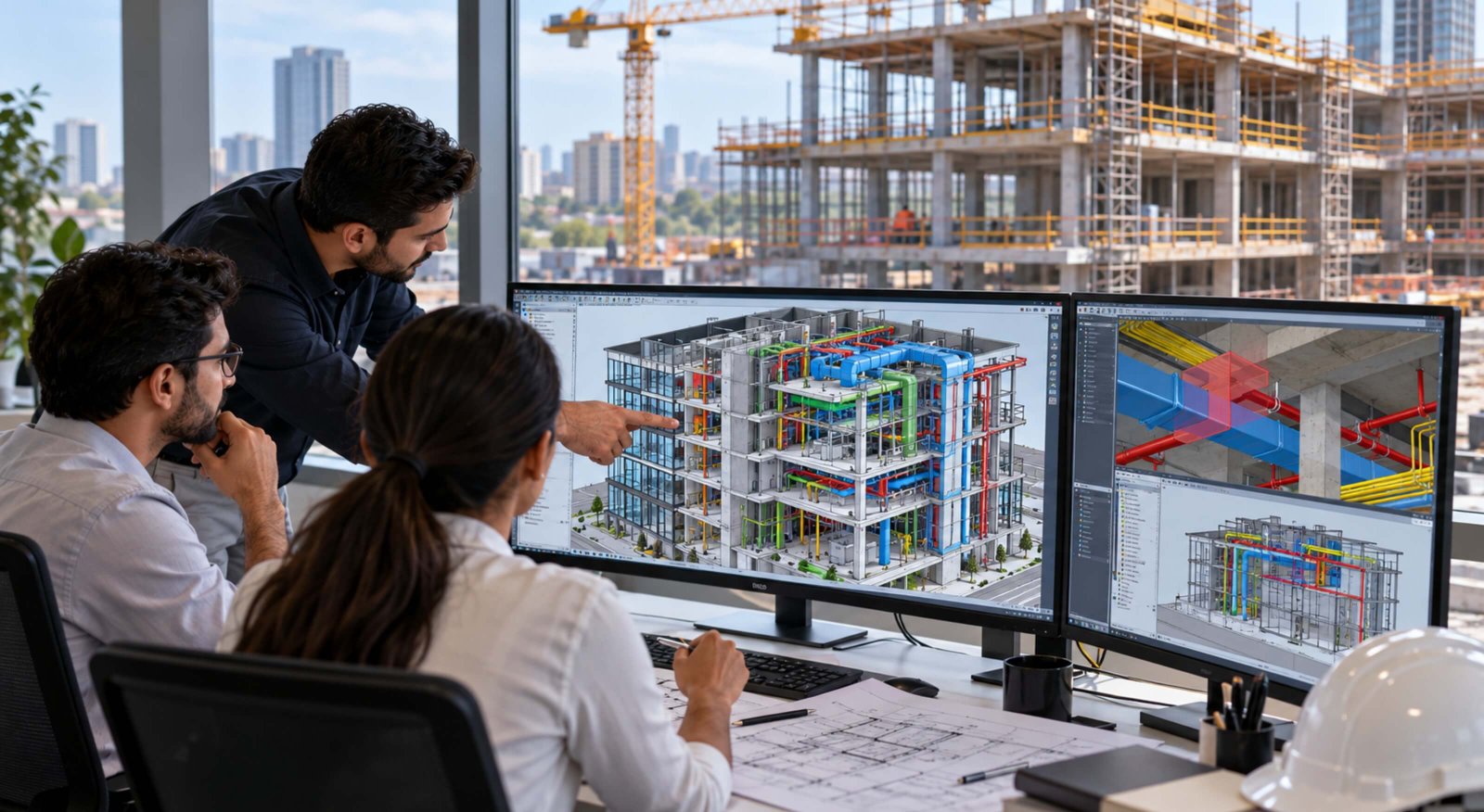
Coordination between architectural, structural, and MEP disciplines is essential for successful project delivery. Traditional coordination often requires professionals to review models, identify conflicts, communicate issues, and update designs. AI-assisted analysis can help teams prioritize potential issues, identify patterns, and streamline model reviews. For example, automated workflows can help identify:
- HVAC ducts conflicting with structural beams
- Plumbing pipes intersecting with electrical services
- Insufficient equipment clearance
- Incorrect model information
- Inconsistencies between linked models
Faster Model Creation Through AI-Assisted Automation
One of the most interesting developments is the ability to translate natural-language instructions into modeling operations. For example, a BIM professional could instruct an AI-assisted system to create walls, doors, rooms, or schedules based on defined requirements.
Research published in Automation in Construction in July 2026 evaluated LLM-driven BIM automation. The study reported a 46% reduction in task completion time compared with manual BIM scripting, although the automated approach required more correction iterations.
AI Reducing BIM Modeling Time by 40%?
The potential for a 40% reduction in BIM modeling time is an interesting productivity target, but it should not be considered a guaranteed result for every project. Time savings depend on:
- Project size and complexity.
- Level of development requirements.
- Quality of architectural and engineering inputs.
- Automation capabilities of the software.
- BIM standards and project workflows.
- Experience of the modeling team.
For instance, automating repetitive family placement or documentation may deliver substantial time savings. However, developing a detailed hospital BIM model or coordinating a complex industrial facility still requires considerable engineering expertise and manual validation.
The Future of AI in BIM Modeling
AI is moving BIM workflows toward more connected, intelligent, and automated project environments. In the coming years, further developments in BIM modeling integrated with AI will include:
- Automated conversion of design inputs into BIM elements.
- AI-assisted architectural and MEP modeling.
- Intelligent model validation and quality checks.
- Automated construction documentation.
- Predictive clash analysis and coordination.
- Better integration between BIM, cost estimation, and project management.
For BIM service providers, adopting these technologies can improve workflow efficiency, support faster project delivery, and create more opportunities to focus on complex engineering requirements.However, technology alone cannot guarantee model accuracy. Project standards, technical knowledge, and professional quality checks will continue to play an important role.
Conclusion
AI is reshaping BIM modeling in 2026 by reducing repetitive tasks, accelerating design exploration, automating documentation, and improving coordination workflows. While a 40% reduction in modeling time is not guaranteed across all projects, AI-assisted automation is creating measurable opportunities to improve productivity.
FAQ

How does AI reduce BIM modeling time?
AI reduces BIM modeling time by automating repetitive tasks, generating design alternatives, assisting with documentation, analyzing models, and streamlining coordination workflows.
Can AI automatically create BIM models?
AI can assist in generating BIM elements from sketches, drawings, and natural-language instructions. However, complex models still require professional review, corrections, and validation.
Will AI replace BIM modelers in the future?
No. AI is more likely to change the responsibilities of BIM modelers by reducing repetitive work. Technical expertise, engineering judgment, coordination, and quality control will remain important.
Which AI tools are useful for BIM modeling?
Autodesk's AI capabilities, Dynamo, pyRevit, generative design tools, and AI-assisted scripting can support different BIM modeling and automation workflows.
Is 40% faster BIM modeling achievable in 2026?
It may be achievable for selected workflows with significant repetitive work and well-implemented automation. However, the actual improvement depends on project complexity, automation maturity, and the team's experience.