BIM Services - Uniquescadd - Page 3

Level of Detail Vs. Level of Development in the BIM Environment

The AEC industry’s horizon has witnessed many notable changes that have not only simplified the complex process but also resulted in the sector’s growth. The need for good infrastructure has always been a top priority for any architecture firm. As the sector’s innovation graph keeps getting higher, one of the best transformations of the wave came when BIM-building information modeling was introduced. BIM services have and continue to revolutionize the sector with their long list of benefits and collaborative nature.

As vast as the AEC sector is, BIM modeling is also a wider concept to understand. It entails varied aspects that cater to the demands of the architecture process. As we all know, constructing any facility isn’t easy and requires the smallest of details to be accurately managed for desirable outcomes.

Moreover, today, we witness beautiful and unique architecture around us that catches our eye, although behind the beautiful exterior lies intricate detailing of every aspect. With the help of BIM services in the sector, architecture, engineers, and other collaborators can effectively execute the project with high precision.

Build Your Next Project with Accurate BIM Services by Experts

bim services

Understanding each aspect of building information modeling within the BIM concept is essential. Out of many frameworks, understanding the concept of BIM level of development and BIM level of detail is essential. These two terminologies are interchangeable according to the requirement and carry great significance in the BIM concept. However, people usually confuse them, although they entail many differences. Let’s explore both concepts in detail, including the origin of LOD in the BIM concept.

The Origin of LOD

The history of LOD goes way back before it came into the sector’s spotlight. Although the framework of LOD was established by the American Institute of Architects (AIA) in 2008, it was further taken into the hands of Associated General Contractors of America (AGC).

What is the Level of Development?

In the process of construction and implementation of BIM, AEC professionals need to understand the level of completeness and how accurately the BIM model is incorporated at different phases of the construction process. Hence, the level of development defines the project completeness in the degree of reliability of the data entailed in the BIM 3D model. As a matter of fact, this offers transparency in communication and effective collaboration between the different professionals involved in the project.

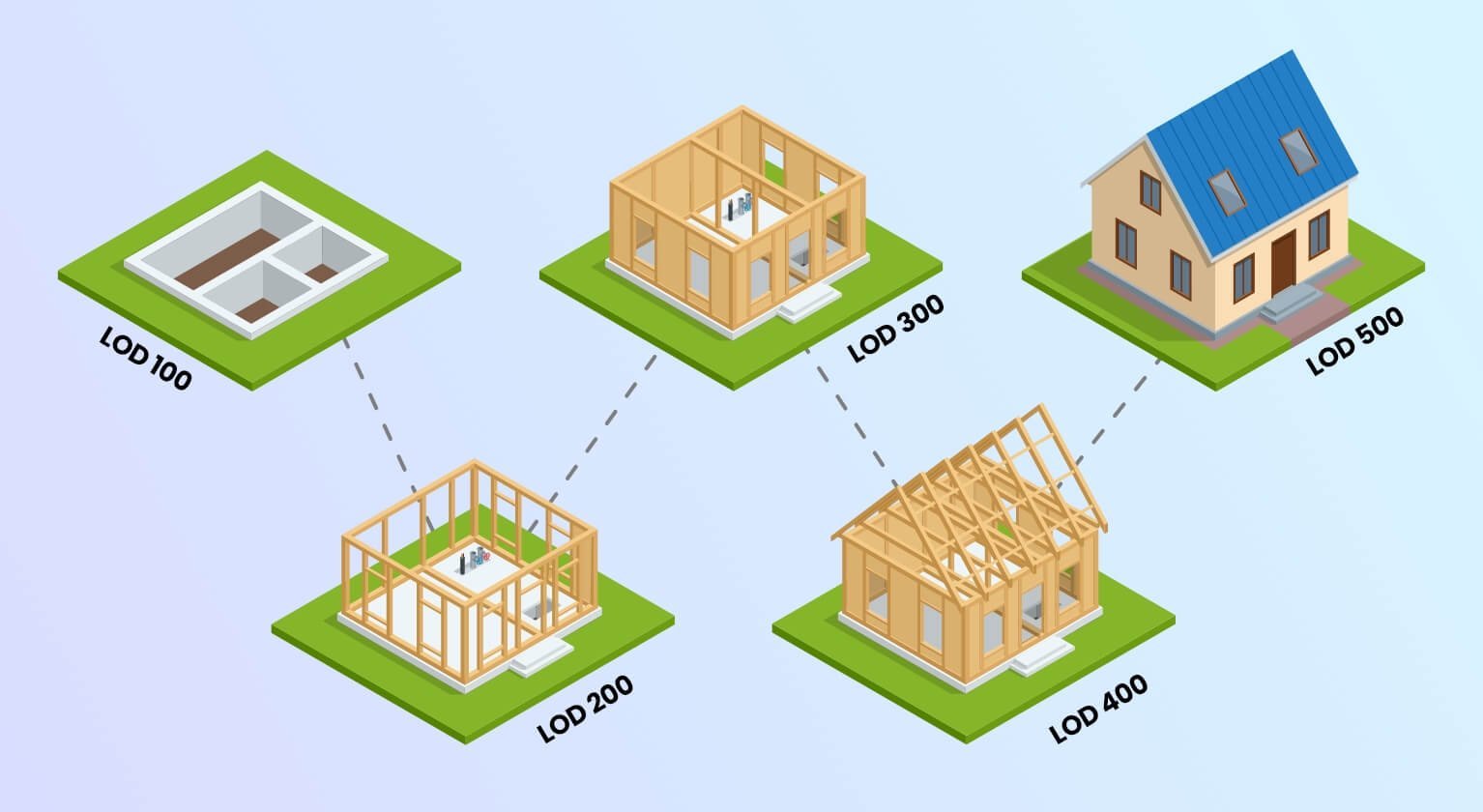
Furthermore, the BIM level of development acts as a key component in the entire construction process as it provides regulated and accurate management of the BIM model while the construction is completed. More than that, the level of development showcases and defines the amount of details incorporated in the BIM at different phases of the project. This explicitly fulfills the requirements and purpose of the BIM model. Usually, the BIM level of development, which caters to the level of completeness, ranges from LOD 100 – to LOD 500, with each level defining different stages.

  • LOD 100- Concept Design
  • LOD 200- Schematic Design
  • LOD 300- Detailed Design
  • LOD 400- Construction
  • LOD 500- As-Built

What is the Level of Detailing?

As discussed, the BIM level of development describes the level of completeness. On the other hand, the BIM level of detail is defined as the amount of information and accuracy in the drawing. A higher level of detailing generally promotes bulk information incorporated in the drawings. Such information can include dimensions, notes and annotations, colors, textures, lighting, and more. The level of detail helps to provide accurate details, which are further used in the construction process. As a matter of fact, technical drawings serve different levels of detail, which may include;

  • Sketch
  • Concept Drawing
  • Detailed Drawings

Level of Development Vs. Level of Detail and Their Applications

Both concepts hold significant importance in the BIM framework. The level of development and detail are usually interchangeable in the AEC industry, although both concepts of distance meanings and purpose serve in BIM projects. The BIM Level of detail defines the amount of visual or graphical representation of information entailed in the BIM model. It caters to the amount of details added in the 3D BIM model, such as dimensions, textures, colors, and more. Typically, the BIM level of detail is used to define visual information in a particular phase of construction or the entire project.

On the other hand, the BIM level of development is described as the completeness and precision of the information input in the BIM model. This is further divided into five main types of levels, which showcase varied information and how far the construction is done. In fact, the level of development defines the degree of accuracy at different stages of the construction project, usually from conceptual design until the final phase of the construction is completed.

This is the major difference between these two concepts. Despite being interchangeable in the AEC sector, the application of BIM level of detail and development is incorporated in varied phases. The following are the significant applications;

Significant Applications of Level of Detail and Level of Development

Cost Estimating
Project Planning
Design and Coordination
  • Cost Estimating:-Both LODs help prescribe the cost estimation for the entire construction project or each phase of the building, allowing for a better estimate of the quantity and reducing material wastage.
  • Design and Coordination:- The level of detail and development are incorporated to ensure accuracy and reliability. Specifying each detail in the construction enables AEC professionals to avoid clashes, errors, and rework.
  • Project Planning:- A rough estimate of the BIM project’s level of development and detail allows project managers to manage the timeline, resources, and budget accurately.

In a Nutshell

The significance of BIM’s level of detail and BIM’s level of development lies within their abilities. Each concept carries its own information, enabling project managers to accurately and efficiently complete the project and manage the operation, maintenance, and project lifecycle.
Role of MEP BIM in Clash Detection and Resolution

The horizon of the AEC industry has completely altered compared to earlier times. Today, there are many tools, software, and technologies that have not only simplified the construction process but also made it accurate and efficient. Moreover, a wave of technological advancements in the industry has reshaped how we used to build and design. Modern architecture is full of opportunities, creativity and demands for a modern working approach, which is why, with the help of BIM services in the sector, it is easier to create and manage the 3D model.

Although BIM is the sector’s powerful tool, it has revolutionized MEP BIM services. It is not just another technology but a cornerstone of modern architecture with unmatched efficiency, collaboration, and accuracy. In fact, any building, regardless of its type and nature, is incomplete without its functional components. This means that it is not sufficient to construct just the structure; the mere structure should be functional in all aspects.

Imagine a building where there is no electricity main or sufficient water flow or where it may be unsafe in case of accidental fire or any other natural calamity. Does it make a livable situation in that mere building? It is difficult to paint such a picture with the firm answer no as it has zero facilities, providing a holistic and suitable environment. What makes any infrastructure functional is its livable facilities: mechanical systems, electrical systems, plumbing pipelines, and fire safety.

Effectively Resolve Clashes with MEP BIM Clash Detection Services

bim services

In collaboration with all three, it makes MEP services. Incorporating MEP with BIM technology makes it even more acceptable, accurate, and efficient for AEC professionals to begin with on-ground work. Moreover, MEP is a simple but blend of science that goes beyond just assembling nuts and bolts. It requires intricate precisions, perfect measurements, and a defined design to successfully install MEP systems in a building.

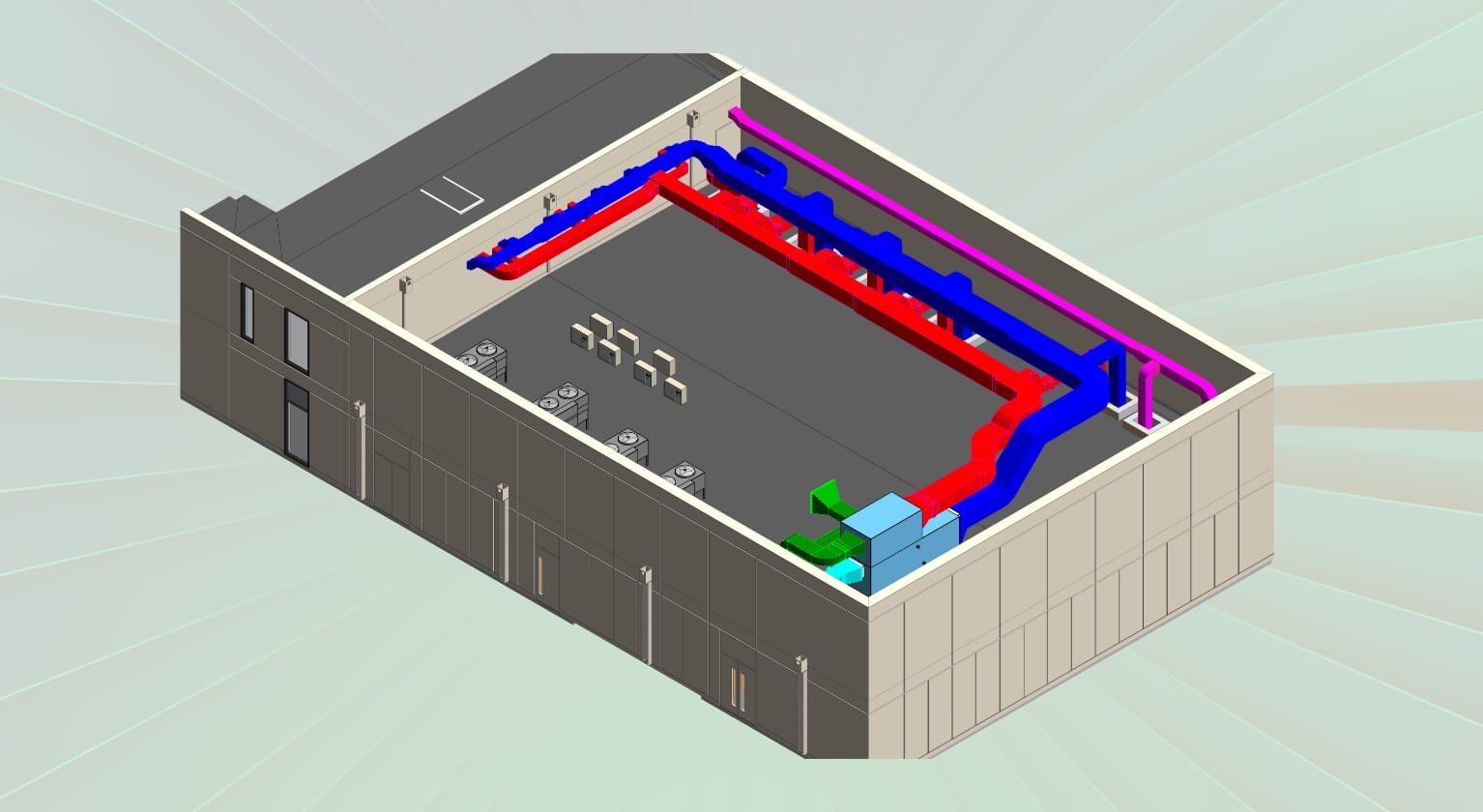
Additionally, the incorporation of building information modeling makes it a robust integration that offers enhanced coordination, collaboration, and accuracy, which can transform how MEP systems are designed, installed, and maintained. These systems coincide within the walls and ceilings and coexist together in the building, serving a livable and breathable situation in the infrastructure. However, installing three main domains is a complex and motley process for AEC professionals. The sheer complexity of installing MEP systems in a building requires intricate attention to detail, and three domains may clash with each other or clash with other components of the building. Hence, to maintain harmony within these and other elements, MEP BIM services provide accurate processes in the 3D model of the infrastructure. Let’s quickly understand why MEP is critical and how MEP BIM can detect clashes.

Sheer Requirement of MEP in Building

In architecture, a building requires an accurate framework that is functional and habitable. Incorporated with BIM, MEP is the most important aspect in the AEC sector as it is crucial for building design, construction, and maintenance. Moreover, its functional capabilities make the building breathable. For a simpler understanding, let’s break down MEP.

  • M – Mechanical System: The foremost discipline stands for mechanical systems that deal with air quality and climate control, including HVAC systems (Heating, Ventilation, and Air Conditioning). These systems ensure that the facility’s living situation is comfortable.
  • E – Electrical System: Moving further, the E stands for electrical systems in buildings that charge all the lights, power outlets, and other electrical wiring.
  • P – Plumbing System: Lastly, the P in MEP stands for plumbing, which manages all the water-essential systems and pipelines.

It isn’t easy to imagine any facility without these three components, as they play a significant role in maintaining the building’s efficiency. Additionally, installing these systems together in the 3D BIM model can result in a major clash in the functionality of one of these systems.

Hence, it is further encompassed with the BIM model to overcome the complexity of installing MEP, ensuring that the three domains don’t collide with each other or any other infrastructure component. The powerful integration of MEP BIM services makes the project more efficient and accurate, with more advantages for the project and AEC professionals. Following are some of the benefits

  • Design Precisions
  • Clash Detection and Resolution
  • Enhanced Communication and Collaboration
  • Sustainability Integration
  • Time and Cost Savings
  • Minimizing Errors
  • Enhanced Safety

With several benefits, MEP BIM services also offer a detailed 3D representation of MEP systems. It has become a comprehensive model to detect clashes and resolve them quickly in the digital model. To understand better, let’s briefly understand the role of MEP BIM in clash detection.

MEP BIM Services Major Role in Clash Detection and Resolution

Constructing any infrastructure requires different aspects of accuracy to keep the building functional. Construction process is complex and time-consuming as it involves various stages, procedures, and techniques to complete the project accurately. Any errors or clashes detected on the construction site can cause a significant loss in terms of money, material, time, and effort. Although BIM services are integrated with MEP systems, it has become easier for architects, engineers, and other collaborators to quickly detect any minor clash and resolve within the model before the actual groundwork begins.

That’s the power of MEP BIM services in the AEC industry. Before the commencement of technology, clashes were recognized on construction sites, resulting in a change of construction plan. Due to this traditional method, cost overruns and delays in projects were frequent. Therefore, with the commencement of MEP Clash detection with the BIM 3D model, identification of clashes between MEP systems has become easier, allowing AEC professionals to avoid any changes during the later stage of construction. MEP BIM services minimize cost overrun, reduce material wastage, resolve conflicts between the three domains, and much more. More than that, MEP BIM offers various benefits, as follows

MEP BIM Offers Various Benefits

Early detection of clashes
Saves Time and Money
Streamline the Communication
Efficient Design
Identify Potential Risk
Enhance Coordination of MEP Systems

In the End

The pivotal role of MEP BIM services in the AEC industry in identifying and resolving clashes is crucial. In today’s modern era, it has become a comprehensive, collaborative approach that ensures saving time, money, and last-minute changes in construction plans. A minor clash between the MEP systems or any other component can result in significant loss. Moreover, the help of MEP BIM services in clash detection enhances communication and collaboration between AEC professionals.

A Comprehensive Guide to Outsource BIM Services

“BIM Unifies the language of Building Design.”

In the technological-driven scenario, every sector is looking for novel ways to stay competitive and innovative in the market. Today, with the advanced use of technology, sectors have evolved gradually and adopted new working methods. In this fierce race, the architectural and construction industry is ahead by discarding traditional architectural procedures. For the AEC industry, the sheer credit of reshaping the industry is aligned with the introduction to building information modeling in the 70s. However, it was in the early 2000s when BIM technology was perceived as positive. In this today’s growing economy, BIM is no longer an alien concept and has emerged as a paramount of success for the architectural and construction industry.

Since the implementation and rapid use of BIM services, the global market of BIM has seen an exponential hike, and according to Mordor Intelligences report, the market size is estimated at USD 8.72 billion in 2024 with expected reach of USD 16.72 billion by 2029 and growing at a CAGR of 13.09% in 2024-2029. As a matter of fact, BIM services are widely accepted and have become the need of the hour as they serve a smoother and streamlined construction workflow. Additionally, BIM creates a collaborative process between architects, engineers, and other collaborators, which helps in accurately planning, designing, and executing the entire construction process with a 3D model.

Outsource BIM Services to Increase Potential of your Next Project

bim services

As a well-known technology, the global adoption of BIM has seen a rapid course of action in several countries. Out of which, many countries have made BIM modeling services a mandatory practice. The US is one of the first countries to adopt this innovative technology. With evolving awareness, BIM services in India have recognized their advantages in implementation and have quickly caught up with the industrial trend. With the rise in technological advancement, BIM paves the path to modern architecture and enhances the construction process with detailed accuracy and ease of execution among AEC professionals. However, let’s quickly understand BIM and how it impacts the entire AEC industry.

What is BIM Technology, and Why Should We Outsource?

As the construction sector has grown rapidly, BIM technology has altered the reality of the architecture industry. With the rise of BIM services globally, it has become easier to collaborate with AEC professionals, enhanced communication, and more accurate construction management. On that note, building information modeling is defined as a digital technology that provides a 3D representation of the infrastructure with all the characteristics of the building. The facility’s 3D model allows AEC professionals to enhance communication and collaboration seamlessly.

Having an accurate 3D model of the facility before the groundwork begins solves potential risks and errors that result in minimized cost, improves accuracy, and enhances the decision-making process between architects and engineers. To be honest, BIM modeling services are the bright future of the AEC industry with their adaptive, easy, and accurate models.

In the traditional working method, it took a lot of work to create the infrastructure model and identify the errors before construction began. Moreover, it was a time-consuming and labor-intensive task that required specialized skills and an intricate level of precision to draw sketches. However, with the introduction of BIM modeling services, the various stages of projects have been simplified and offer a long list of benefits. The following are some;

  • Accuracy in Cost Estimation
  • Completion of the Project with the Timeline
  • Reduce the Expense
  • Enhance Communication and Collaboration
  • Improves Safety on Construction Site
  • Accurate Project Visualization
  • Identify Potential Risk
  • Improved Project Management
  • Provides Sustainable Design
  • High-Quality Results

With a never-ending list of benefits, building information modeling has brought a closer look into the construction process and made the complex process more manageable. As a matter of fact, BIM technology has a great extent of abilities to reshape the future of the AEC industry with more emerging technologies and methods.

Today, in the modern architecture era, it has become an all-time resource for architects to execute projects accurately without any possible errors in the design stage. It plays a pivotal role in the AEC industry, although it requires specialized skills and expertise to execute the BIM services extensively. Over the last few years, outsource BIM services has been a marvelous and cost-effective option. Outsourcing firms have a skilled workforce and relevant experience to take up a construction project at a cost-effective range. As a matter of fact, 45% of general contracting firms have outsourced BIM technology, resulting in higher ROI and better end results for the projects. Moreover, outsourcing 3D BIM modeling services will save ample amounts of time, rework, and cost. Considering outsourcing for BIM services can result in the following benefits;

  • Quality Output
  • Timely Delivery
  • Customization as per Project
  • Experienced Manpower
  • Focus on Core Business Activities

UniquesCADD offers extensive outsourcing BIM services to a global clientele, leveraging our expertise, cutting-edge technology, and vision to accomplish projects accurately.

Key Considerations to Choose BIM Outsourcing Partner

Managing BIM services in-house can become a significant challenge to any firm. It will cost a lot to set up the entire BIM department with software, technologies, experts, and much more. This will result in chances of errors, project delays, inaccuracies, and more. Hence, outsourcing to a BIM services provider is a comparably better and reasonable option. Following are the key aspects of outsourcing BIM service partners.

Key Considerations to Choose BIM Outsourcing Partner

Check for Experience
Technology and Software
Quality Control and Assurance
Team Expertise
  • Check for Experience: Outsourcing BIM services partners should have decent experience accurately comprehending the different types of projects.
  • Quality Control and Assurance: Quality assurance and control are essential to check for, as BIM service providers must have guaranteed quality checks and assurance protocols.
  • Technology and Software: Before hiring third parties it is essential to consider the partners utilizing updated and right technology. Outsourcing BIM partners should have licensed and updated software and technology for accurate project execution.
  • Team Expertise: Expertise is another comprehensive aspect to consider before outsourcing BIM. The outsourcing BIM partner experts must have relevant expertise, skills and proficiency in BIM software to execute the BIM model with precision. Extensive years of experience and expertise helps to make a difference in a project’s success.

In the End

BIM technology is a cornerstone of the AEC industry, providing accurate results in the construction process. Moreover, hiring third parties for BIM services can offer more benefits to the construction project, with enhanced levels of accuracy, communication, collaboration, and process efficiency. In today’s era, BIM implementation has become paramount to success in the field of modern architecture. Moreover, it will flourish more in the coming years due to the rise in digitalization.

Top Benefits of Outsourcing CAD to BIM Services

The world has become competitive and being fast, fiercely and constantly updating with technology has become a need of the hour. However, when speaking of the architectural industry it has become prominent to update with the latest trends and technology in the industry. As we all know, the AEC industry is a complex one with tons of possibilities of having errors. Moreover, in the modern architectural world, the infrastructure requires more accuracy, efficiency and better designs. Luckily, in the 90s the AEC industry was introduced with CAD and Building Information Modeling technology which made the construction process much easier, faster and more accurate. However, both of the technologies have similar capabilities to create digital models of the infrastructure but cater and fulfill numerous other aspects of approach, functionality and uses in the entire construction process.

As CAD was introduced in the AEC industry, it became quite easier for architects to produce high quality drawings at a quicker pace. The technology was replaced with hand drawings as traditional drawings have higher possibilities of errors and rework. Whereas CAD provides high accuracy more automated processes and design, enhancing the quality of work. Speaking of Building Information Modeling technology, it has a more comprehensive approach than CAD, allowing architects and engineers to create visual 3D representation of buildings with detailed information, including components, materials, dimensions and other properties. Moreover, CAD to BIM conversion allows architects, engineers and contractors to communicate and collaborate within the same database for the desired project. Since the growing popularity, CAD to BIM conversion services is a powerful technology that caters to save money and speed up the project delivery with 70%. Not only this, it has brought evolution and changed the construction project execution.

Most Reliable Solutions for your Next CAD to BIM project

bim services

CAD to BIM service requires technical knowledge, desired skill set, and expertise to deliver the project on time with accuracy. Moreover, having an in-house team of CAD to BIM experts can be costlier. Hence it is better to outsource CAD to BIM services, not only this but outsourcing can provide other numerous benefits. Following are the benefits discussed in brief.

Outsourcing CAD to BIM Services Advantages

Top CAD to BIM services providers offer higher accuracy, enhanced project quality and easier workflow. UniquesCADD is top outsourcing CAD to BIM services provider, ensuring the unparalleled performance, high quality and perfection in each detail with satisfied global clientele based in Paris, Netherlands, Germany and the USA. Our skilled team of professionals the quality and timely delivery of each project. As a BIM services provider, we offer a wide spectrum of CAD to BIM services under a single roof. Following are services that can entail different design and construction stages for better results.

different design and construction stages

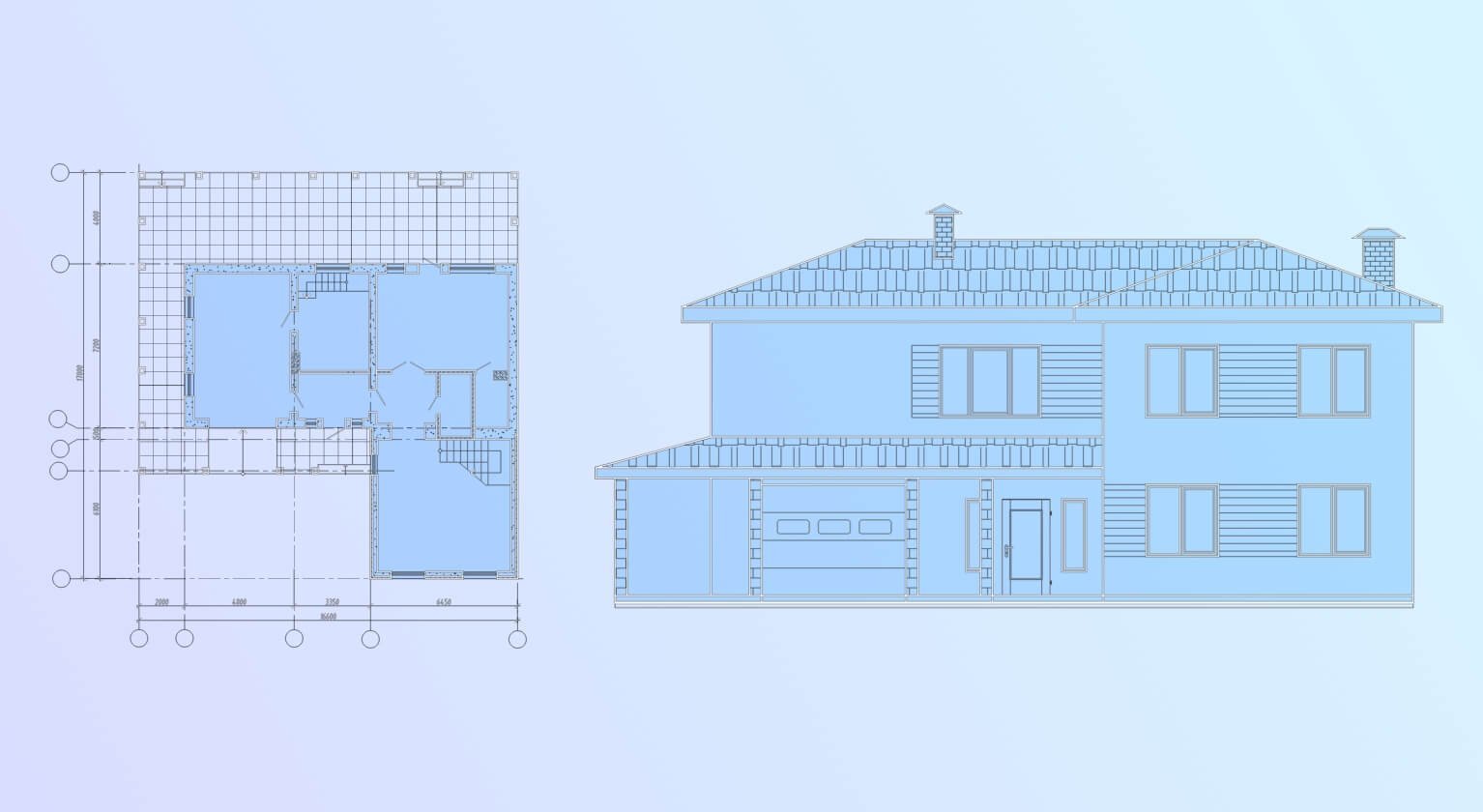
PDF to BIM Conversion Services
Hand Sketch to BIM Modeling
2D CAD to Revit
3D CAD to Revit

PDF to BIM Conversion Services

Conversion of PDF drawings into BIM models for enhanced, accurate, and precise visualization.

Hand Sketch to BIM Modeling

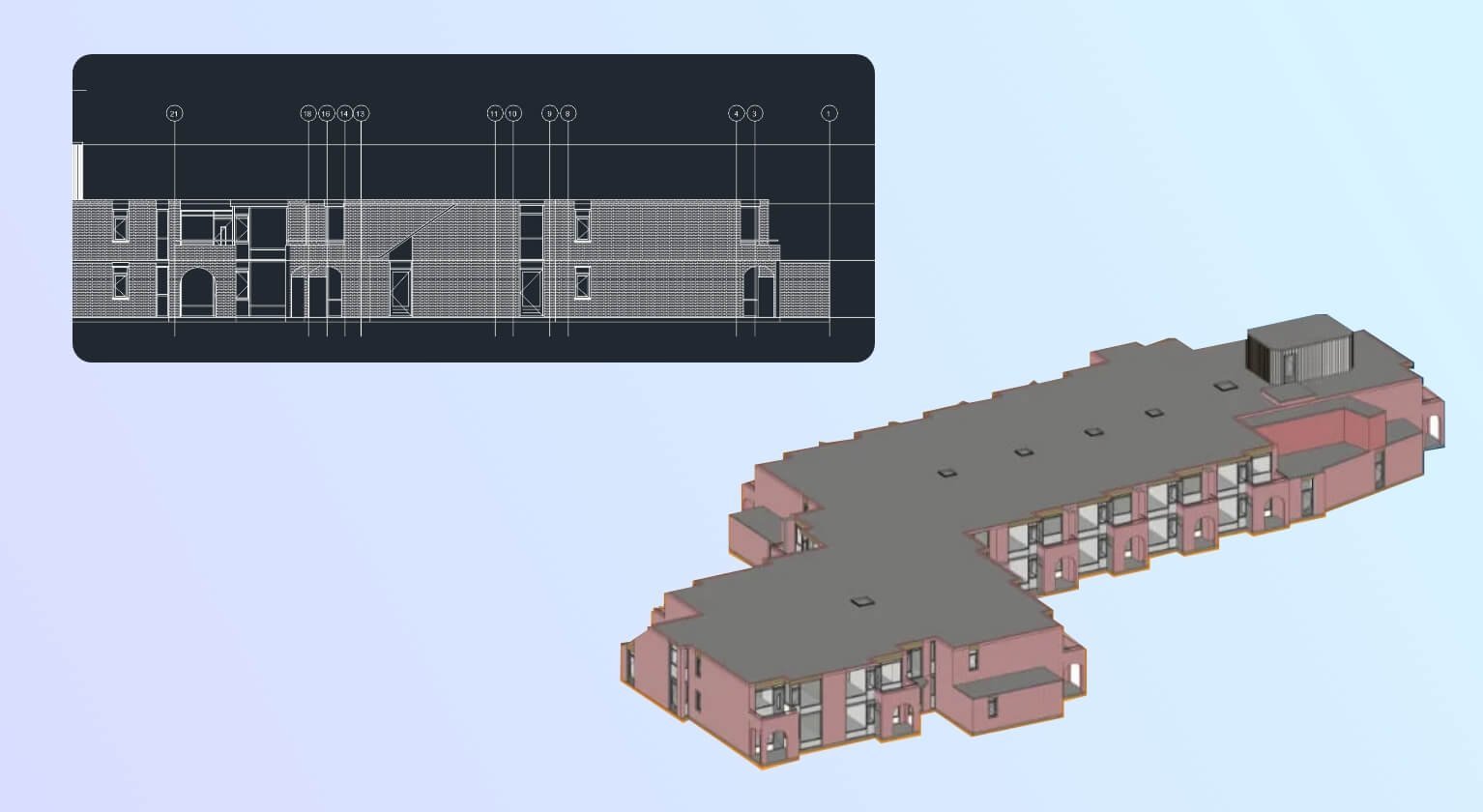
Converting hand drawings into detailed and accurate 3D BIM models in Revit.

2D CAD to Revit

Converting 2D CAD into Revit software with accuracy and streamlining the work for 2D BIM model projects.

3D CAD to Revit

Conversion 3D CAD into Revit software, enhancing the coordination and providing detail information of the 3D BIM model.

Our wide spectrum of CAD to BIM services are done by professionals within the given timeline. Outsourcing CAD to BIM services offers numerous benefits which can upscale the quality of the project. Besides, making the process easier and precise for better outcomes. Following are the detailed benefits:

detailed benefits of Outsourcing CAD to BIM services

Reduced Cost and Time
Boost Productivity
Better Outcome
Improvise Communication
Ease the Project Visualization
Reduce Errors

Reduced Cost and Time

Outsourcing CAD to BIM services allows the AEC firm to minimize the cost and focus on other core tasks of the organization. CAD to BIM services optimize the design, making it easier and accurate.

Boost Productivity

Top outsourcing CAD to BIM Companies will enhance the productivity of the entire construction process. The services provider follows the process that creates 3D BIM models, performs quality check and delivery time. By hiring an outsourcing CAD to BIM specialized, the AEC firm can enhance productivity while focusing on the core competencies of the firm.

Better Outcome

CAD to BIM services requires specialized skills and knowledge to deliver the accurate results with precision. Moreover, CAD to BIM can provide accurate models as per the requirement, ensuring the quality, and detailing of the model.

Improvise Communication

With CAD to BIM outsourcing services, it improvises the communication between all the people involved in the construction process. Moreover, it streamlines the workflow in the process, making the construction process easier and faster.

Ease the Project Visualization

CAD to BIM conversion allows architects, engineers and contractors to have a perfect digital representation of the building to work accordingly on the project by collecting the desired information from the same database.

Reduce Errors

While working and collecting data from the database, it reduces the chances of errors in construction of the building. Outsourcing CAD to BIM services provider experts ensures the quality of models generated in the Revit software by performing a quality check.

If looked at separately, both CAD and Building Information Modeling are widely popular and adopted choices for any AEC firm. Whereas, reflecting the popularity, Archicad to Revit services have become a common go to solution to work single-handedly onto the same project for architects, engineers and contractors. CAD to BIM model contains various amounts of data which are updated in real time; moreover, it calculates every single modification that can be helpful in the project. Archicad to Revit provides parameters like; dimension, materials, color, textures and much more.

To Sum Up

CAD to BIM conversion services facilitate the smooth functioning of the entire construction process. Besides, in the modern architecture world, it has now been widely adopted for better accuracy, high quality and reduces the overall errors of the project. In Addition, outsourcing CAD to BIM services can save you overall cost, time and increase profitability with high-quality of services.

Empowering the AEC Industry with CAD to BIM Services

During the late 70s, the AEC industry went through some drastic changes. The world was then introduced to computer technology. With such advanced technology, computers reached its para mark to introduce CAD (Computer Aided Drafting), which was a significant change in the AEC industry. The revolution hit the industry, and soon, in the 90s, software like AutoCAD was introduced to ease the whole process. The AEC industry took steps in the digital era from paper to computer screen. Today, the world is on a continuous roll of advancements and drastic changes that can make our lives easier.

Moreover, with constant changes and tech advancements, CAD to BIM Services came into existence, which again eased out the construction process more than before. The influence of CAD to BIM conversion services reduced the risk of human error & made it possible to explore complex architectural designs. On that note, CAD to BIM services allows architects, engineers, and contractors to work in collaboration and improve communication until the end of construction.

The AEC industry today is much simpler than it was earlier. CAD to BIM conversion services have revolutionized the traditional methods of the architecture process. Let’s understand how CAD impacts the revolution in the AEC industry to BIM services.

Hire Experts for CAD to BIM services

bim services

CAD to BIM services Revolutionized the AEC Industry

The purpose of CAD is to let users view the entire project before the construction is completed. On the other hand, BIM services are a digital representation of the whole infrastructure in various dimensions, including 3D, 4D, and 5D. BIM modeling services help to plan, design, construct, and manage the entire architecture process efficiently. Moreover, combining the two services makes it more efficient and easy for collaborators to work accordingly.

With CAD services coming into existence, it has replaced manual drafting and constant rework in the design. At the same time, BIM modeling services take a step further by creating a 3D model of the infrastructure that helps in projecting the actual digital visualizations. CAD to BIM services have become an essential part of the construction process. It helps to build effective communication and maintain the construction flow. In short, CAD to BIM conversion services can be defined as scanning the paper drawing into a digital visual format. It facilitates a high level of accuracy and reliability in the construction.

Why Outsourcing CAD to BIM Services?

As the AEC industry is on constant advancement to make the construction process less complex and more effective, CAD to BIM conversion services were introduced. It enhances the overall communication and collaboration between different parties involved in the construction process. Moreover, it allows a visual representation of the facility, which can be enhanced, edited, or remodeled as per the requirement. In addition, the CAD to BIM also improvises the project management and detection of errors and clashes that are resolved during the visualization stage. To have these services with 100% accuracy, it is best suited for construction companies or other parties to outsource CAD to 3D BIM services. These services require extensive technical knowledge, expertise in software, and attention to minor details in the model. Outsourcing these services can benefit in many ways. Following are some of the major perks of outsourcing CAD to BIM.

major perks of outsourcing CAD to BIM

Minimum Investment, Maximum Profit
Cost Effective
Quality Deliverables
Increased Productivity and Efficiency
Reduced Overall Operational Cost
Improvised Quality Construction
Better Coordination

Who Requires CAD to BIM Conversion Services?

CAD to BIM services have transformed the AEC industry for many years now. These services have helped architects, engineers, and contractors to create an accurate infrastructure 3D model. CAD to BIM conversion services help to visualize the entire project for better understanding and communication between the collaborators involved in the construction process. Moreover, not only architects and engineers but CAD to BIM conversion services are also helpful for structural engineers and MEPF to easily recognize clash detection, maintenance and operation of the building, and clash coordination. Additionally, CAD to BIM services are also advantageous for interior designers to visualize the interiors in the 3D model of the structure and represent the interiors in a magnificent way to visualize how the space will look in reality.

As the AEC industry is transformed with CAD to BIM conversion services, making the entire process easier, faster, and more accurate for architects and engineers to work in collaboration. Besides, this also helps in easing out the construction process complexities and can provide a more extensive view of the project. With the ability to make complex things easier, CAD to BIM services can be used for any type of building structure, including commercial buildings, historical buildings, educational institutes, and residential buildings.

Factors to Consider CAD to BIM Services Provider

With digitization evolving around the world, almost every firm is considering switching to a BIM services solution to make the construction process more manageable. However, firms implementing CAD to BIM are finding it strenuous to carry out the services as BIM modeling services require a unique skill set, expertise, and knowledge. To bring an extensive solution to that, firms are now outsourcing CAD to BIM conversion services as the BIM market is growing widely. A large set of outsourcing organizations provide accurate services through a team of experts. According to the reports, 45% of the firms outsource their BIM services. However, with growing popularity, choosing the right partner is a troublesome task. Here’s a peek into the aspects of selecting the right outsourcing CAD to BIM services provider.

aspects of selecting the right outsourcing CAD to BIM services provider

Relevant and Extensive Experience
Costing
Skilled Team and Resources
Work Approach and Communication

Relevant and Extensive Experience

Any BIM outsourcing service provider is defined by its relevant experience. Since the service requires a special skill set and experience to manage and complete the complex project.

Costing

With the growing popularity of outsourcing CAD to BIM services, a firm needs to understand their pricing and offering along with it. Quoting the best and most suitable pricing for outsourcing services. The relevancy of the expertise and pricing strategy must match your budget.

Skilled Team and Resources

The relevancy of any BIM service provider firm relies on having an excellent team of professionals and updated tools and software to carry out the BIM modeling project smoothly and efficiently. The more skilled the team, the more ease, and fact your project will be executed with accuracy and details as per your wish.

Work Approach and Communication

Outsourcing CAD to BIM service providers has various work approaches and communication processes. Considering an outsourcing company with clear, concise, and transparent communication with work strategies that can execute your project efficiently is vital.

UniquesCADD is an outsourcing firm providing extensive BIM modeling services and CAD to BIM services with a broad spectrum of knowledge, a skilled team of professionals, and the latest tools and technology to carry out any complex project.

In the End

CAD to BIM services have been widely adopted for numerous reasons, transforming the AEC industry in recent years. Easing out the complex construction process and enhancing the collaboration and communication between the parties involved. Moreover, CAD to BIM conversion services also improve construction visualization, making it easier for architects, engineers, contractors, and even interior designers to work in coordination until the end of the construction.

Reshaping the AEC Industry with Point Cloud to BIM

The AEC industry has evolved over the years with advancements in technology and the introduction of new software and tools. All have contributed to making the construction process more manageable. Back in the day, the architecture industry was quite complex; it still is, but with the ease of tools and technology, the industry has boomed. The introduction of BIM services in the AEC industry has taken the world of construction to the next level. More accuracy, reliability, and almost zero room for errors. Architectural BIM services have brought many significant changes that have made it easier for architects and other collaborators to work in a smooth and efficient manner.

BIM modeling services are usually defined as creating a 3D model of a construction process that eases the collaboration with architects, civil engineers, and other collaborators in the process. In simple words, it is services that digitally represent the building for a clear idea. As a matter of fact, BIM can be used throughout the construction cycle, providing helpful insights and clearing the road of errors while actually constructing the building. With booming BIM services in the industry, point cloud to BIM has taken charge of making the process a little less complex in a short time.

Point cloud to BIM has become a vital service for construction companies around the world. Architects have adapted modern technology, making the complex process more effortless. Moreover, it has revolutionized the industry with improvised accuracy and enhanced construction process efficiency. It is not limited to this but is also a cost-effective option. To understand it better, let’s dive into what is point cloud-to-bim modeling and how it impacts the industry as a whole.

bim services

Understanding Point Cloud to BIM

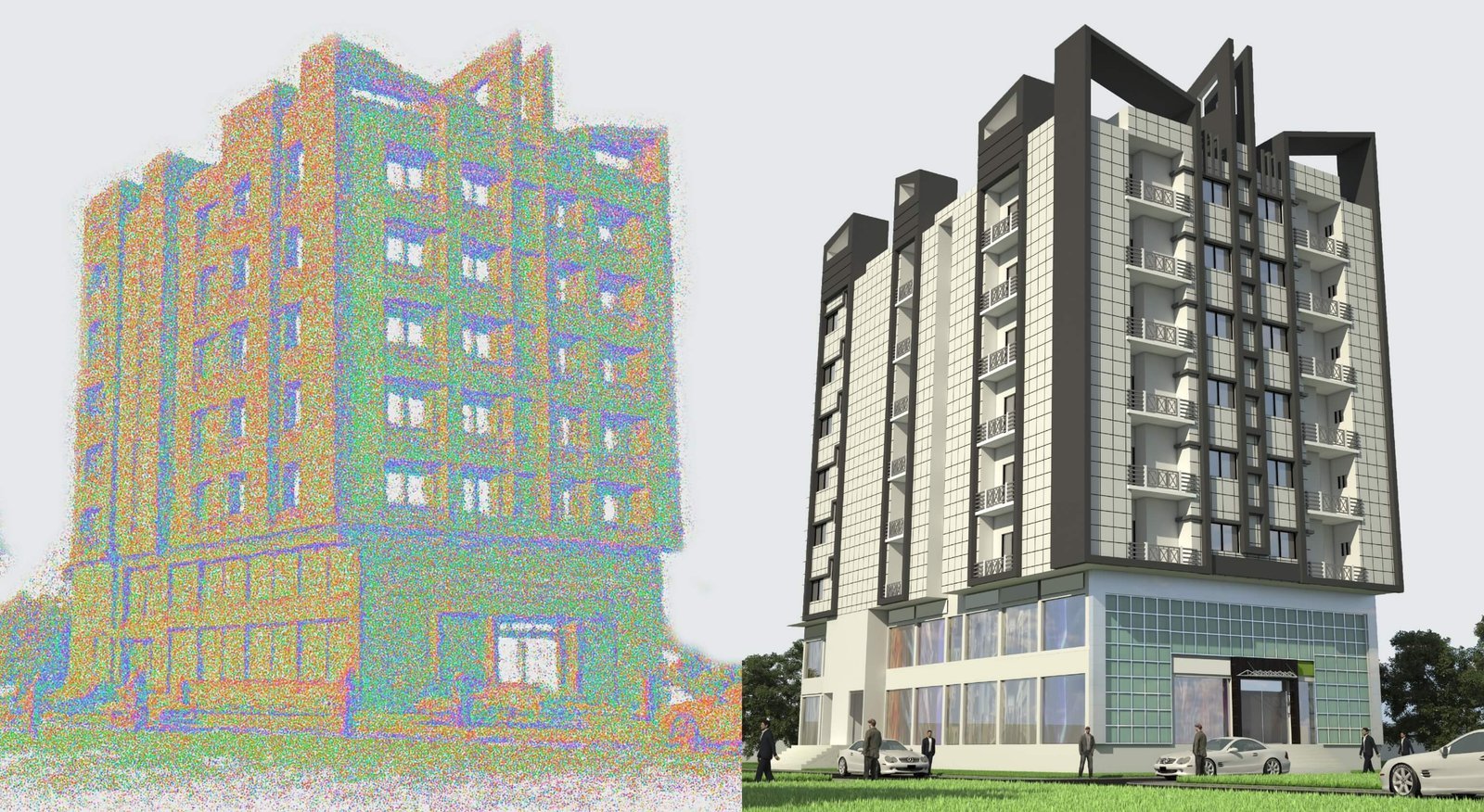
Point cloud to BIM is defined as the process of scanning the entire space through a laser and loading the scanned image into BIM software. Point cloud to BIM services is a 3D scanned image that is then used as a digital representation in BIM modeling to incorporate the renovated design. Usually, point cloud to 3D modeling is used for renovating existing space. The laser-scanned image is a digital representation that takes the measurements, the geometry of the space, and other relevant information that is required for renovating the space. The point cloud is a replacement for manual surveys taken in earlier times, reducing the great extent of errors from technicians. The entire process is known as a point cloud to BIM modeling.

This advancement in technology has reshaped the entire AEC industry. With the help of point cloud to BIM technology, the survey was conducted 5 times more accurately than the traditional methods. However, the process is more challenging than it sounds; a slight mistake while scanning can create a tremendous loss in the final phase of the construction. Hence, contributing to the process with attention to detail is important. Following is the process of Scan to BIM

the process of Scan to BIM is

Scan
Process
Extract
Model & Visualise
    • Scan: The laser scanner must be set up in the center of the space to take the survey of the area in 360 views accurately.
    • Process: Once the 360 laser scanning is done, the data extracted is processed in BIM software, mainly on AutoCAD.
    • Extract: After getting the data processed in the software, streamlining the extracted data is vital to align the scanned measurement.
    • Model & Visualise: The modeling and visualizing steps are crucial. It involves the extracted data to utilize in the design. The extracted geometry makes Modeling and visualizing easy to create perfect panoramic visuals.

The point cloud of BIM service’s purpose is to serve the digital representation of the renovation. These services are widely popular in the real estate industry to showcase the look and feel of the entire building.

Benefits of Point Cloud to BIM

Architectural BIM services have made the AEC industry a booming one. Not only this, but it has also many other major benefits that have impacted the industry. These services have brought an easier way to take the survey. It creates a significant impact on the building restoration process. However, point cloud to BIM services has a lot of advantages in today’s era of the construction industry. Following are some of the perks of point cloud to 3D modeling for building seamless and high-performance results.

Accuracy and Efficiency

The entire process results in higher accuracy and efficiency than the traditional measurements and survey methods. Scan to BIM process captures the smallest detail, reducing the chances of errors.

Improvised Collaboration

The whole construction process involves numerous members in different phases. Each phase is linked to another one, and the slightest miscommunication can impact the entire process. However, scanning to BIM ensures collaboration and minimizes the risk of misunderstanding and errors.

Cost Effective & Time Saving

A 3D laser scan to BIM is a cost-effective solution and comparatively saves time. The manual process requires field experts, and there is much more of a chance of errors. However, scanning to BIM saves the cost of field experts, reduces the probability of error, and leads to a faster and more efficient construction process.

Improvised Safety

Point Cloud to BIM ensures a smooth workflow between the collaborators at each stage, which reduces the chance of error, risk of injuries, or accidents on the construction site. This service allows for better planning and execution as the building is represented digitally, where the scope of mistakes can be easily identified before actually constructing the building.

Monitoring Project

Scan to BIM services can also be used to monitor each phase of construction in order to compare and analyze BIM services to keep the project record. The data can then be wisely utilized according to the phase of construction, which at last ensures the identification of delays, mistakes, or clashes.

These are the significant benefits enlisted above of point cloud to BIM services. However, only 45% of the companies are using these services. Yet, the growing popularity of scan to BIM has benefited a lot of construction projects as it streamlines and converts the complex process into an easier one for all the collaborators. Moreover, it also provides the precise dimensions that are required to renovate the space.

In the End

Not to ignore the fact that point cloud to BIM services has brought a great impact on the AEC industry. Not only this, but it also brought the development of new software and tools to make it easier and better. Therefore, scanning to BIM has led to streamlining the collaboration, reducing the chances of errors, and increasing accuracy, which is highly important during construction. Hence, utilizing this service can lead you to the completion of a project without any complexity. BIM services in India are a beneficial option if you outsource.