 Him Darji
7 minutes
 Him Darji
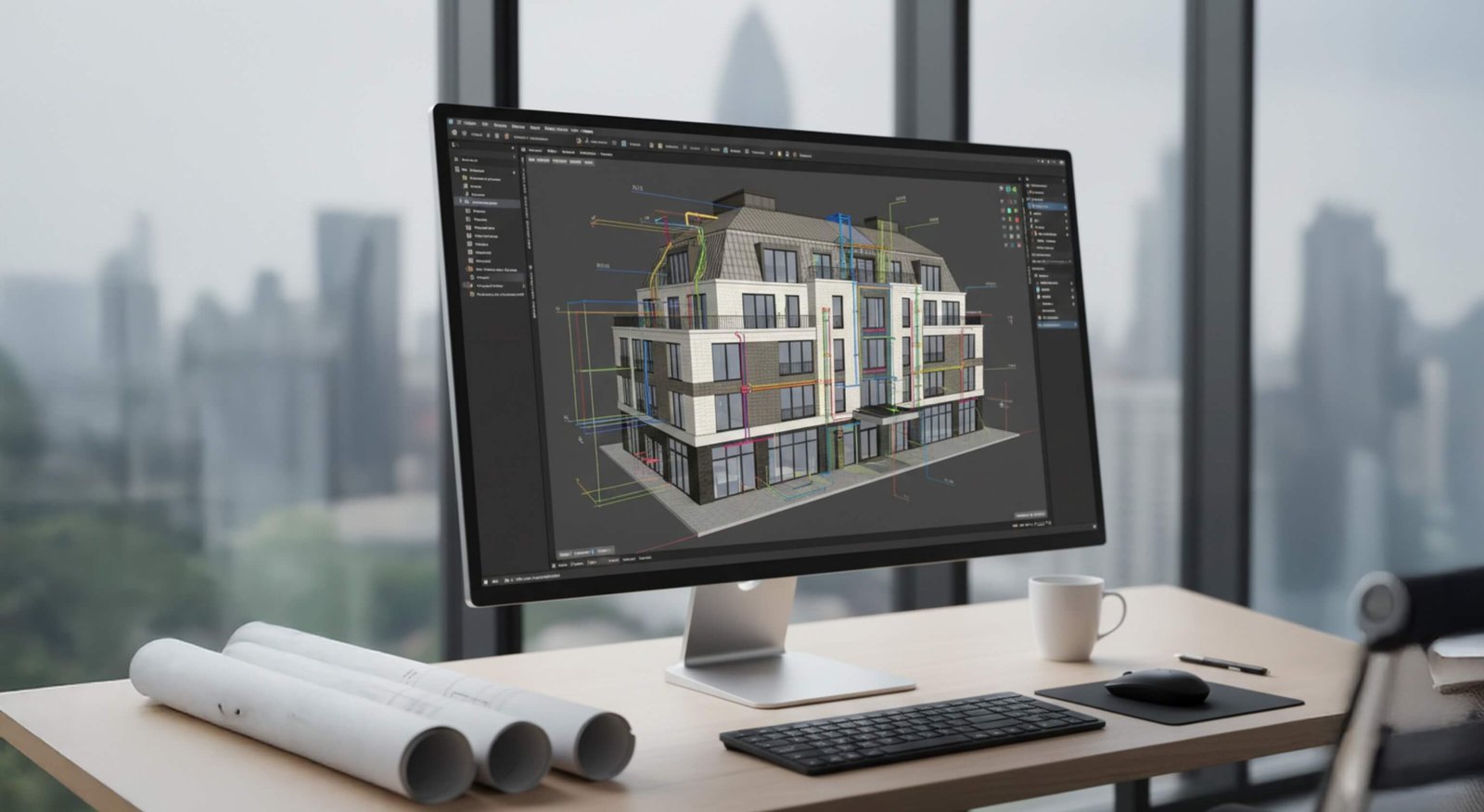
In the world of construction and architecture, adopting the latest technology and innovation is a vital factor to remain ahead of the competition. The dynamic market has undergone several alterations that have transformed how architecture projects are executed. With continuous technological advances, the AEC realm has witnessed a significant wave of technology called Building Information Modeling. An approach that has changed the traditional working approach and offered more streamlined, accurate, efficient, and reliable construction projects. With BIM technology, architects, engineers, designers, and other professionals seamlessly manage complex architectural designs, minimize errors, and more.
This technology has revolutionized the AEC realm, as BIM offers a wide range of benefits, from improving efficiency and reducing costs to contributing to sustainable design and more. Moreover, BIM modeling services are more than just a technology; they are a vital approach in the modern architecture and construction sector. As a matter of fact, modern architectural landscapes consist of complex designs that demand precision and efficiency. In the evolving landscape of architecture and construction, staying up to date with the latest trends and staying ahead of the competition is key to success in the vast market. While BIM offers a plethora of benefits, today no architect or engineer can imagine starting a project without BIM technology.
Leveraging the power of building information modeling helps AEC experts stay on budget and deliver the project on time, which are key to success. While traditional workflow practices led to costly rework, project delays, wastage of materials, increased labour costs, and more. As AEC has evolved through innovation, BIM integration enables AEC professionals to visualize projects in 3D before groundwork. As a revolutionary approach, BIM architectural services aim to streamline the workflow, reduce cost, improve project efficiency, and foster collaboration among different AEC experts involved.
In the massive field of AEC, projects are long and come in various types, helping maintain precision during construction and ensuring streamlined facility management in the future. Architectural BIM benefits directly translate to the cost-saving aspect of the project, enabling smooth project execution. Importance in the modern architecture realm isn’t based on a long list of benefits, but also on its final outcome for AEC professionals. Let’s get into the details of architectural BIM modeling services and their approach for cost saving in the project, especially for real estate developers.
Traditional and manual practices in the architecture and construction industry cannot bring accurate and efficient results due to constant errors, rework, costly delays, and more. On the other hand, demand for sleeker, more modern, sustainable, and efficient design is increasing over time, regardless of project type or size. Therefore, BIM is one of the transformative approaches in the AEC landscape that has not only changed the process but also enhanced the final outcome while ensuring safety, accuracy, and efficiency. The introduction to BIM architectural services is a technology, or, per se, a transformative approach that enables architects, engineers, designers, and other professionals to simulate, visualize, and validate every design decision before construction begins.
The 3D visualization is not only for showcasing, but also a data-rich intelligent model with a digital representation of the physical and functional characteristics of the project. In advanced software such as Revit, AEC experts leverage the power to enhance project quality with precision and efficiency. In simple terms, Revit architectural services is the process of creating intelligent, data-rich 3D models that capture the physical and functional aspects of building design. This data-rich model allows architects and other AEC professionals to plan, visualize, design, and execute the construction with coordination, reliability, safety, and accuracy.
Before architectural BIM modeling services, CAD was a significant technology that transformed the AEC traditional methods. Enabling professionals to shift from paper to screen, which offered lump sum benefits as well as had its limitations with complex project design. Furthermore, as technology advanced and demand rose, BIM modeling services emerged, enabling seamless communication, coordination, 3D visualization, data-driven decision-making, greater accuracy, and more. All these benefits are concluded as an architectural BIM cost-saving factor, leading to successful project completion. Not only this, but the role of 3D models in the modern architecture and construction realm is vast, segregated into various aspects, such as;
By leveraging architectural CAD and BIM services in the modern construction project, architects, engineers, and other professionals can seamlessly execute plans. Nonetheless, in today’s competitive AEC landscape, AEC firms consistently seek cost-saving, novel ways and methods to deliver efficient infrastructure without over budgeting. Let’s shed some light on how architectural BIM cost savings are a crucial aspect for firms and real estate developers.
As briefly discussed about architectural BIM benefits and its sheer importance in the AEC realm, it is vital to understand its key approach. Competition in the AEC landscape is constantly increasing, and staying ahead of the market is crucial. Moreover, by ensuring complex, modern design projects, AEC firms can harness the power of architectural BIM modeling services to make data-driven decisions, reduce budget overruns, and optimize resources from start to finish.
Building Information Modeling (BIM) services provide significant cost savings for real estate developers by improving accuracy, enabling early clash detection, streamlining collaboration, and facilitating accurate cost estimation throughout the entire project lifecycle. Studies show that high levels of BIM usage can result in a return on investment of over 25% and reduce project costs by up to 20% by minimizing errors and rework. The following are key ways BIM reduces costs:
By adopting BIM architectural services, real estate developers gain a strategic advantage in a competitive market, ensuring projects are delivered more efficiently, within budget, and with higher quality.
Future trends in architectural Building Information Modeling will focus on advanced technological integrations that enhance collaboration, automation, and data analysis, leading to significant cost savings across the entire building lifecycle.
Key trends driving future cost savings include:
The future of architectural BIM services is bright and continually evolving with advances in technology. Moreover, given the long list of architectural BIM benefits, it underscores the importance of modern construction projects. As a matter of fact, the AEC landscape is vast and highly competitive, and adopting new technologies is crucial. It is important to consider outsourcing architectural BIM modeling to reliable BIM service providers. Explore in detail the outsourcing of BIM services.
The architecture and construction industry has witnessed a significant shift from paper to screen to 3D views. This has changed how architects, designers, engineers, and other professionals plan, design, and execute the complex construction project. AEC firms have gradually adopted the building information modeling approach to make data-driven decisions, improve efficiency, and deliver accurate project outcomes without cost overruns or material waste.
While being a pivotal game-changer in the industry, it demands specialized skills, knowledge, the use of technology, the ability to manage complex designs, and more. AEC organizations have a plethora of tasks and are adopting BIM requirements for their in-house teams. This is an expensive outlook, whereas AEC firms seek novel ways to cut operational costs. Therefore, outsourcing architectural BIM modeling services is a key solution for AEC firms.
Outsourcing BIM service providers offer accurate architectural BIM by a team of professionals and the use of the latest technology for efficient outcomes. Nonetheless, UniquesCADD is a top BIM company specializing in BIM modeling services and offering a wide range of services. Using cutting-edge technology and a team of professionals, UniquesCADD aims to deliver precise outcomes on time. The following are some of the key benefits of partnering with UniquesCADD;
BIM modeling in architecture isn’t just a concept; it’s become a strategic tool for successful construction projects. By enabling accurate BIM architectural services, AEC experts can streamline complex construction workflows and ensure the precise execution of design plans.
Him Darji
An eloquent, keen-eyed and competent professional with seven years of significant experience. My expertise in client coordination, team management and BIM development. Also having the experience with Europe and USA BIM standards and be part of the multicultural international AEC team. In addition, I have led more than 50 engineers and BIM modelers in more than 100+ projects. As of now, my current duties are to create BIM execution plans to keep the project efficient and effective throughout the work cycle.
Bringing your vision to life with a skilled team that creates structures accurately as you imagine with the latest technology and the best market rates.



 +91 78746 60832
 career@uniquescadd.com

603, Times Square Grand, Sindhu Bhavan Road, Thaltej, Ahmedabad, Gujarat 380059

719, Seventh Floor, Tower 2, World Trade Center, Kharadi - Pune 411014