 Mahipal Jadeja
A Comprehensive Guide to Clash Detection Using Navisworks
MEP Services
10th December, 2025
Mahipal Jadeja
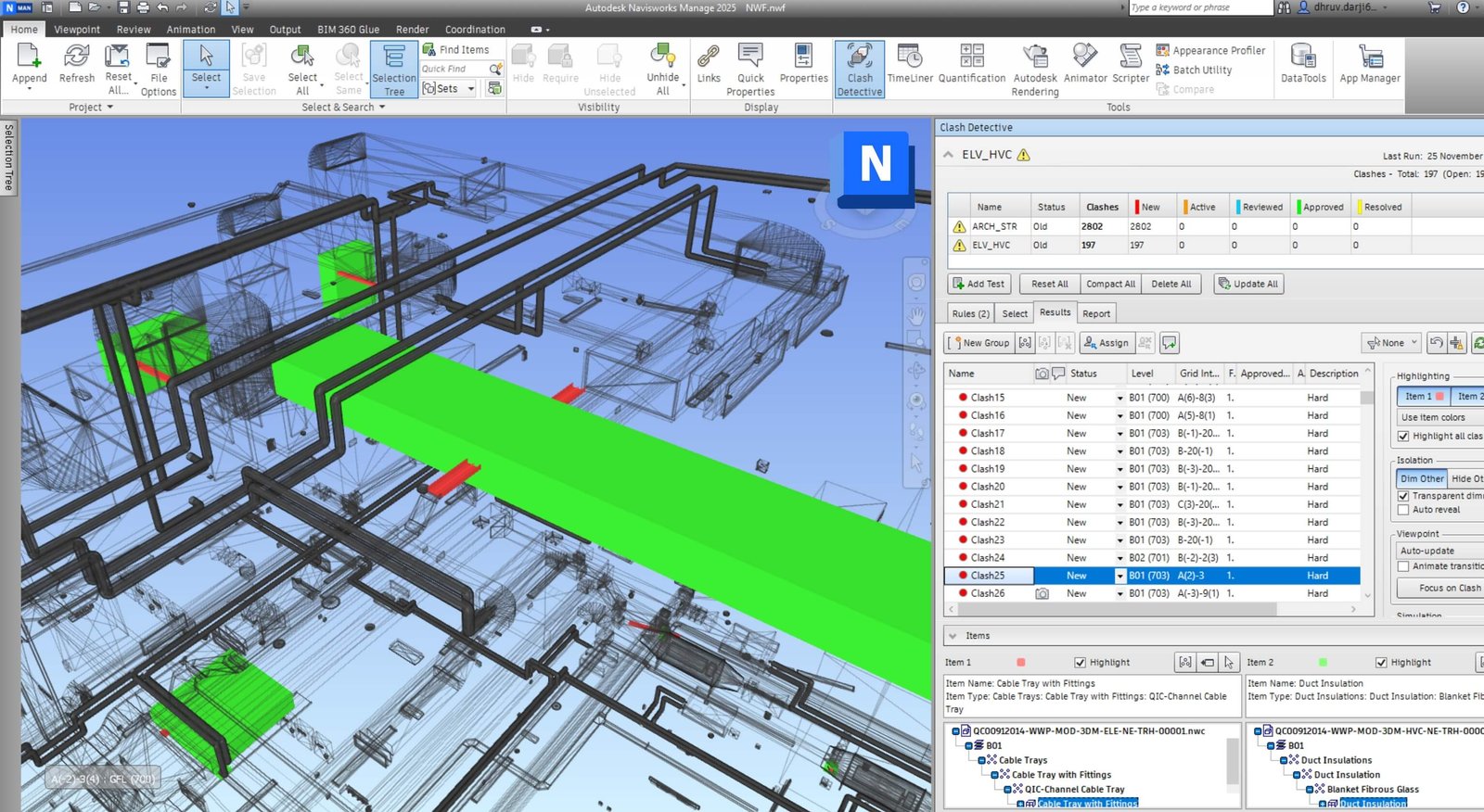
Table of Contents
Send Us Your Requirement
The architecture, engineering, and construction sector has seamlessly adopted the new approach with the help of technology and innovation. In this vast and complex field, technology plays a critical role in advancing the process. Today, modern architecture heavily relies on software, tools, integration of AI, and more as it improves the process while allowing AEC experts to complete the project seamlessly. The architecture and construction sector have witnessed a wave of transformation caused by advancing tech and innovation. This enables architects, engineers, designers and other professionals to streamline the complex process and minimize the unnecessary errors.
The modern realm of architecture and the construction industry is involved with curved designs that are complex in nature, require expert skills, the use of the latest software, and more. As the industry has witnessed a major shift in technology, innovation, and digitalization methods, AEC firms have been dependent on computer-aided design (CAD), building information modeling (BIM), and AI to enhance the overall outlook of construction projects.
Over the years, traditional architectural practices have yielded diminishing returns, leading to more accurate and efficient results. Not just this, but evolving over time and with innovation leads to faster results, a more beneficial outlook, and consistent growth in the dynamic market. Moreover, traditional methods were time-consuming, full of errors that led to costly rework, labour-intensive, and more. With time and technological advances, CAD and BIM modeling services have become powerful tools for architects and other professionals.
The primary difficulty in the traditional method was the rework of errors and clashes, as it was common. However with CAD, it allows professionals to shift from paper to screen offering 2D view. With advancement, building information modeling emerged as a powerful tool that enhanced the visualization of the project with collaborative nature.
This also led to material waste and to exceeding the construction project cost. As the time evolved, gradually, AEC professionals shifted to computer screens and further to 3D modeling. CAD and BIM became powerful tools, altering the approach to planning, designing, and execution. Not just this, but with BIM modeling services, AEC experts could easily identify clashes and conflicts. This leads to less rework, saving time and costs, a streamlined process, and less material waste.
As a matter of fact, BIM is an effective approach supported by Navisworks, an Autodesk software. Although there are plenty of other BIM tools, Navisworks is reliable for BIM clash detection services, ensuring the project is efficient, accurate, coordinated, and executed as per the design plan. Conflicts, clashes, and even minor errors can be risky, especially for an on-site construction process. Therefore, Navisworks clash detection is an imperative resolution as well as an effective tool for integration of clash detection services. For better clarity and understanding, let’s understand clash detection and how Navisworks is a collaborative tool.
Streamline Architecture Project with Quick Clash Detection in Navisworks
Get Quote
Understanding Clash Detection in an AEC Project
Technology has brought about a paradigm shift in the industry, streamlining complex projects. In any construction project, managing the efficiency and accuracy is one of the toughest things to do in all the construction frameworks. Architectural, structural, and MEP all require seamless coordination in design, accurate positioning of elements, and more. Any errors, clashes, or conflicts can be risky, time-consuming, inefficient, and more. If the clashes are not resolved at the design stage, rework, wastage of materials, project delays, cost overruns, and more can be primary factors of unsuccessful construction projects. Here, the role of BIM clash detection services is a game-changer for architects, engineers, designers, stakeholders, and more.
BIM modeling improves collaboration, communication, and visualization, enabling AEC professionals to work more efficiently together. BIM has a prominent approach in the architecture and construction sector, and utilizing Navisworks software is a key solution. Navisworks is a software by Autodesk. Navisworks clash detection allows AEC experts to identify any conflicts in the design stage and offers resolutions that enable them to improve the design. As a matter of fact, clash detection in BIM with Navisworks software often generates a clash detection report for architects and other experts.
Clashes can occur due to a lack of attention, insufficient expertise, underutilized technology, insufficient collaboration, and more. In simple terms, a clash detection process is the identification and resolution of errors, clashes, or conflicts between elements during the design stage of a construction project. In any architecture and construction project, common clashes such as spatial overlaps, incompatible model parameters, and insignificant time sequences occur.
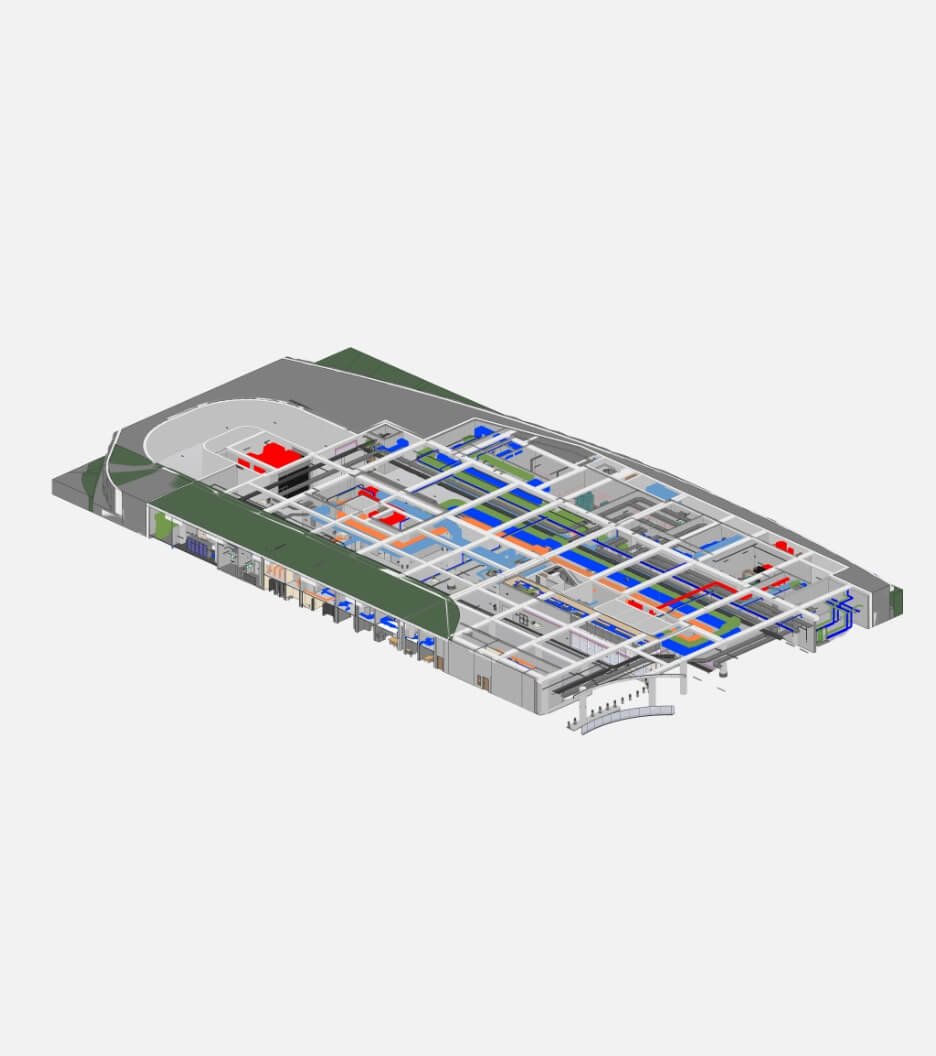
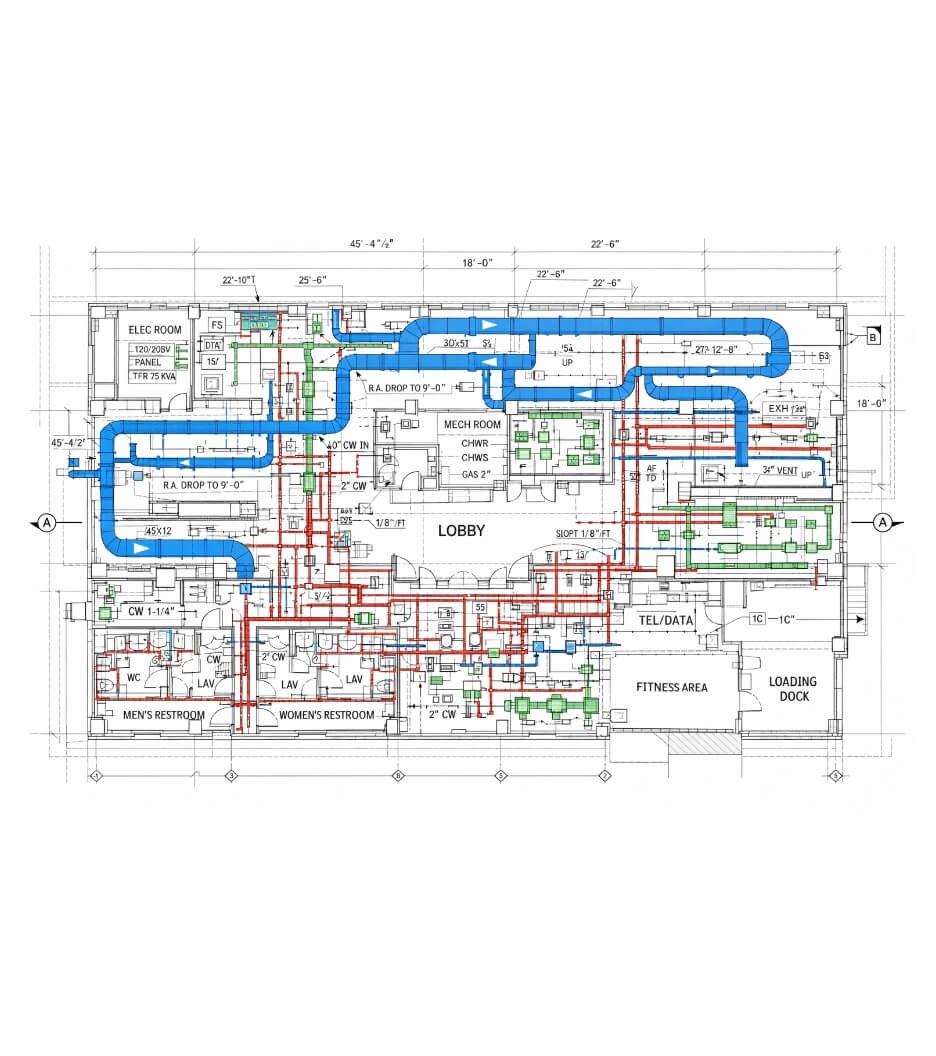
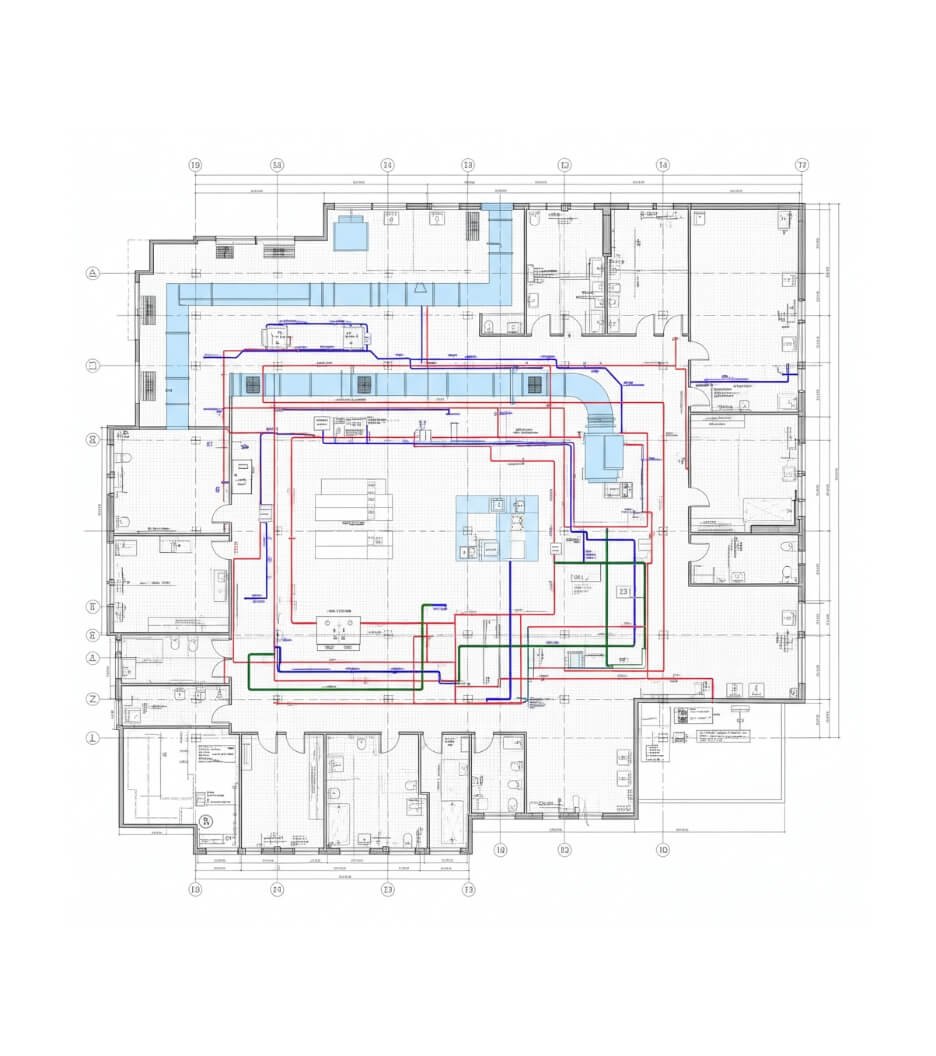
Early detection of clashes can avoid rework, later design changes, and avoid unnecessary cost in project delays. As a matter of fact, for any accurate, safe, functional, and efficient building design, clash detection is a game-changer during the BIM coordination using Navisworks. However, clash detection can only be implemented when all construction frameworks, such as architectural, mechanical, electrical, plumbing, structural, and more, are incorporated into the 3D BIM model. Here, the prominent role of MEP 3D modeling, along with MEP clash detection, enhances the overall project.
MEP integration and ensuring harmony among all components are not evident; a novel approach makes the building functional and safe. However, MEP clash detection in coordination is a vital approach that enables architects, engineers, and other professionals to create accurate MEP elements. Moreover, there are various clash detection in the project that makes it easier to resolve;
- Hard clash: These are the type of clashes when two components of the building intersect each other. With BIM clash detection services, AEC professionals can identify and resolve hard clashes using geometric and algorithm-based embedded components.
- Soft clash: This type of clash occurs when one component is not provided with the geometric tolerance. Typically, a soft clash is defined as the detection of a distance between two elements.
- Workflow/ 4D: This is a timeline conflict, as the name suggests. It represents mismatches in contractor scheduling, conflicts in the timeline, or issues with material delivery.
These are the significant types of clash detection in any architecture and construction, but also bring a variety of benefits, such as;
Clash Detection Benefits in AEC Project
Reduced rework
Time saving and efficiency
Cost savings
Quick project completion
Improved collaboration
Better design
Enhanced quality and safety
Seamless in site construction process
Using Navisworks clash detection, a plethora of benefits can be achieved, including improved project efficiency, profitability, team collaboration, and optimized building performance. Although to reap every benefit, Navisworks is evident as software or, per se, a platform for construction clash resolution. Let’s get into the depths of Navisworks and how it is a crucial software for architects, engineers, contractors, and other professionals.
Insights into BIM Software: Navisworks
In the dynamic and vast field of architecture and construction, technological advances are constant. Adapting these technological advancements will not only help streamline the complex construction project but also ensure the key parameters for success. From planning to execution, technological adaptation has been a key factor for successful project completion. With the help of BIM modeling services, AEC professionals enhance the overall project with accuracy and efficiency.
To maintain the seamless precision and integration of the entire construction framework, AEC experts use Navisworks clash detection services. In simple terms, any construction project consists of various workflows collaboratively put together to form a whole. Navisworks is an Autodesk software for BIM modeling services that acts as a model aggregator.
This software specifically integrates design data into a single working environment for MEP coordination, BIM coordination, simulation of the model, construction clash detection, and more. As a matter of fact, it is a powerful software tool that provides effective solutions to clashes and conflicts identified in the model. It precisely generates clash detection reports for stakeholders.
This seamlessly helps in building accurate and clash-free 3D BIM models, reducing the scope of multi-level design changes, avoiding project cost overruns, and ensuring an exact timeline. Not only this, but Navisworks includes various tools, including clash detection, time Liner, animator, and others, for enhanced visualization of the project model. This software accurately reviews and validates the design and brings precise forecasts for operations. As a matter of fact, it is the most reliable platform for MEP clash detection, as it enables AEC professionals to maintain harmony among all components.
Additionally, Navisworks, as a software, instantly identifies the conflicts that led to minimal design changes in the design stage. AEC professionals implementing MEP 3D modeling usually harness the power of Navisworks as a software for ensuring the streamlined workflow, minimal scope of errors, and enhanced visualization of MEP components. The thorough view of the BIM 3D model helps to validate the design as a whole.
Since the Navisworks software is highly capable of integrating different construction frameworks, such as architectural, MEP, structural, and more, this results in improved collaboration, faster project timelines, and enhanced visualization, not just this, but BIM clash detection and BIM coordination using Navisworks bring significant benefits; let’s discover in detail.
Benefits of Navisworks in BIM Modeling
As briefly discussed about the Naviswork software and its magic in the architecture and construction industry. AEC professionals harness their power for maintaining efficiency and accuracy in the project. However, it does more than that by minimizing costs for errors, design alterations, and enhanced collaboration, among other benefits.
With the right expertise and knowledge, it becomes easier for professionals to identify clashes and resolve them while maintaining coordination across different construction frameworks and ensuring BIM model quality checks. Nonetheless, it also brings multiple advantages for architects, engineers, and other professionals. The following are some of the key benefits of managing BIM coordination using Navisworks and clash detection services.
Naviswork for BIM Clash Detection Benefits
Enhanced coordination across different platforms
Improved onsite construction process
Reduced design errors with the clash detective tool
3D visualization for real-time resolution
Accurate and efficient collision detection
Time-based clash detection (4D BIM projects)
These are some of the key benefits that shed light on the importance of the software. However, Navisworks isn’t a tea cup that can be used by anyone. However, it requires expertise, knowledge, and skills to leverage its true power. Moreover, technology is constantly evolving, and new updates help with smoother project execution. This requires AEC firms to outsource BIM clash detection services to a reliable team of professionals for harnessing accurate BIM 3D models.
Nonetheless, the idea of outsourcing has spread like wildfire, enabling AEC firms to offer consistent deliverables with the help of BIM experts. Explore how outsourcing BIM clash detection and MEP modeling can be helpful.
Importance of Outsourcing BIM Clash Detection
The above discussion highlights the key importance through multiple benefits. However, to harness the true power of Navisworks, an Autodesk BIM software, it is evident to outsource as the software proficiency and BIM expertise are evident for project success. Outsourcing is a concept in which an AEC team partners with a third party to deliver a service that yields enhanced outcomes. As AEC firms may lack the resources and talent, investing in them will be insignificant due to higher costs.
Therefore, outsourcing helps minimize costs, deliver desired outcomes, provide professional support, ensure process accuracy, and more. As a matter of fact, outsourcing Navisworks clash detection services allows AEC firms to focus on the core of the project while receiving accurate, clash-free BIM 3D models for communication, collaboration, and visualization. UniquesCADD is a top BIM service provider with a team of experts.
Professionals are well-versed in various technologies and software proficiency, including Navisworks. UniquesCADD has significant years of experience with international clientele that proves their ability to manage complex and large BIM projects. Partnering with us brings a variety of benefits, such as;
- Team of professionals
- Minimized cost
- Design accuracy
- Dedicated team of resources
- Quick project delivery
- Ability to manage tight deadlines and complex projects
In the End
BIM clash detection services are a prominent approach for modern architecture and construction projects. Utilizing the power of Navisworks software allows professionals to quickly identify conflicts, achieve the desired resolution, minimize errors, and enhance overall visualization of the construction project.
Send Us Your Requirement
Mahipal Jadeja
Uniquescadd is an industry leader in architecture and BIM, offering state-of-the-art solutions for modern construction needs. As Digital Marketing Manager, I am responsible for driving our online presence, including managing website branding, content marketing, and the publication of informative blogs. I ensure that our messaging resonates with our audience while keeping the brand aligned with current industry trends. My role also involves promoting Uniquescadd across various digital channels to establish the firm as a trusted name in architecture and BIM services.