 Rahul Dogra
MEPF BIM Modeling Standards and LOD Requirements
MEP Services
20th February, 2026
Rahul Dogra
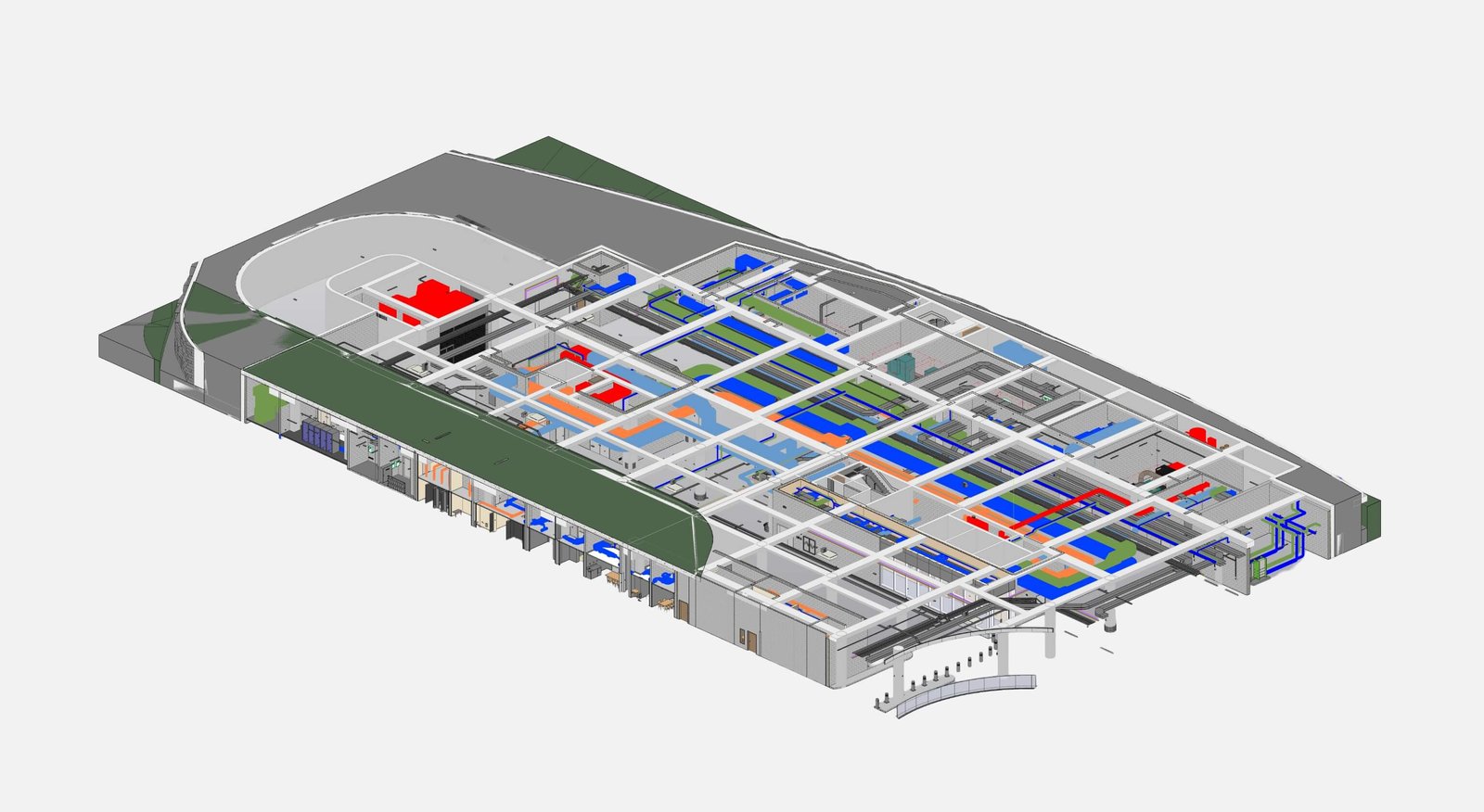
Table of Contents
Send Us Your Requirement
The architecture, engineering, and construction industry has evolved over the years, with approaches, technologies, workflows, and more. Staying ahead of the market is one of the factors that enable the AEC realm to deliver as per client demands. The continually improving technology has led to significant changes, enabling AEC professionals to enhance accuracy, efficiency, safety, and reliability in construction projects. As a matter of fact, any construction project is a complex process that involves various disciplines, all equally important to its completion. Today, BIM modeling has become one of the crucial aspects for architects, engineers, and designers. BIM, an indispensable tool, delivers significant benefits and ensures precision across architectural, structural, and MEP system design.
For any construction project, coordination is key to a seamless workflow and to minimizing errors on the site. While every system design must coordinate with others, there are specific standards and levels of detail that allow professionals to manage the project’s complexity and maintain harmony among components. Since BIM modeling services have been a key player in MEPF disciplines, using a level of detail ensures a seamless process, communication, informed decision-making, and more. Additionally, as a foundational concept, the level of detailing is a critical parameter that helps in defining the reliability of the project.
While MEPF is the heart of any infrastructure, ensuring the building is functional by all means. Seamless electrical flow to accurate air ventilation: every component plays a major role, demanding acute precision and harmony among all disciplines. As a pivotal part of the construction project, the complexity is high, which is why MEPF BIM services are an indispensable tool for AEC professionals, allowing them to have a 3D view of MEPF components.
In the rapidly evolving architecture, engineering, and construction (AEC) landscape of 2026, MEPF (Mechanical, Electrical, Plumbing, and Fire Protection) BIM Modeling has transitioned from a “value-add” to a non-negotiable requirement. With the rise of modular construction and smart building integration, the precision of these models is what separates a high-performance project from a logistical nightmare.
This guide provides a comprehensive breakdown of the standards, protocols, and Level of Development (LOD) requirements essential for modern MEPF workflows.
Strategic Importance of MEPF Standards
MEPF systems are the “circulatory and nervous systems” of a building. They are often the most complex to coordinate because they compete for the same limited ceiling and shaft spaces.
Standardization ensures
- Interoperability: Data can flow between architects, engineers, and fabricators without loss.
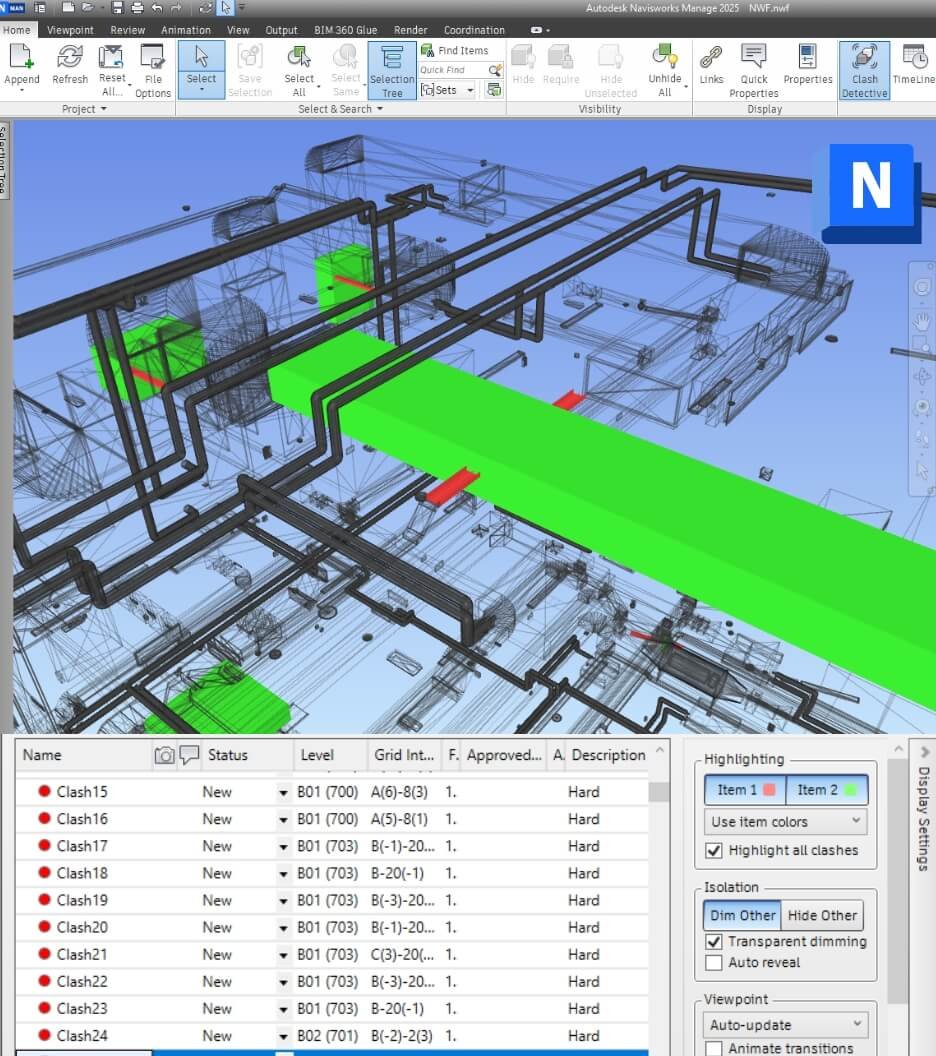
- Clash Avoidance: Systems are modeled with “soft” clearances for maintenance, not just “hard” physical boundaries.
- Asset Management: The model serves as a “Digital Twin” for the building’s entire lifecycle.
Core BIM Standards for MEPF
In 2026, the industry relies on a hierarchy of international and regional standards to maintain consistency.
- ISO 19650: The Global Framework. The ISO 19650 series is the international benchmark for managing information throughout the life cycle of a built asset.
- ISO 19650-1 & 2: Define the concepts and principles for the delivery phase.
- CDE (Common Data Environment): A central requirement where all MEPF data is hosted, ensuring there is a “single source of truth.”
NBIMS-US (National BIM Standard – United States)
Provides specific consensus-based standards for the North American market, focusing on data exchange and building information maturity.
Industry-Specific Technical Standards
For MEPF, the geometry must reflect real-world performance. Designers often integrate:
-
- ASHRAE: For HVAC system performance and load calculations.
- NFPA: For Fire Protection system spacing and compliance.
- SMACNA: For ductwork fabrication standards.
Understanding Level of Development (LOD) Requirements
The LOD framework, originally defined by the AIA and further detailed by the BIMForum, is the most critical metric for MEPF modeling. It defines the “reliability” of the model element—how much a downstream user can trust the information it provides. In simple terms, the level of detailing refers to the degree of development, geometry, and information about the project stage, among other things. Each level of detail defines how the component in the project is represented at that level. As a matter of fact, given the critical nature of MEPF, BIM LOD levels for MEPF are not only significant but also a streamlined way to maintain efficiency and accuracy.
For MEP consultants and engineers, the level of development in BIM MEPF projects enhances design accuracy, construction readiness, cost-effectiveness, and more, making the project streamlined and successful. The following explains the different LODs in detail, showcasing their significance for MEPF BIM services.
Different LOD in MEPF BIM
LOD 100: Conceptual Design
LOD 300: Detailed Design
LOD 400: Fabrication and Assembly
LOD 200: Schematic Design
LOD 350: Construction Documentation & Coordination
LOD 500: As-Built/Asset Management
LOD 100: Conceptual Design
- Representation: Elements are represented by generic symbols or 2D masses.
- MEPF Context: Preliminary “block” loads for HVAC, total estimated power demand, and general utility entry points.
- Usage: Early-stage site analysis and feasibility.
LOD 200: Schematic Design
- Representation: Generic placeholders with approximate size, shape, and location.
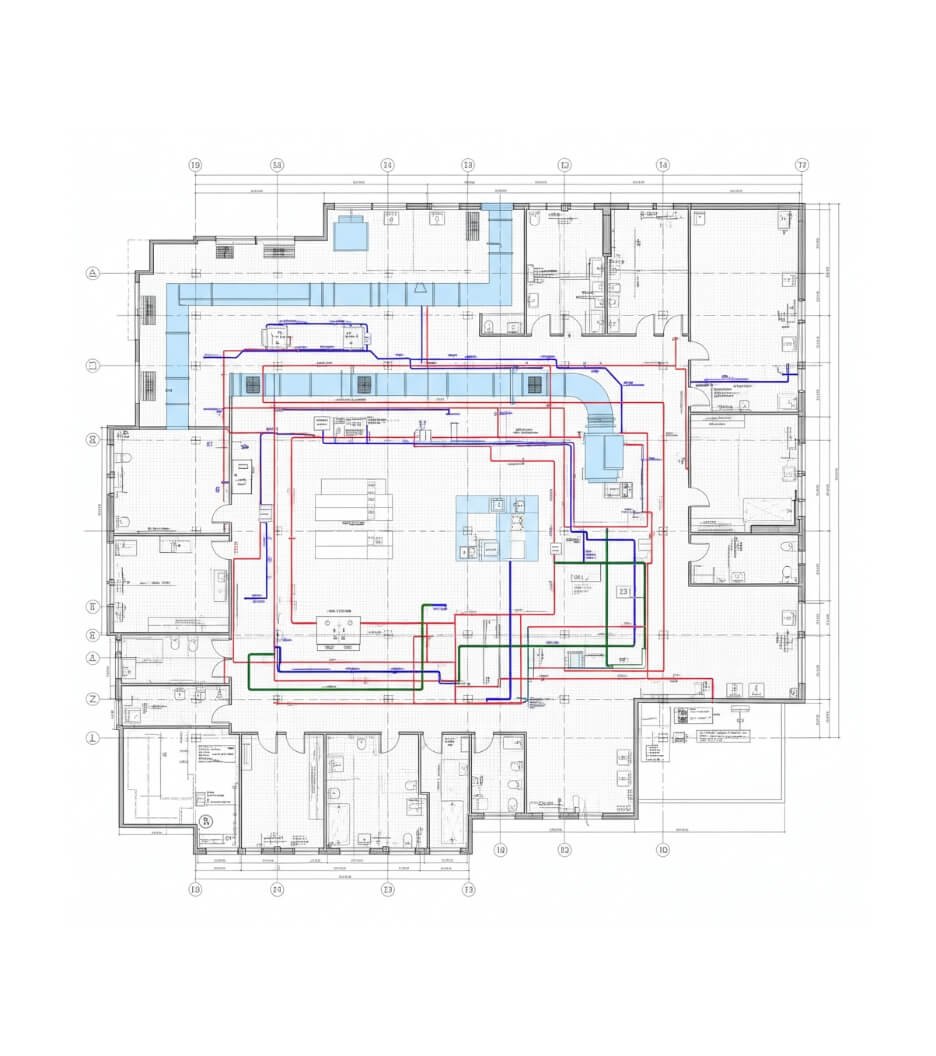
- MEPF Context: Main distribution runs (large ducts/pipes) are shown. Equipment like AHUs or switchgear is placed as generic boxes to check for spatial “big-picture” fit.
- Accuracy: Elements are indicative.
LOD 300: Detailed Design
- Representation: Specific systems with accurate size, shape, and location.
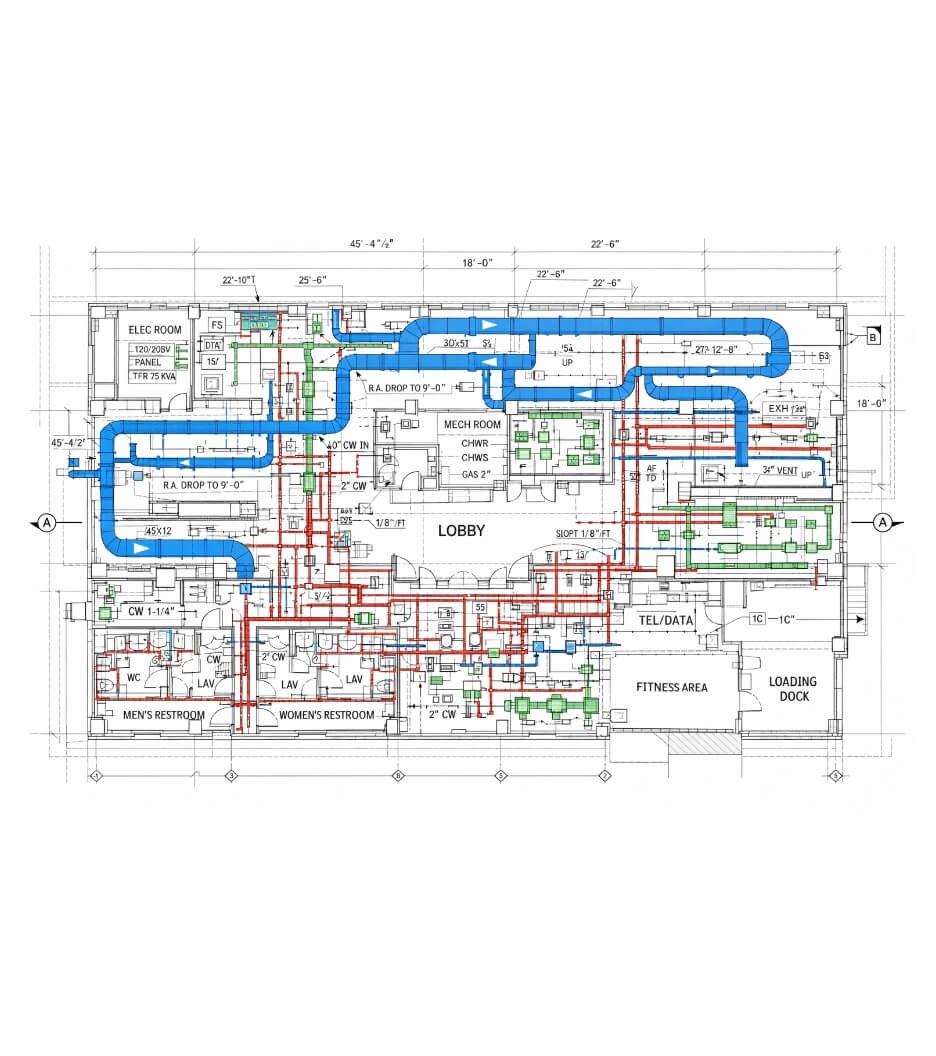
- MEPF Context: Pipes and ducts are modeled to exact dimensions. This is the stage where Clash Detection begins in earnest.
- Reliability: Suitable for generating traditional construction documents and quantity take-offs.
LOD 350: Construction Documentation & Coordination
- The “Coordination” Level: This is the bridge between design and construction.
- MEPF Context: Includes supports, hangers, and connections. It shows how the MEPF systems interface with the structure (e.g., specific wall penetrations and seismic bracing).
- Usage: Final interdisciplinary coordination to ensure no field clashes occur.
LOD 400: Fabrication and Assembly
- Representation: Manufacturer-specific components.
- MEPF Context: Models include specific part numbers, bolt patterns, and assembly details.
- Usage: Direct export to fabrication shops (e.g., CNC duct cutting or pre-spooled piping).
LOD 500: As-Built/Asset Management
- Representation: Field-verified conditions.
- MEPF Context: The model is updated to reflect exactly what was installed, including maintenance data, warranty info, and serial numbers.
- Usage: Handover to the Facility Manager for the building’s operational life.
These are different types of levels of detail that represent vital information at each stage of construction. As a matter of fact, choosing the right LOD depends on the project’s goals, stakeholder requirements, and resource availability. From understanding the project phase to final deliverables, it is evident that best practices for seamless workflows, accurate results, and project success while minimizing overall cost. Explore further in detail about best practices for LOD implementation in MEPFE BIM services.
Best Practices for MEPF Modeling
Practice
Description
Why it matters
BIM Execution Plan (BEP)
A project-specific roadmap.
Defines who models what and at which LOD.
System Classification
Proper naming of air, water, and electrical systems.
Vital for automated calculations and schedules.
Clash Detection Hierarchy
Resolving “Gravity” systems (plumbing) first.
It’s easier to move a cable tray than a 10-inch sloped waste line.
Clearance Zones
Modeling “invisible” space for maintenance access.
Ensures technicians can actually reach equipment once installed.
From defining BIM LOD levels for MEPF to aligning the final project delivery. As the sector is constantly growing and evolving with technology and innovation, a variety of challenges can become obstacles in complex architecture projects. Provide a brief overview of the challenges and future outlook for LOD MEPF BIM services.
Challenges and Future Outlook
As we move further into 2026, the focus has shifted from 3D geometry to 6D (Sustainability) and 7D (Facility Management) data. The biggest challenge remains “over-modeling”—creating LOD 400 models when only LOD 300 is required, which bloats file sizes and wastes man-hours. The integration of AI-driven clash resolution and Automated Rule Checking is currently streamlining these workflows, allowing engineers to focus on system performance rather than manual pipe routing. The continuous evolution in the AEC industry has led to changes in the implementation of LOD in MEP BIM services. This demands strong skills, proficiency in software, and the ability to manage complex projects. While AEC firms are occupied with consistent operational work, outsourcing MEPF BIM services with required LOD implementation is beneficial. Explore in detail the outsourcing of MEPF BIM modeling.
Outsourcing BIM LOD Levels for MEPF
As discussed, the crucial role of MEPF BIM services, the implementation of LOD, and adherence to BIM standards enable AEC professionals to reduce project complexity. This helps maintain accuracy, efficiency, safety, and reliability, leading to successful onsite construction. As a vital aspect of the architecture and construction project, hiring a MEPF BIM services provider is beneficial in many ways. An outsourcing BIM service company ensures precise implementation of LOD standards for accurate project delivery, the latest technology for MEP modeling services, and a team of professionals at cost-effective pricing plans.
UniquesCADD is a renowned BIM company in India offering MEP BIM services. Hand-picked talent and the use of cutting-edge technology, UniquesCADD aims to deliver accurate and efficient MEPF BIM services by implementing BIM standards in accordance with country mandates and LOD requirements. The following are some of the key benefits of outsourcing with UniquesCADD
- Cost effective
- Efficient outcomes
- Technical and Standard expertise
- Quick turnaround time
- Dedicated resources
- Constant support
Conclusion
Navigating MEPF BIM modeling in 2026 requires strict adherence to LOD definitions and international standards such as ISO 19650. By clearly defining the Level of Development at the project’s onset, teams can avoid costly rework, reduce material waste, and deliver a data-rich asset that serves the owner for decades.
Send Us Your Requirement
Rahul Dogra
Rahul Dogra is a CEO at UniquesCadd. Having provided numerous solutions to the AEC industry, Rahul utilizes this forum to share his in-depth knowledge. Blending technological mastery and executive vision, he delivers fulfilling experiences that develop long-term associations with clients. Being an understanding leader, Rahul believes that a culture of honesty, dedication, accountability, and mutual respect is the key that helps UniquesCadd to deliver excellence each time.