 Parth Patel
7 minutes
 Parth Patel
The construction industry has undergone a significant transformation, driven by various technological developments and innovations, from manually designing and executing projects to the digital construction process, which leads to more accurate project outcomes. The modern curve in the architecture and construction realm continues to advance with new approaches and significant tools. Thanks to digital tools and approaches, construction planning, design, execution, and management have become easier processes. This is developed using building information modeling technology, which offers significant solutions to enhance the entire process and maximize the building lifecycle at every phase.
Not only for designing and planning, but BIM architectural services are useful in facility management and even for renovation projects. The architecture and construction landscape is not limited to constructing houses or commercial shops, but goes beyond this. Infrastructure projects, including factories, roads, tunnels, bridges, stations, airports, and more, require utmost accuracy and efficiency in design. As the public is the end user of such projects, it is highly essential to maintain precision to ensure safety precautions and the durability of the project.
Here, the role of BIM in infrastructure development is highlighted, as it offers a digital 3D representation of the project’s physical and functional characteristics. Moreover, any nation is defined by its infrastructure development, which is why it is crucial to ensure the accuracy and performance of infrastructure projects. Additionally, infrastructure projects are complex, large, and multifaceted, with a variety of challenges. Hence, implementing building information modeling services is a key solution, enabling engineers and architects to construct large infrastructure projects with precision and safety.
Infrastructure in any country keeps everything moving and simple living. Imagine if there were no bridges or tunnels, no electrical houses for power lines, and no roads or streets. It is nearly impossible to live without any basic infrastructure. Hence, with crucial importance, accurate, efficient, and safe infrastructure development is a need.
From seamless highways that connect cities to having a developed electrical workflow that reaches every home, large-scale projects are at the heart of a nation, with BIM consultants on board for the right implementation and outcomes. With the help of BIM services for infrastructure projects, it is evident that implementing them can lead to increased accuracy and efficiency. Let’s explore in detail the large-scale construction project planning with BIM; however, let’s take a deep dive into understanding what’s involved in infrastructure projects.

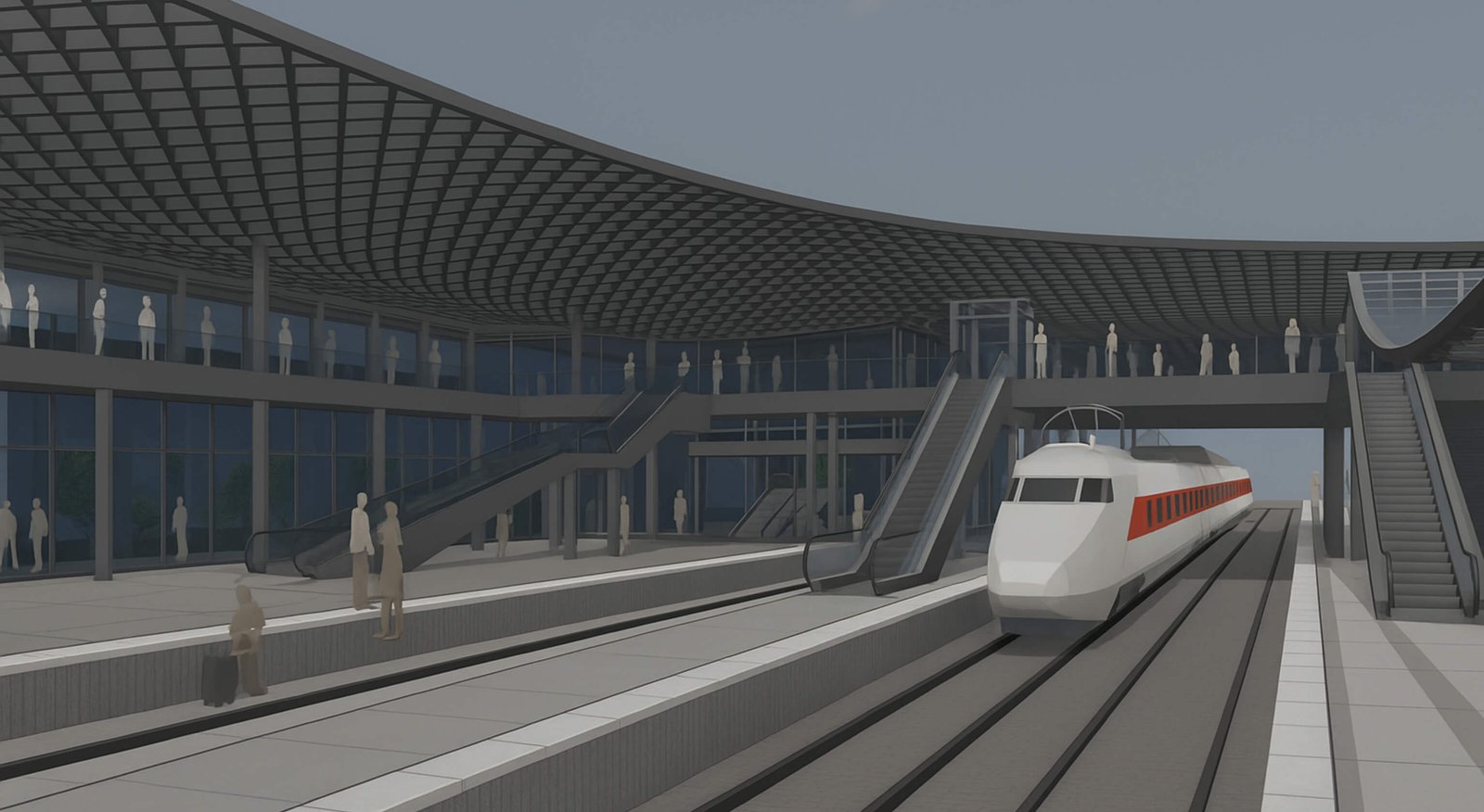
A country is developed with efficient and accurate infrastructure development, as it is beneficial for the public, enhances the quality of life, and increases the nation’s value. Infrastructure projects are not limited to roads and bridges; they also encompass the construction of dams, power plants, waste management facilities, essential factories, and more. Furthermore, infrastructure encompasses structures, systems, and services that support operations. Typically, this infrastructure is designed to support economic growth and includes large transportation hubs, such as railway stations, airports, ports, and other facilities. Other than this, infrastructure project development includes the following;
Infrastructure projects are a key part of economic development and hence demand streamlined execution. A slight indifference can be dicey or unsafe for the public to use and may cause significant harm. The government uses these as opportunities to develop the nation with efficient facilities for the public to utilize. Developing and managing these large-scale infrastructure projects requires utmost accuracy, a seamless workflow, and zero scope for errors, among other factors, to ensure the project’s success, safety, and longevity.
BIM architectural services are a game-changer for infrastructure construction projects, enabling professionals to streamline the complex design process and ensure safety, efficiency, and accuracy in large-scale infrastructure projects. Discover how BIM plays a vital role in managing extensive infrastructure projects.
Considering the rapid evolution in the AEC sector, many engineers, architects, and other professionals have adopted the latest technological approaches. As traditional workflows were prone to errors, time-consuming, and yielded insignificant outcomes, laborious BIM construction project management quickly became a go-to tool for AEC professionals. Moreover, the architecture and construction industry continues to grow and evolve to ensure the seamless management and execution of large-scale infrastructure projects. Traditionally speaking, commencing a large-scale project, such as a dam, bridge, or railway station, was complex and demanded utmost accuracy to ensure safety and longevity.
However, traditional construction methods failed to cater to the complexity as well as the ability to address every challenge. For the modern architecture and construction industry, BIM modeling services are key players, enabling AEC experts to plan, design, execute, and manage projects seamlessly.
With the unaccountable benefits of BIM architectural services, it is an indispensable tool for large-scale projects, allowing experts to coordinate, efficiently complete, stay within budget constraints, minimize the scope of errors, ensure safety, and manage the project. As a matter of fact, BIM for infrastructure projects has enabled AEC professionals to enhance project management, making it more efficient, sustainable, and profitable.
Architecture and construction are vast industries that are involved with changing dynamic demands and require keen attention to detail for integrating the latest curves. Typically, large-scale projects have complex designs and have their fair share of challenges. Coordination and communication among all AEC professionals for such large projects is not easy. Scope for errors, miscommunication, and data exchange can be significant in such extensive projects.
Having a common digital platform with access to professionals allows everyone to stay on the same page. Moreover, constructing large infrastructures is not only the end, but their efficient management is equally vital for safety and longevity. BIM project management in construction is a game-changer for experts. The digital 3D data-rich model offers deep insights and enhanced visualization, while resolving challenges and facilitating communication and collaboration. Explore some benefits of BIM in infrastructure management.
For large-scale infrastructure projects, managing the complexity and challenges with efficiency. Moreover, adhering to compliance and delivering projects on time are equally essential for completing large projects. Infrastructure projects require accurate planning, detailed design, and meticulous attention to detail, as well as maintaining functionality and more.
Often complex in nature, such projects involve various stakeholders and technical expertise to ensure the project is safe, efficient, and long-term functional. Large-scale construction project planning with BIM is a key solution to addressing all challenges and streamlining complexity. Not only this, but BIM services also offer a plethora of benefits in large construction projects, adding value to them. Explore further in detail.
These are the significant benefits of BIM in large projects. BIM construction project management enables AEC professionals to ensure that large-scale infrastructure is both safe and functional. However, to fully reap the benefits of building information modeling, it is vital to implement the right solution with the right expertise. A BIM service provider is a comprehensive approach to managing such vast and complex projects. Additionally, partnering with the right BIM expert helps outline strategies, ensures accurate implementation, and manages and executes the process efficiently. The following are some key BIM elements that can be beneficial in large-scale construction.
As briefly discussed, the benefits of BIM implementation in complex infrastructure projects are vital to understand the elements. BIM solutions help ensure quality, efficiency, and accuracy; however, applying the right elements in the project is equally necessary to reap all the benefits. In fact, BIM services in the AEC industry have transformed the approach that architects, engineers, and other professionals used to execute large-scale projects. With BIM modeling services, professionals ensure accuracy at each stage. For this, it is important to implement the right BIM solution with the right software. The following are the key solutions to consider;
Those mentioned above are some of the solutions that are useful for large-scale projects and bring desired outcomes. Maintaining accuracy, efficiency, and safety in large-scale projects, such as bridges, highways, dams, airports, and more, is also evident in managing their longevity. This makes building information modeling an invaluable technology for AEC professionals, enabling them to manage the complex nature of projects, adhere to timelines, ensure safety, maintain facilities, and more.
Therefore, BIM architectural services have a significant impact on large-scale projects. However, implementing BIM for big projects isn’t simple. It demands expertise, proficiency in tools and technology, practical strategies, and more for optimal outcomes. Outsourcing BIM services to reliable outsourcing firms helps to ensure the desirable outcomes. UniquesCADD is a top BIM company with expertise in BIM services for infrastructure and industrial projects. With a team of professionals and the use of cutting-edge technology, UniquesCADD brings seamless 3D BIM modeling for desired project completion.
The AEC realm encompasses a range of small to large-scale projects that require precision and efficiency for project success. BIM architectural services for large infrastructure projects offer a multitude of benefits, ultimately leading to project success.
Parth Patel
With over 5 years of experience in the BIM industry leading diverse BIM projects across the USA, UK, UAE, Australia, and Canada, I bring expertise in architectural modeling, scan-to-BIM, restoration projects, and facility management. As a Process Owner at Uniquescadd, I specialize in team management and client coordination, ensuring seamless project delivery. My journey with Uniquescadd has refined my skills in advanced BIM tools and strategies, enabling me to deliver innovative solutions. Passionate about optimizing workflows and enhancing project efficiency, I am dedicated to driving success through excellence and collaboration.
Bringing your vision to life with a skilled team that creates structures accurately as you imagine with the latest technology and the best market rates.



 +91 78746 60832
 career@uniquescadd.com

603, Times Square Grand, Sindhu Bhavan Road, Thaltej, Ahmedabad, Gujarat 380059

719, Seventh Floor, Tower 2, World Trade Center, Kharadi - Pune 411014