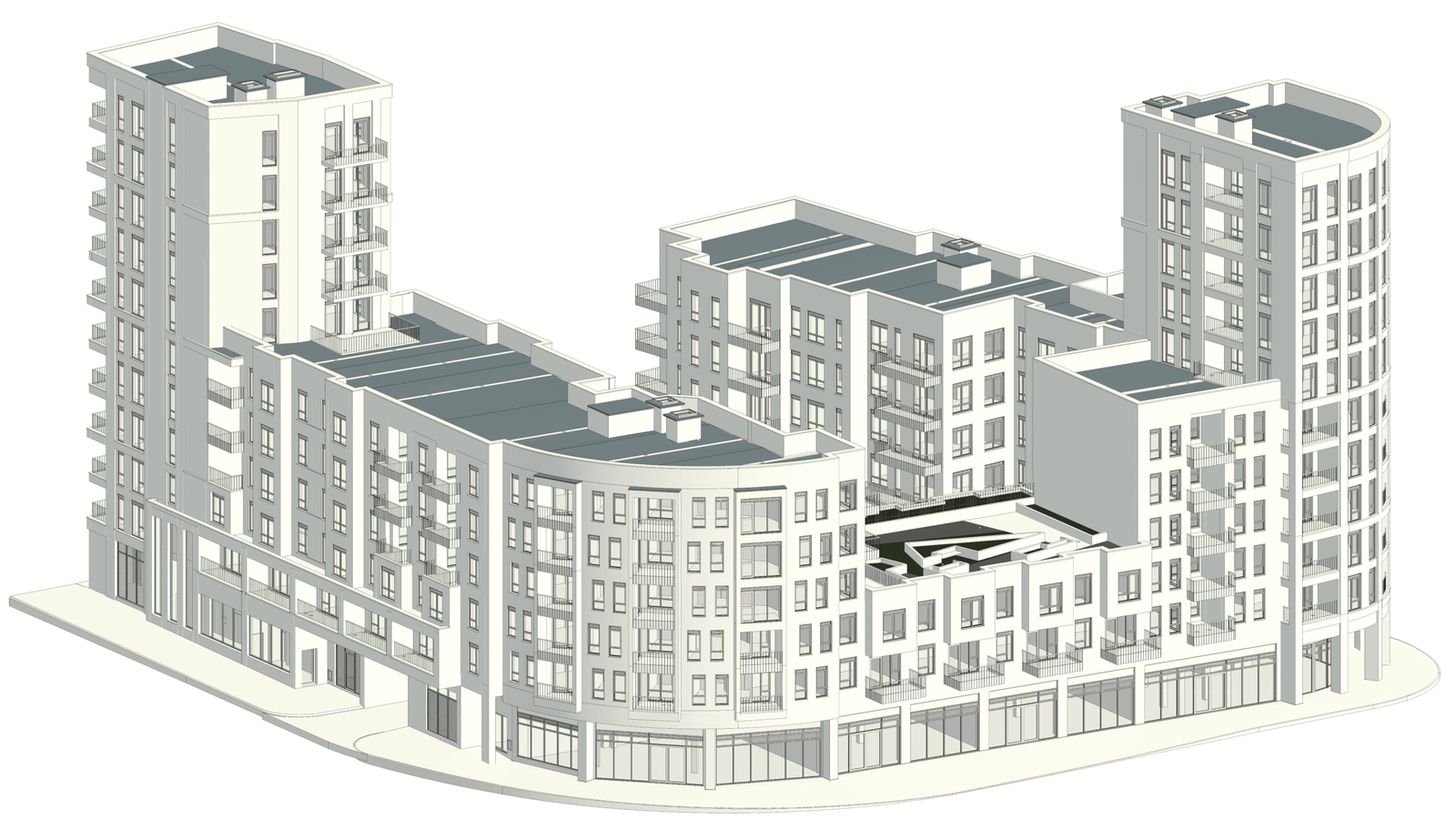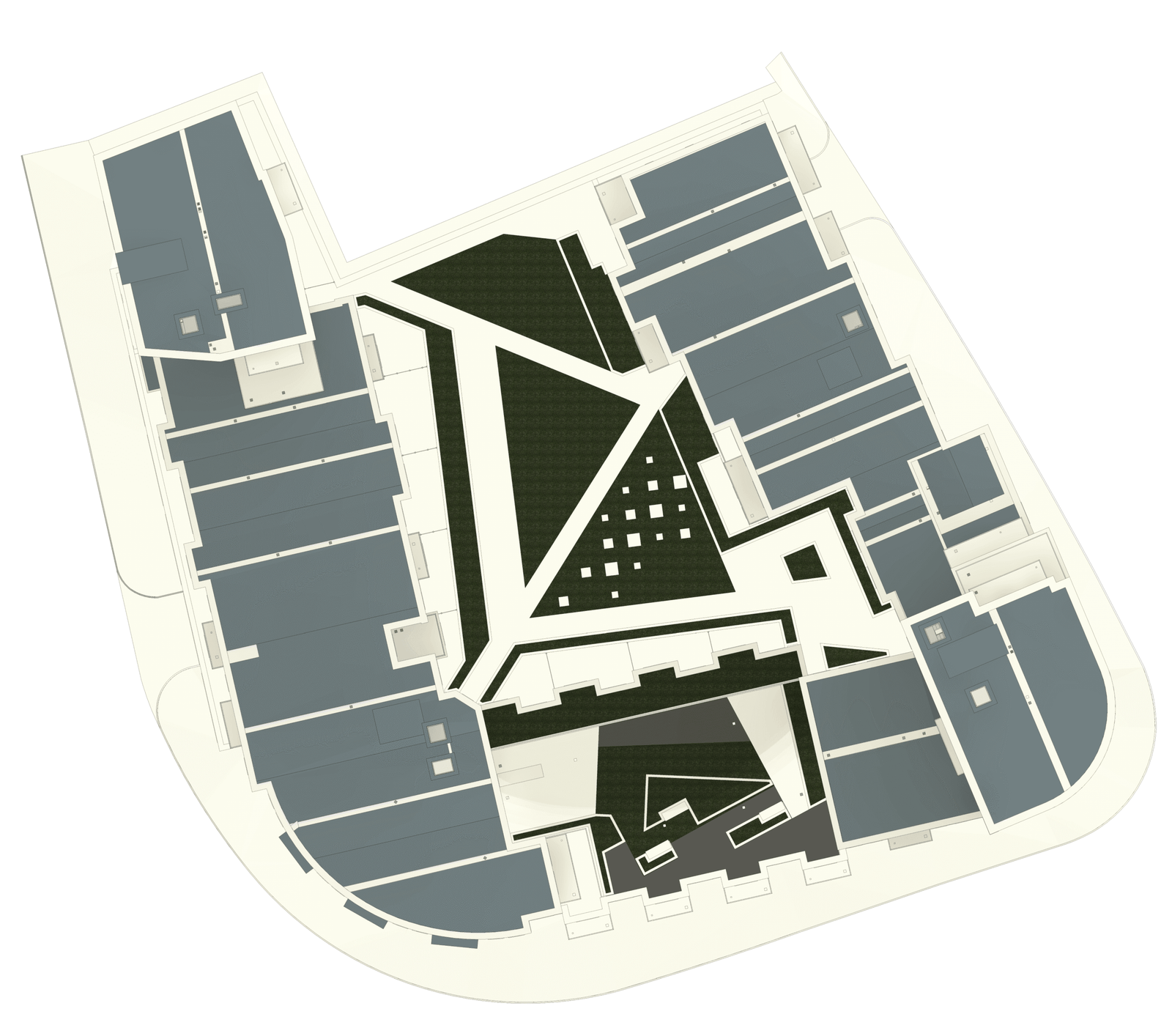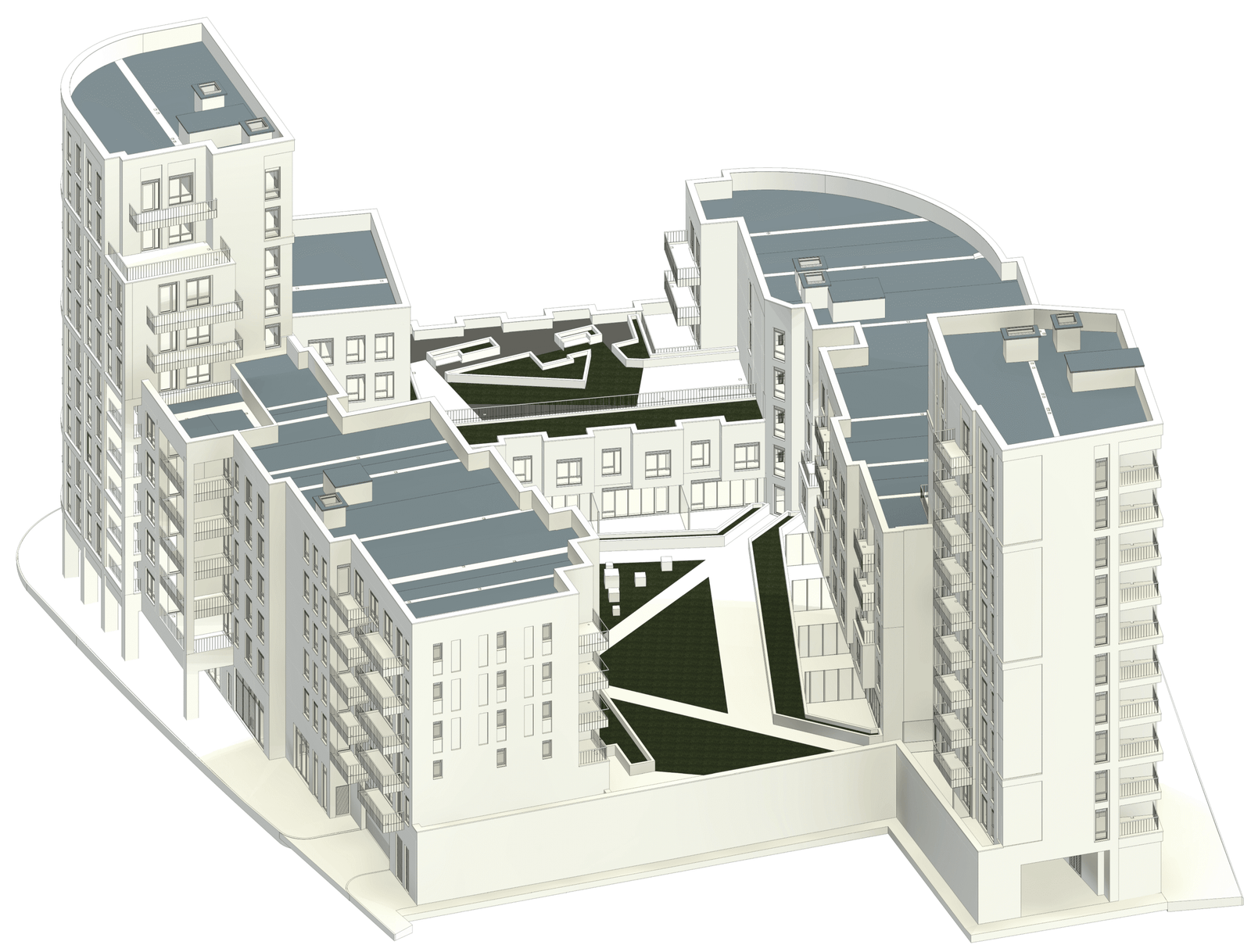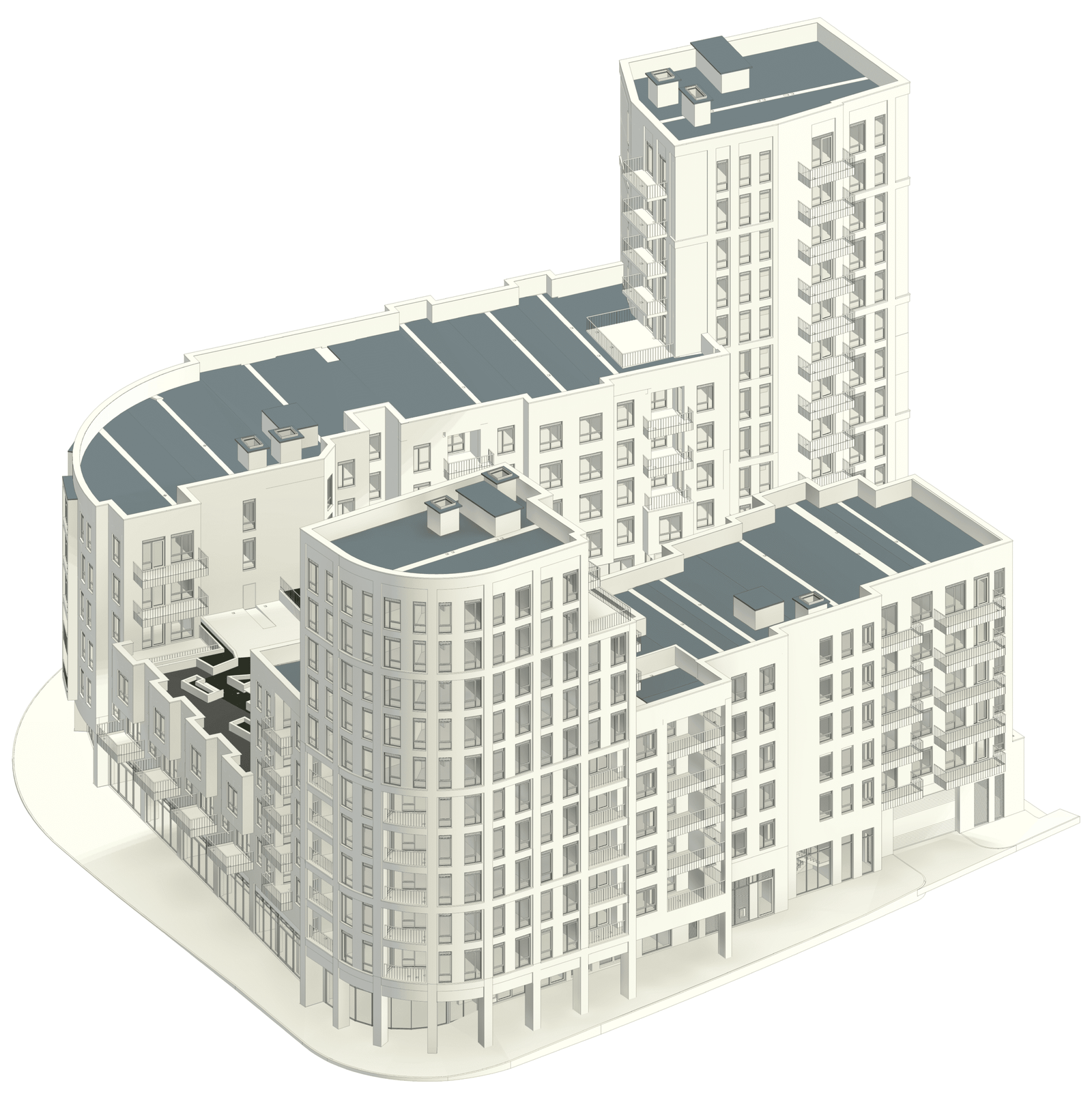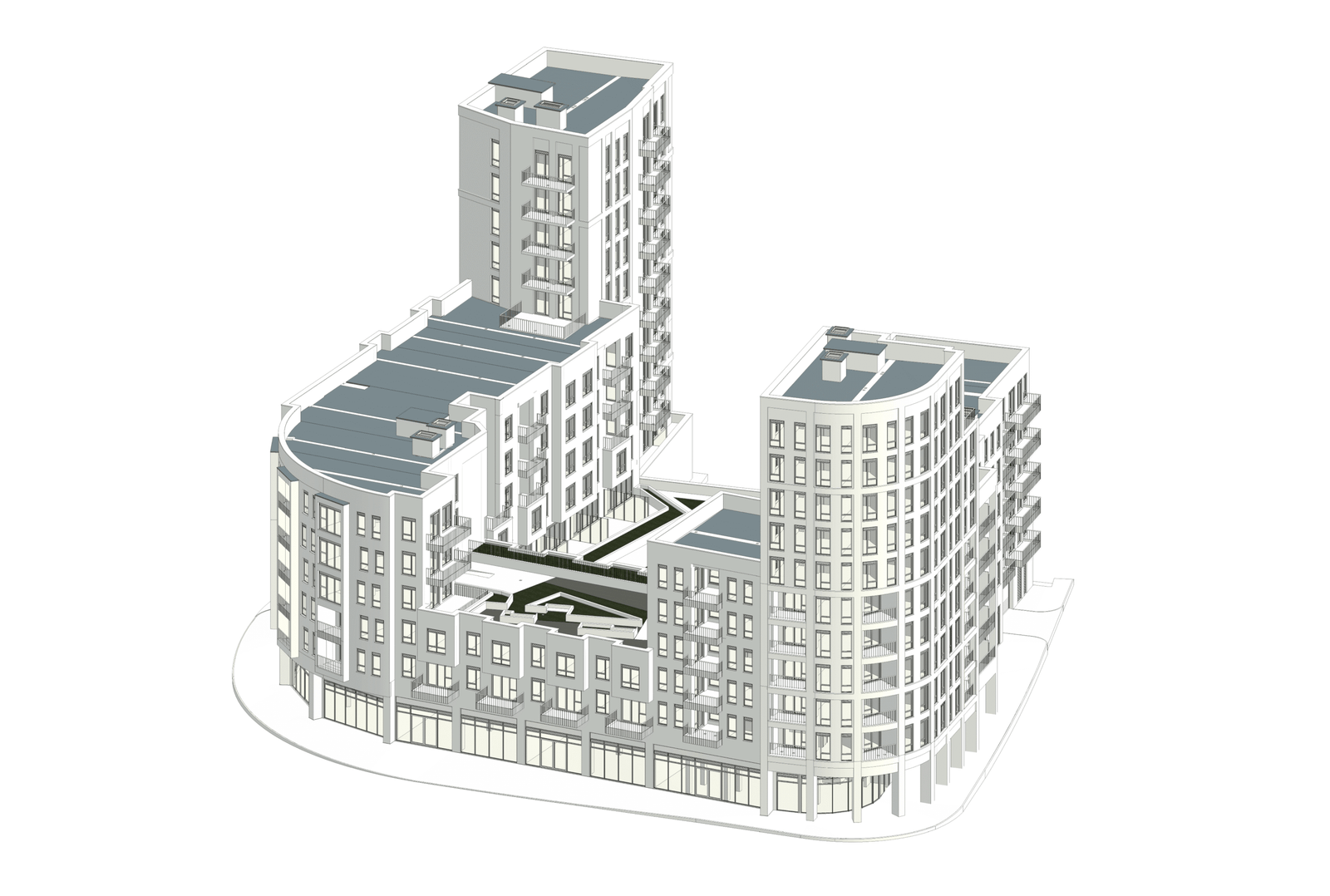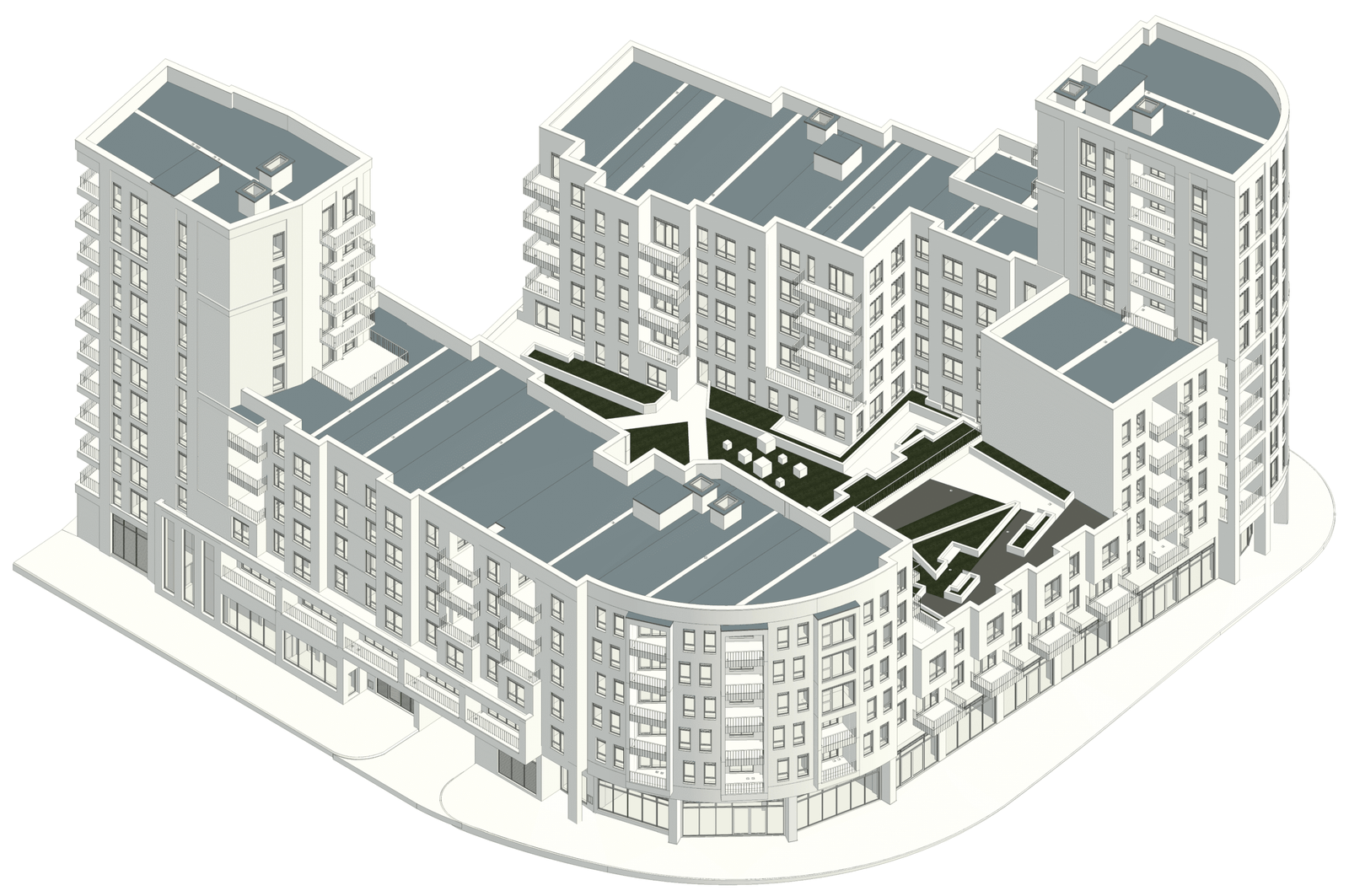
The Challenge
- Accurately digitizing and interpreting 2D CAD (DWG/PDF) sources into a cohesive 3D BIM environment.
- Reconciling specific client CAD standards with modern Revit templates to ensure technical consistency.
- Coordinating the complex geometry of multiple interconnected mid-rise buildings and shared podiums.
- Navigating LOD 300 constraints to provide sufficient design intent without over-modeling non-essential components.
- Seamlessly blending residential unit requirements with ground-level commercial storefronts and glazing details.
- Representing landscaping and courtyard pathways within the broader structural framework for site coordination.
The Solution
- Developed a comprehensive Revit model capturing architectural elements including walls, roofs, and balconies.
- Created detailed internal layouts for residential units to facilitate accurate spatial analysis.
- Defined ground-floor retail spaces with specific attention to storefront glazing and accessibility.
- Utilized Revit’s data capabilities to generate precise area calculations for building-wise and unit-wise reporting.
- Established a streamlined conversion process to maintain geometric accuracy from legacy 2D inputs.
- Modeled the shared courtyard and surrounding landscape to ensure a holistic view of the site.